
Court filings expose DHS 'Operation Puppet Master' spying on Minnesota anti-ICE protesters and unions
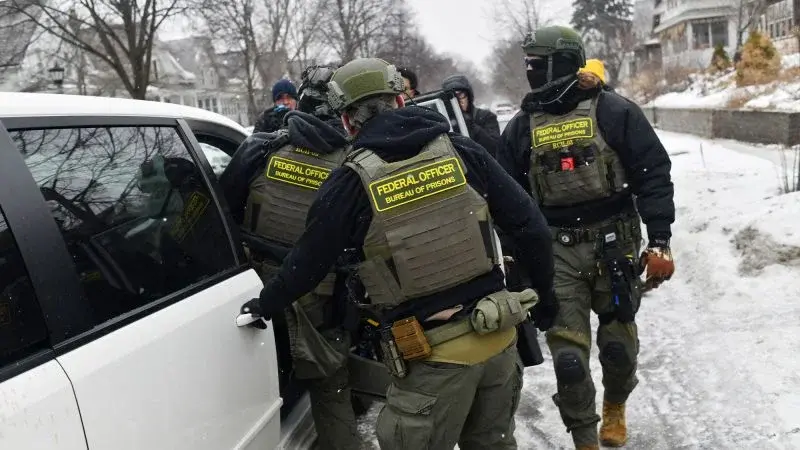
Newly disclosed court documents reveal that the Department of Homeland Security (DHS) conducted extensive undercover surveillance of anti-ICE protesters, labor unions, and left-wing groups in Minnesota. The investigation, dubbed 'Operation Puppet Master,' involved agents infiltrating public meetings, recording conversations, and seizing financial records from major unions like the SEIU and AFL-CIO. Defense attorneys argue this constitutes a 'mass spying campaign' targeting lawful First Amendment activity, while the government maintains it was investigating a conspiracy to impede federal officers. No organizations have been charged, but the records have intensified civil rights concerns about the criminalization of protest.
Key points
- DHS launched 'Operation Puppet Master' in January 2026, shortly after the killings of Renee Good and Alex Pretti, to identify a 'network of conspirators' opposing ICE.
- Undercover agents infiltrated public meetings at libraries, churches, and union halls, using audio recorders and joining Signal chats to monitor activists.
- The government obtained financial records from major unions, including the Service Employees International Union (SEIU) and Communications Workers of America, via administrative subpoenas.
- Defense attorney Kevin Riach filed a motion demanding the release of all related records, arguing the surveillance targeted protected speech rather than criminal activity.
- The 15 defendants in the related conspiracy case have all pleaded not guilty; the indictment contains no allegations of injuries to specific ICE officers.
Background
This development follows earlier reports in August 2026 that highlighted broad DHS surveillance of left-wing groups during the Minnesota anti-ICE protests. The current disclosure provides specific operational details, including the names of the investigations and the methods used, such as the use of administrative subpoenas and undercover agents posing as activists. It also connects to the broader tension between federal immigration enforcement and state-level opposition, as seen in previous cases involving deportation and clemency disputes in Minnesota.
How outlets are covering it
CNN and The Guardian emphasize the scale of the surveillance, describing it as a 'mass spying campaign' that targeted mainstream unions and nonprofits without evidence of crimes. The Guardian highlights the use of administrative subpoenas to obtain financial records, which former FBI agent Mike German criticized as an overreach. FOX 9 Minneapolis focuses on the specific tactics used, such as agents wearing wires and using AI to search for protest photos, and includes statements from the Minnesota AFL-CIO expressing concern about being targeted for political solidarity. MPR News underscores the legal arguments made by defense attorney Kevin Riach, who contends that the government is targeting political enemies and violating First Amendment rights. All sources agree that the DHS has not commented on the scope of the investigation, but they differ in their emphasis: CNN and The Guardian focus on the civil rights implications, while FOX 9 and MPR News focus on the procedural and legal aspects of the case.
Why it matters
The disclosure of these documents raises significant questions about the boundaries of federal surveillance and the protection of First Amendment rights. If the government is using undercover agents and financial subpoenas to target lawful protest and union activity, it could set a precedent for the criminalization of political opposition. The case also highlights the tension between federal immigration enforcement and local community organizing, with potential implications for future protests and labor actions across the country.
What to watch
The defense attorney, Kevin Riach, is seeking a court order to compel the government to release all records related to the undercover investigations, including those from 'Operation Whipple Shield.' The outcome of this motion will determine whether more details about the scope and methods of the surveillance are made public. Additionally, the 15 defendants in the conspiracy case will continue to face trial, with the government expected to present evidence to support its allegations of a 'conspiracy' to impede federal officers. Civil rights groups may also pursue legal challenges against the use of administrative subpoenas and undercover tactics in future cases.
- Documents show federal surveillance operation in Minnesota targeted progressive groups, unions CNN
- US conducted ‘mass spying campaign’ against leftwing groups and anti-ICE protesters, records reveal The Guardian
- Undercover DHS agents infiltrated anti-ICE meetings, labor unions during Operation Metro Surge FOX 9 Minneapolis-St. Paul
- Attorney: Homeland Security spied on Minnesotans who spoke out against ICE MPR News
- U.S. Investigated Left-Leaning Groups During Minnesota Immigration Crackdown The New York Times
Want the full story? Read the original reporting
Read on CNN