
US Midterms Become Referendum on Trump's Failing Economy and Iran War
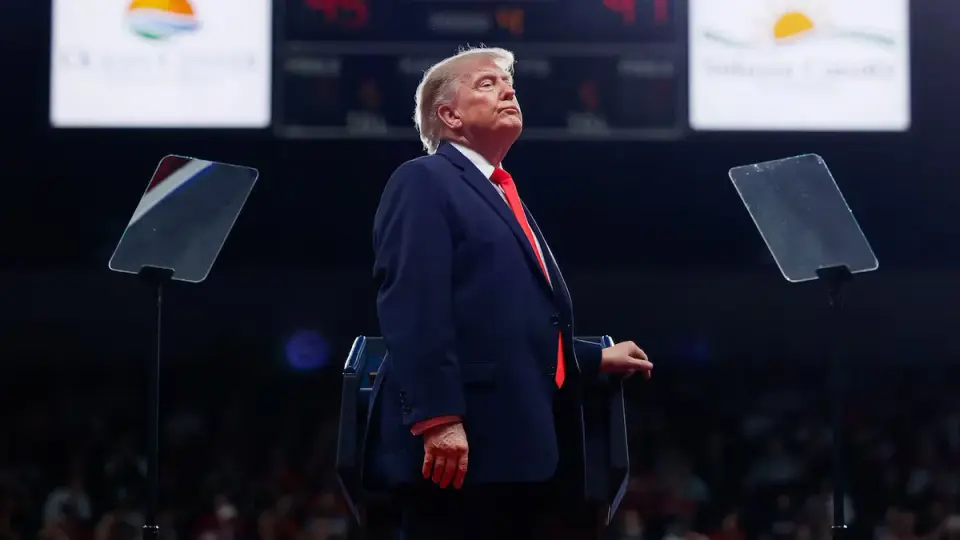
US voters are casting ballots in the 2026 midterms amid a predicted Democratic surge, with polls showing Republicans trailing by eight points. The election is framed as a referendum on President Trump's second term, marked by historic low approval ratings, a protracted war with Iran, and economic struggles. Early voting has exceeded 56 million, outpacing 2022 levels, while Trump’s 'Midterm Blitz' campaign failed to reverse the negative momentum. Key races in Texas and South Carolina remain critical, and the outcome will determine whether Democrats gain control of the House and potentially the Senate, potentially leading to investigations into the administration.
Key points
- Polls predict a 'Democratic wave' with Republicans trailing by eight points in generic ballot surveys, risking loss of the House and potentially the Senate.
- Early voting has reached over 56 million, significantly outpacing 2022 levels, with high turnout in battleground states like Texas and South Carolina.
- Trump’s approval rating is at historic lows, with 71% of Americans disapproving of his handling of the economy, and 63% citing him as a factor in their vote.
- The war with Iran, which Trump promised not to start, has led to rising fuel prices and 77% of Americans expect the conflict to continue for at least six more months.
- Democrats are fielding 'prairie populist' candidates in hostile territories, such as James Talarico in Texas and Abdul El-Sayed in Michigan, to appeal to conservative and undecided voters.
Background
The 2026 midterms follow a period of escalating tensions, including the US-Iran conflict that began in 2025 and continued through 2026, with talks in September 2026 failing to resolve the naval blockade of the Strait of Hormuz. Economic pressures, including rising fuel costs and inflation, have been a central concern for voters, as seen in the 2026 airline industry's profit outlook adjustments due to fuel costs. The current election also follows a redistricting process that changed about one-third of congressional districts, though the national House map shifted only slightly toward Republicans.
How outlets are covering it
EL PAÍS frames the election as a 'referendum on the end of Trumpism,' emphasizing the 'Midterm Blitz' as a risky gamble that failed to reverse the negative outlook, with Trump’s approval at historic lows and the war with Iran as a key factor. The Conversation highlights the irony of Trump blaming Biden for economic issues, noting that voters now blame Trump for inflation and the Iran war, with 71% disapproving of his economic handling. The Independent focuses on the practical aspects of the election, such as early voting surging to 56 million, and the potential for Democrats to gain control of the House, which could lead to investigations into the Trump administration. All sources agree on the negative impact of the Iran war and economic struggles on Trump’s approval, but differ in emphasis: EL PAÍS on the political legacy, The Conversation on the shift in blame, and The Independent on the electoral mechanics and potential consequences.
Why it matters
The outcome of the 2026 midterms will determine the balance of power in Congress, potentially leading to a Democratic majority that could launch investigations into the Trump administration. A Democratic 'wave' would reduce Trump to a lame duck president, impacting his legacy and the future of his political party. The election also reflects broader concerns about the economy, the Iran war, and the role of AI and data centers in American politics, with voters expressing concern about the impact of these issues on their lives. The results will also influence the future of the Republican Party, which may face internal divisions and a need to reassess its strategy in light of the election's outcome.
What to watch
The results of the 2026 midterms will be determined on November 3, with early voting already exceeding 56 million. The outcome will likely lead to a Democratic majority in the House, potentially resulting in investigations into the Trump administration. The war with Iran is expected to continue, with 77% of Americans anticipating at least six more months of conflict. The Republican Party may face internal divisions and a need to reassess its strategy, while the Democratic Party will likely consolidate its gains and push for progressive policies. The election will also influence the future of AI and data centers in American politics, with voters expressing concern about their impact on local communities and the environment.
- United States holds referendum on the end of Trumpism EL PAÍS English
- Opinion | Don’t Be a Haley Stevens The New York Times
- US midterms: Donald Trump has told voters to imagine he is on the ballot – here’s why that’s a problem The Conversation
- Opinion | Trump put himself on the ballot. Democrats are ready to collect. The Boston Globe
- Polls open as Trump set for disaster despite a last-ditch appeal to midterms voters: Live updates The Independent
Want the full story? Read the original reporting
Read on EL PAÍS English