
Voter Shift to In-Person Ballots Accelerates as Early Turnout Surpasses 2018 Levels
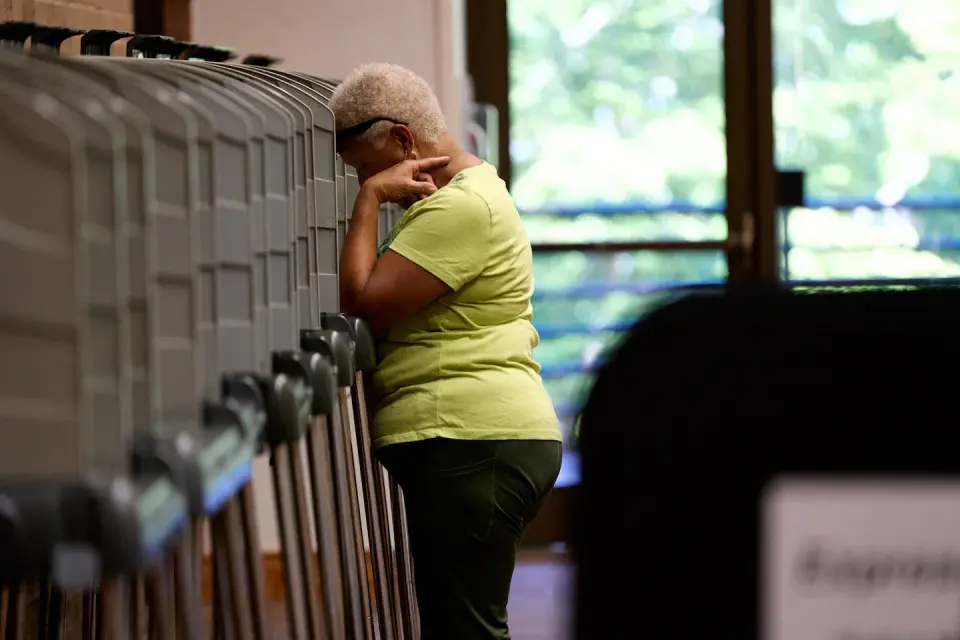
As the 2026 midterms approach, early voting data indicates a historic surge in participation, with over 16 million Americans casting ballots ahead of schedule. A significant portion of this activity is shifting from mail to in-person voting and drop boxes, a trend particularly pronounced among Democrats and unaffiliated voters. This behavioral change follows months of President Donald Trump’s attacks on mail voting and his subsequent failed attempt to use the Postal Service to restrict ballot eligibility. While Republicans have recently been urged to vote by mail, experts note it is too late in the cycle for many to request and return ballots. Current polling and early vote metrics suggest Democrats are outpacing Republicans in engagement, potentially setting the stage for a wave election, though final results remain uncertain until Election Day.
Key points
- Over 16 million people have voted early, with more than 10 million using mail ballots, a rate potentially exceeding the 2018 midterm record.
- Democrats and unaffiliated voters are showing significantly higher early engagement than Republicans, who are trailing in several key states.
- Voters are increasingly shifting from mail to in-person voting and drop boxes to avoid potential delays or rejection issues associated with mail ballots.
- The Supreme Court blocked the administration's attempt to use the Postal Service to verify voter eligibility, citing insufficient time for implementation before the election.
- Latinos and unaffiliated voters are voting at unusually high rates early in the cycle, a pattern that typically occurs closer to Election Day.
Background
This development follows a series of legal and political battles regarding mail voting. In September 2026, the Supreme Court blocked an executive order that would have allowed the Postal Service to determine voter eligibility, ruling it arbitrary and capricious. Prior to this, Trump had spent months attacking mail voting as fraudulent, only to reverse course in October and urge Republicans to vote by mail. Our archive notes that Democrats had already begun shifting to in-person voting in late September due to fears of Postal Service unreliability and potential ballot rejection.
How outlets are covering it
The Washington Post emphasizes the strategic shift by Democrats toward in-person voting as a direct response to Trump’s threats regarding mail ballots. The New Republic highlights the irony of Trump’s recent reversal, noting that his previous suppression efforts have likely cost Republicans crucial early votes, and points to data showing Democrats and independents are far more engaged than Republicans. The Argonaut and Vanderbilt Hustler focus on the legal and constitutional implications, noting that while the Supreme Court blocked the specific executive order, the decision left open the possibility of future executive interference in election administration. The Argonaut specifically highlights the impact on students who rely on absentee ballots, while the Hustler argues that the administration’s attempts to control ballot processing threaten the independence of the voting system. All sources agree that early voting numbers are high, but they differ on whether this guarantees a Democratic victory or simply reflects a temporary surge in enthusiasm.
Why it matters
The shift in voting methods and the high early turnout rates could determine the outcome of the 2026 midterms. If Democrats maintain their early lead and Republicans fail to mobilize sufficiently in the final weeks, it could result in a significant change in the balance of power in Congress. Additionally, the legal precedent set by the Supreme Court regarding the Postal Service’s role in elections may have long-term implications for how future administrations attempt to influence voting access and eligibility.
What to watch
Analysts will monitor the final days of early voting to see if the current enthusiasm among Democrats and unaffiliated voters persists. The outcome will likely depend on whether Republicans can mobilize a large turnout on Election Day to counter the early vote lead. Legal challenges regarding mail ballot eligibility and processing may continue, but the Supreme Court’s recent ruling suggests that major changes to voting rules are unlikely to be implemented before the election.
- More Democrats are voting in person after Trump’s threats about mail ballots The Washington Post
- Transcript: Unraveling Trump Blurts Out Surprise Show of Midterm Panic The New Republic
- Students face voting limits, questioning constitutional rights Argonaut
- ADIGA: Restrictions on mail-in voting are disenfranchising Americans The Vanderbilt Hustler
- Trump’s Attack on Mail-In Voting Could Disenfranchise More Republicans Than Democrats Between The Lines
Want the full story? Read the original reporting
Read on The Washington Post