
Voters link 2026 midterms to Pretti and Good killings in Minneapolis
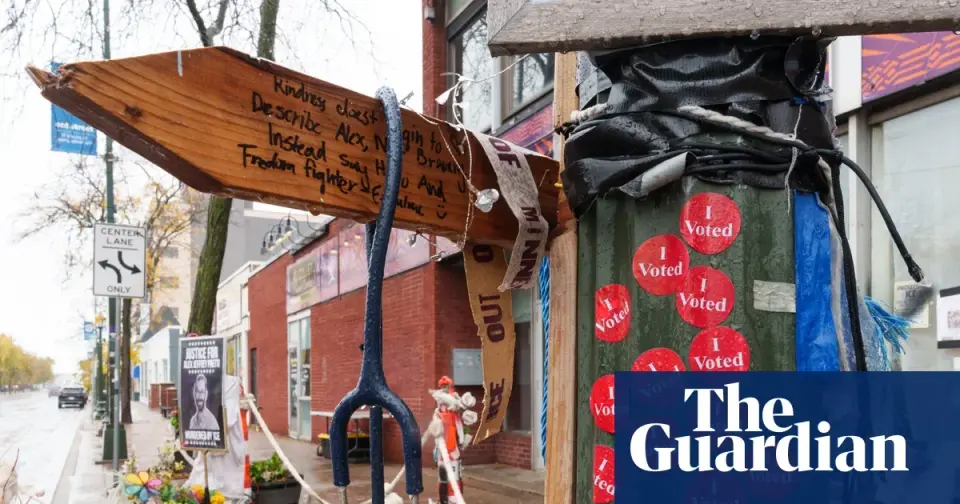
Minnesota voters are merging their 2026 midterm participation with mourning for Alex Pretti and Renee Good, two citizens killed by federal agents in January. By leaving 'I Voted' stickers at memorial sites, residents symbolically connect their civic duty to the unresolved legal and political fallout of the 'Operation Metro Surge' enforcement actions. This act highlights how the Trump administration's aggressive deportation policies have become a central, emotionally charged issue in the state's election for governor and Senate, transforming local grief into a broader political statement against federal overreach.
Key points
- Voters in Minneapolis placed 'I Voted' stickers at the memorial sites of Alex Pretti and Renee Good on Election Day, linking their civic participation to the January killings.
- Alex Pretti, a 37-year-old ICU nurse, and Renee Good, a writer and mother of three, were killed by federal immigration officials during 'Operation Metro Surge' in January 2026.
- The killings have become a pivotal issue in the 2026 Minnesota midterms, where voters are selecting a governor and US Senator, with many viewing the election as a referendum on federal enforcement tactics.
- Community groups that previously organized rapid response teams against ICE arrests have shifted their focus to supporting voter access and monitoring polling places in Minneapolis.
- Despite threats from the Trump administration to deploy federal law enforcement to voting sites, no such officials were observed at polling locations during the election.
Background
The 2026 midterms follow a period of intense legal and public conflict regarding the January 2026 shootings. In October, the Pretti family accused the Department of Justice of shielding the agents involved, while the Good family filed dual federal lawsuits alleging a coordinated civil rights conspiracy by senior administration officials, including Stephen Miller and Kristi Noem. These legal battles have intensified public scrutiny of the 'Operation Metro Surge' and framed the current election as a direct response to the perceived failure of federal accountability.
How outlets are covering it
The Guardian emphasizes the emotional and symbolic weight of the voting process, highlighting personal testimonies from mourners who view their vote as a moral stance against the killings. Fox 9 Minneapolis focuses on the physical presence of the stickers and the broader context of the families' recent legal actions, noting the Pretti parents' demands for evidence and the Good family's lawsuits. While the sources agree on the factual occurrence of the sticker placements, the Guardian frames the event as a moment of national reckoning, whereas Fox 9 presents it as a local civic response to ongoing legal disputes. The Axios source provided no substantive content beyond a cookie consent notice, offering no additional perspective on the story.
Why it matters
This event illustrates how localized tragedies from federal enforcement actions can reshape the political landscape of a state election. By physically linking their voting participation to the memorials of Pretti and Good, Minnesota voters are signaling that the 2026 midterms are not just about policy, but about accountability for the use of lethal force. The absence of federal agents at polling places, despite prior threats, suggests a potential shift in the administration's posture or a successful community defense of democratic access, making the outcome of the Minnesota races a critical indicator of public sentiment regarding immigration enforcement.
What to watch
The immediate focus will shift to the results of the Minnesota gubernatorial and Senate races, which will determine the state's political alignment in response to the federal immigration policies. Legally, the Good family's civil lawsuits and the Pretti family's demands for evidence will continue to unfold in federal courts, potentially influencing the narrative of the incoming administration. Community groups in Minneapolis are expected to maintain their vigilance over federal enforcement activities, while national attention will turn to whether the 2026 midterm outcomes lead to legislative or executive changes in immigration policy.
- Minnesota voters leave ‘I Voted’ stickers at memorial sites for Alex Pretti and Renee Good The Guardian
- He left his voting sticker where ICE killed his dad. Hundreds more followed. Houston Chronicle
- "I Voted" stickers become tributes at ICE memorials Axios
- Voters place 'I Voted' stickers at Renee Good, Alex Pretti memorials FOX 9 Minneapolis-St. Paul
- 'I voted' stickers left at memorials for Renee Good, Alex Pretti in Minneapolis MPR News
Want the full story? Read the original reporting
Read on The Guardian