
Washington voters reject millionaires tax repeal, but legal battle looms
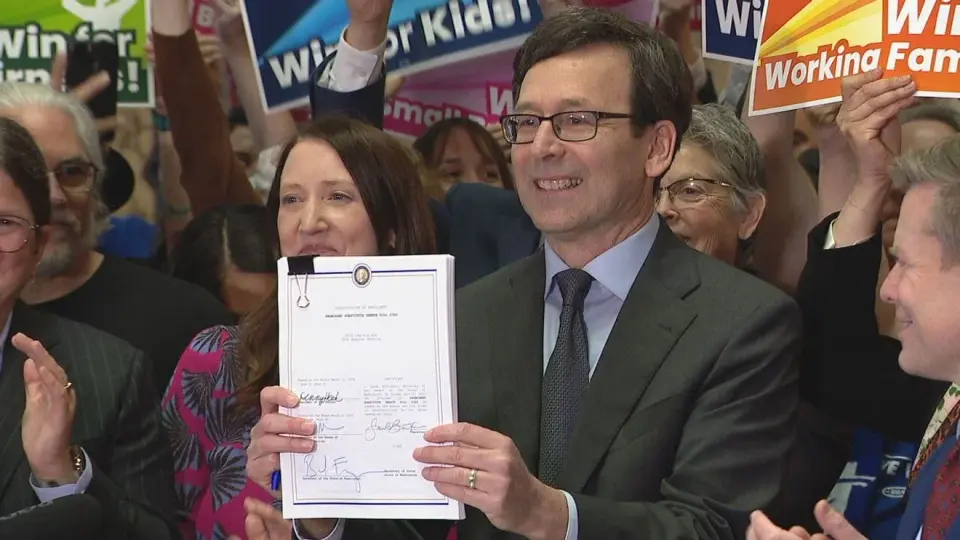
Washington voters are rejecting Initiative 645, which sought to repeal the state's new 9.9% income tax on high earners. Early results show nearly 58% of voters opposing the repeal, suggesting the 'millionaires tax' will take effect in 2028. However, opponents have filed a lawsuit challenging the tax's constitutionality, and the case is expected to reach the state Supreme Court, where newly elected justices may decide its fate.
Key points
- Initiative 645, which aimed to repeal the 9.9% income tax on individuals earning over $1 million, is trailing with nearly 58% of votes counted against it as of Wednesday evening.
- The 'millionaires tax,' signed into law by Governor Bob Ferguson in March 2026, is set to take effect in 2028, with the state expecting to collect over $11 billion in its first three years, including $3 billion in the first year.
- Opponents of the tax, including business leaders and philanthropists, spent nearly $13 million on the 'NO' campaign and millions more on state Supreme Court races, arguing the tax violates the state constitution's prohibition on income taxes.
- Supporters, including labor unions and Democratic legislators, argue the tax is necessary to address significant budget shortfalls and fund public services, with Senate Majority Leader Jamie Pedersen calling the early results a 'giant green light' for tax reform.
- The tax's future now hinges on the state Supreme Court, where opponents have filed a lawsuit challenging its constitutionality, and newly elected justices, some appointed by Governor Ferguson, are expected to rule on the case.
Background
Washington state had previously rejected income taxes ten times, making the passage of the 'millionaires tax' a historic shift. The tax was part of a broader effort by the Democratic-controlled legislature to address budget shortfalls and fund public services. The initiative to repeal the tax, I-645, was backed by the conservative political action committee Let's Go Washington, which collected over 500,000 signatures to place it on the ballot. The tax's opponents argued that a majority of voters would reject the high-earner tax, as they have historically rejected or prevented income-based tax proposals. The state's Office of Financial Management estimated the tax would collect more than $11 billion over its first three years, including $3 billion in the first year. The tax's supporters, including labor unions and Democratic legislators, argued that the tax was necessary to address significant budget shortfalls and fund public services. The tax's opponents, including business leaders and philanthropists, argued that the tax violated the state constitution's prohibition on income taxes and could drive away wealthy residents and businesses. The tax's future now hinges on the state Supreme Court, where opponents have filed a lawsuit challenging its constitutionality, and newly elected justices, some appointed by Governor Ferguson, are expected to rule on the case.
How outlets are covering it
KOMO emphasizes the political and legal implications of the tax's survival, highlighting the role of the state Supreme Court and the newly elected justices in determining the tax's fate. KNKX provides a broader context of the election results, including the rejection of I-645 and the approval of other initiatives, such as the ban on transgender girls in girls' sports. Axios focuses on the legal challenges and the potential for the tax to be overturned in court, noting the 1933 state Supreme Court ruling that found income is property, which Washington's constitution says must be taxed at a uniform rate. All sources agree that the tax's future is uncertain and will be determined by the state Supreme Court, but they differ in their emphasis on the political and legal implications of the tax's survival.
Why it matters
The outcome of the millionaires tax will have significant implications for Washington state's budget and public services. If the tax survives, it will generate over $11 billion in its first three years, helping to address significant budget shortfalls and fund public services. However, if the tax is overturned in court, the state will face significant budget shortfalls and may need to cut public services or raise other taxes. The tax's future will also have implications for the state's business and philanthropic communities, as some have warned that the tax could drive away wealthy residents and businesses. The tax's outcome will also have implications for the state's political landscape, as it will determine the fate of the newly elected justices and the state's tax code.
What to watch
Election officials are scheduled to release updated results on Thursday. The tax's future will be determined by the state Supreme Court, where opponents have filed a lawsuit challenging its constitutionality. The newly elected justices, some appointed by Governor Ferguson, are expected to rule on the case. If the tax survives, it will take effect in 2028, with the state collecting the first tax payments in 2029. If the tax is overturned, the state will face significant budget shortfalls and may need to cut public services or raise other taxes. The tax's outcome will also have implications for the state's business and philanthropic communities, as some have warned that the tax could drive away wealthy residents and businesses.
- Millionaires Tax now goes to the courts after apparent repeal failure KOMO
- Washington voters embrace ‘millionaire tax��� OregonLive.com
- Latest results for the 3 initiatives on every Washington voter's ballot KNKX
- Washington income tax repeal trails as ballot counting continues Axios
- WA voters upholding ‘millionaires tax’ in Tuesday vote The Seattle Times
Want the full story? Read the original reporting
Read on KOMO