Wealth Showdown: The Billionaire and the Taxpayer
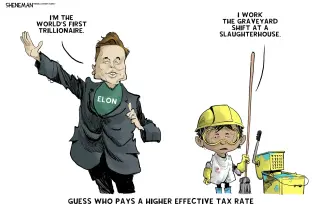
A Drew Sheneman cartoon lampoons the clash between a trillionaire and ordinary taxpayers, using satire to critique wealth concentration and the political fight over taxes.
All articles tagged with #taxation

A Drew Sheneman cartoon lampoons the clash between a trillionaire and ordinary taxpayers, using satire to critique wealth concentration and the political fight over taxes.

A Leiden University study estimates the global top 10% owe society $1.7–$5.7 trillion annually for environmental damages (2017 USD), about $2,300–$7,500 per person, driven mainly by biodiversity loss and climate impacts. The authors suggest targeted environmental taxes on the top decile could fund biodiversity protection and climate action, noting wide country differences (US, China, India) and the potential to cover funding gaps identified for COP targets, using consumption footprints and the Environmental Prices Handbook 2024. Published in Communications Sustainability (2026).

Pennsylvania's Supreme Court ruled that skill games are slot machines under state law, triggering a 120-day window for the Legislature to regulate and tax the devices, which number roughly 70,000 and could generate over $1 billion in revenue. The decision intensifies the policy battle over how to tax and oversee these games, with proposed rates ranging from around 16% to 52%, and offsets ongoing tensions between casinos, small operators, and lawmakers amid concerns about public health and the economy.

Elon Musk’s net worth jumped past $1 trillion as SpaceX’s public debut makes him the world’s first trillionaire, provoking global revulsion and renewed demands for a bold wealth tax to curb inequality. Campaigners say the ultra-wealthy benefit from a biased tax system and government support for their companies, noting SpaceX and Tesla’s limited federal taxes; they argue even a 10% wealth tax could lift hundreds of millions from poverty and urge policymakers to reverse wealth concentration and curb corporate power.

Faced with budget gaps, fourteen states consider raising taxes on the rich to fund schools and hospitals; Massachusetts cites the Fair Share Amendment as a successful example, while California’s Billionaire Tax Act proposes a one-time 5% wealth levy on net worth above $1 billion to raise roughly $100B. Critics warn such taxes could trigger capital flight and harm revenue, even as other states cut taxes or adopt flat-rate schemes, highlighting a broad but uneven national split on how to balance budgets.

Global inequality has persisted since the 1980s, with the top 1% in the US rising from 9% to 16% of pre-tax income and Europe’s top 1% from 8% to 12%. Despite this, tax systems are becoming more progressive, a shift that could limit elite gains and influence politics, even as concerns about populism remain.

Inequality has risen across the rich world since the 1980s, with the top 1% accounting for a larger share of income (US from 9% to 16%; Europe from 8% to 12%), but tax systems remain more progressive than often assumed, indicating ongoing redistribution even as middle-class incomes stagnate and populism grows.

A securities filing shows Amazon slashed its 2025 federal tax bill by 87% to roughly $1.2B as pretax US profits rose to $89.5B, even as the company cut about 30,000 jobs; advocates call it a windfall from the Republican tax cuts, while critics warn such breaks drain the federal budget.

Despite a surge in billionaire wealth, taxes on the ultra-rich remain well below the average, fueling a renewed push for wealth taxes. In California, a proposed one-time 5% levy triggered asset shifts by Brin, Page, and Sacks and drew strong opposition from Gov. Newsom, highlighting the political and logistical hurdles. Proponents push for a simple, flat-rate tax on billionaires with an exit tax to curb capital flight, while critics warn past wealth taxes were costly and evasive, with some favoring alternatives like higher inheritance taxes or treating capital gains as ordinary income.

The UK has implemented new regulations requiring cryptocurrency users to share account details with HMRC to ensure proper tax compliance, including capital gains tax, with exchanges now responsible for automatically reporting user earnings to prevent tax evasion. The move aims to recover an estimated £300 million in unpaid taxes over five years and aligns with international efforts to regulate the crypto industry more effectively.

A bipartisan group of House lawmakers has introduced a new crypto tax framework that includes provisions for a stablecoin safe harbor and staking deferral, aiming to clarify tax rules for digital assets.

Governments are looking to mobilize private wealth, including incentives like tax-free bonds and potential wealth taxes, to address their soaring debt levels, especially amid the upcoming $80-124 trillion wealth transfer over the next 20 years, raising concerns about private sector investment access and fiscal sustainability.

The Supreme Court examined challenges to Trump's 'Liberation Day' tariffs, revealing that these tariffs are essentially a tax on Americans and highlighting the economic and constitutional issues involved, including the president's broad power to impose tariffs under the IEEPA and the economic misconceptions surrounding trade deficits.

In 2026, Social Security will see several significant changes including a 2.7% cost-of-living adjustment, an increase in the full retirement age to 67, higher income tax caps for high earners, and the elimination of rules that previously reduced benefits for public sector workers. Additionally, the program faces a long-term funding crisis with depletion projected by 2034, requiring potential reforms.

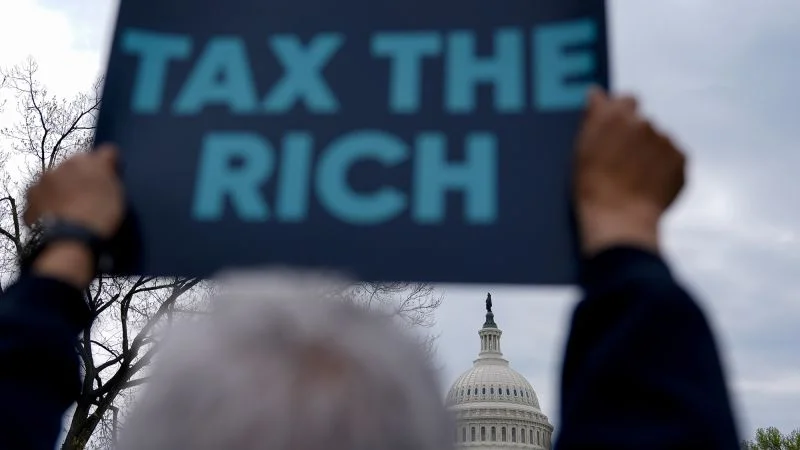
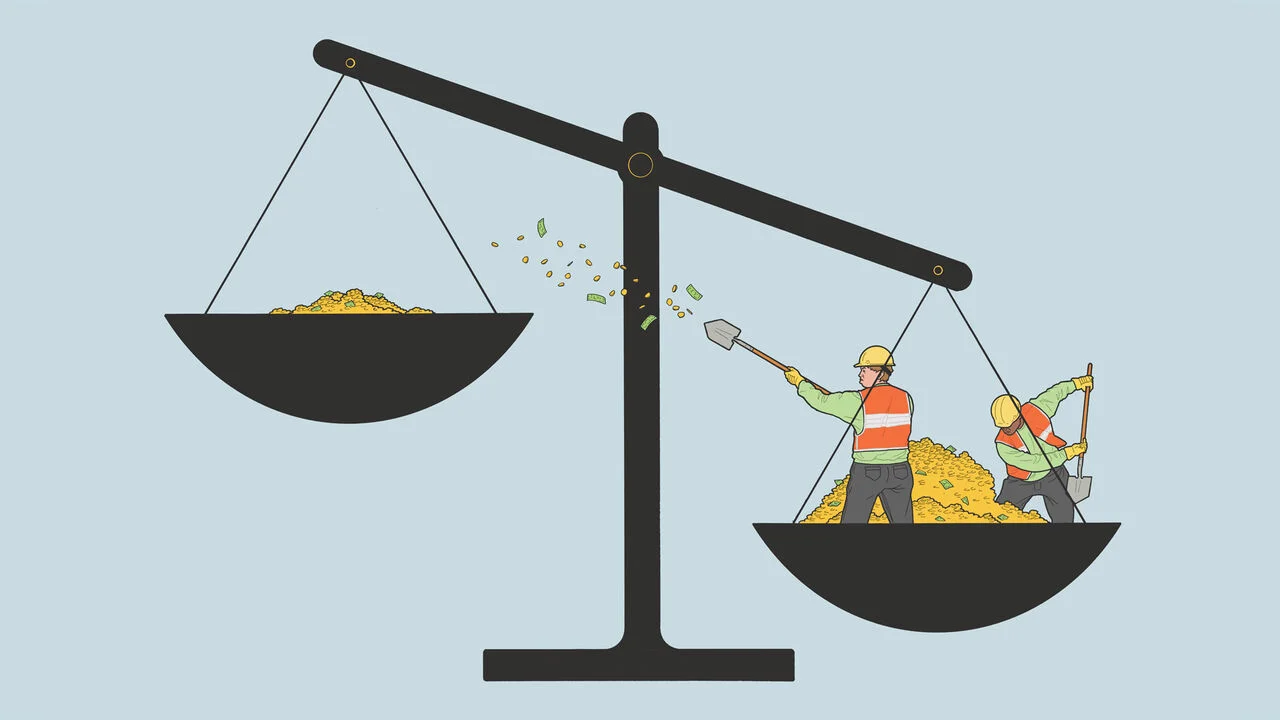
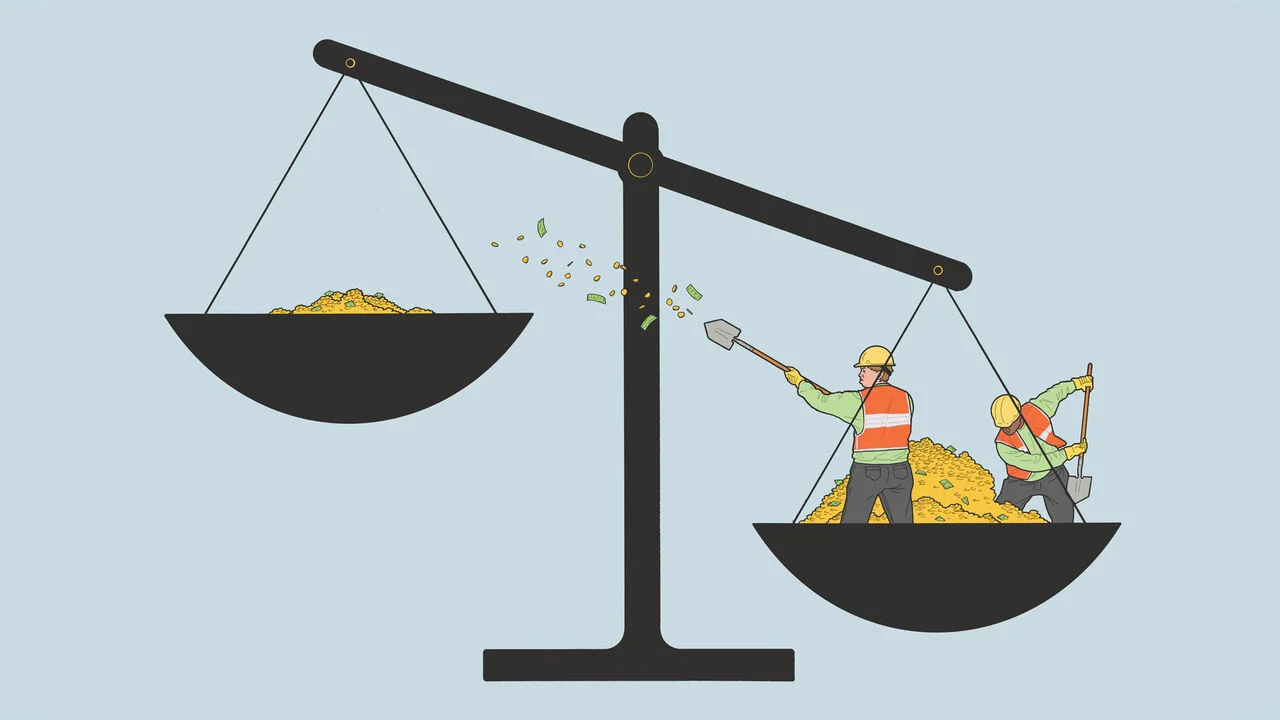
The article criticizes the growing wealth inequality, highlighting the absurdity of trillionaires existing while ordinary workers struggle, and advocates for increased taxes on the wealthy, emphasizing that the time for redistribution is now, not in some distant future.