
Campus and Community Protests Surge Following Cornell Sexual Assault Allegations
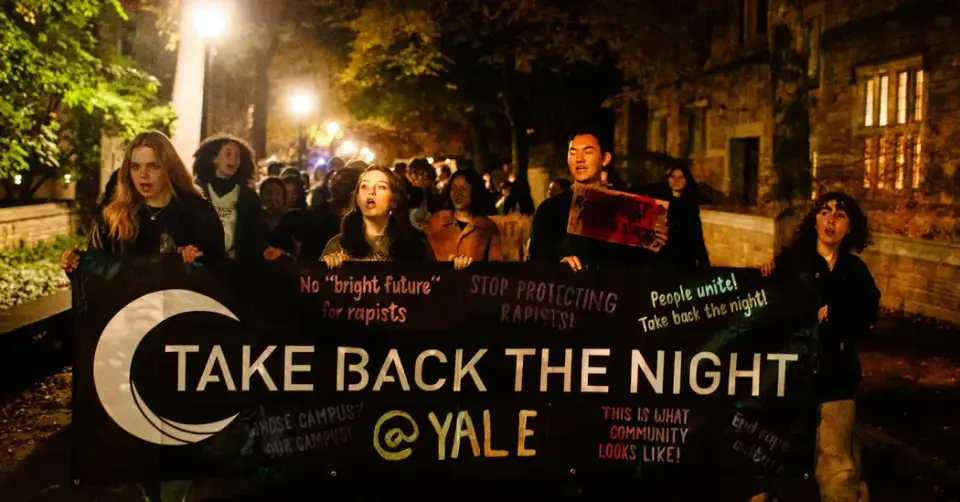
Coordinated protests erupted on college campuses and in local communities on Sunday night and Halloween morning, driven by outrage over sexual assault allegations at Cornell University. Demonstrators in New York and California gathered to demand accountability, while a separate rally in Tennessee highlighted the broader cultural impact of the case. Participants used the pseudonym 'Jane Doe' to symbolize the silenced voices of survivors, marking a significant escalation in public discourse regarding campus safety and institutional response.
Key points
- Take Back the Night organized simultaneous gatherings at Yale and UC Berkeley to protest sexual violence on campus.
- Approximately 100 students protested at Yale, while around 50 gathered at Berkeley, marching to administrative buildings.
- A separate 'We Are Jane' rally in Clarksville, Tennessee, drew about 25 attendees to discuss the Cornell case and domestic violence.
- Protesters used the name 'Jane Doe' to represent the anonymous victim in the Cornell legal filings and to advocate for survivor visibility.
- Organizers in Tennessee announced plans to create a social media group to coordinate future activism and support survivors.
Background
This surge in activism follows earlier discussions regarding institutional failures in handling sexual assault cases, though no specific prior archival events directly relate to this specific Cornell incident. The current protests represent a new wave of coordinated response to recent legal filings and media coverage of the Cornell case, distinct from previous sports or unrelated news cycles.
How outlets are covering it
The New York Times emphasized the scale and coordination of the Take Back the Night movement, highlighting specific locations like Sterling Memorial Library at Yale and California Hall at Berkeley. In contrast, Clarksville Now focused on the grassroots, local dimension of the response, detailing the 'We Are Jane' rally in Tennessee. While the NYT reported on the symbolic use of signs referencing 'Jane Doe' in New York, Clarksville Now highlighted the personal testimonies of local organizers and the creation of a new activist network, showing how the national story sparked localized, community-driven action.
Why it matters
These protests indicate a growing refusal among students and community members to accept institutional silence or inadequate responses to sexual violence. The use of 'Jane Doe' as a unifying symbol challenges the anonymity often imposed on victims in legal proceedings, demanding that universities and society acknowledge the human impact of such crimes. The formation of new activist groups suggests that this issue will remain a focal point for campus and community advocacy in the coming months.
What to watch
Organizers in Clarksville plan to launch a Facebook group to coordinate future protests and provide updates. The broader Take Back the Night movement may see further coordinated actions on campuses as the legal proceedings in the Cornell case continue. Institutional responses from universities like Cornell, Yale, and Berkeley will likely be scrutinized as public pressure mounts for policy changes and better support for survivors.
- Campuses Join Take Back the Night Gathering to Protest Sexual Violence The New York Times
- ‘We Are Jane’ rally held in Clarksville to protest Cornell University rape case Clarksville Now
- Are we really allies of Jane Doe when we only focus on the violent act? Highlander Newspaper
- Opinion: American universities have a sexual assault problem The Atlanta Journal-Constitution
- Cornell students to hold peaceful protest for SA survivors WETM
Want the full story? Read the original reporting
Read on The New York Times