
Curtis Flowers, Central Figure in Landmark Racial Bias Case, Dies at 56
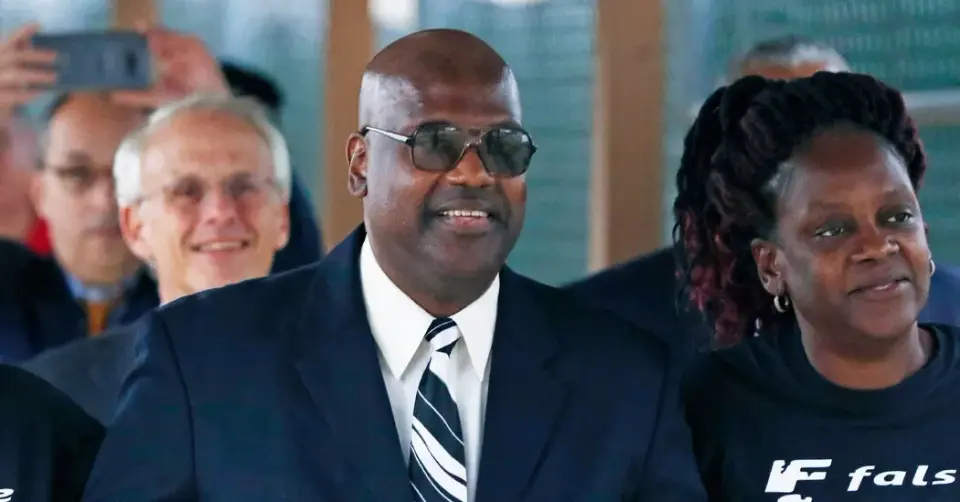
Curtis Flowers, a Black man who spent nearly 23 years in prison after being tried six times for the same 1996 quadruple murder in Mississippi, has died at age 56. His case became a national symbol of racial bias in jury selection, leading the U.S. Supreme Court to overturn his conviction in 2019. Flowers was released from prison in December 2019, and all charges were dropped in 2020. He received $500,000 in wrongful-imprisonment compensation. His death is under investigation by the Montgomery County coroner.
Key points
- Curtis Flowers died at his home in Winona, Mississippi, at age 56. His sister Priscilla Flowers-Ward reported he suffered from advanced diabetes, but the Montgomery County coroner is investigating the cause of death.
- Flowers was tried six times by District Attorney Doug Evans for the 1996 murders of four people at Tardy Furniture. Across all trials, 61 of 72 jurors were white, and all 61 voted to convict.
- The U.S. Supreme Court ruled in 2019 that Evans unconstitutionally excluded Black people from the jury in the sixth trial. Justice Brett Kavanaugh described the state's efforts as a 'relentless, determined effort to rid the jury of Black individuals.'
- Flowers was released from prison in December 2019 after spending nearly 23 years behind bars. The state attorney general's office dropped all charges in 2020.
- Flowers was awarded $500,000 in wrongful-imprisonment compensation, paid in annual installments of $50,000 over 10 years.
Background
Flowers' case gained national attention through the 2018 podcast 'In the Dark,' which highlighted prosecutorial misconduct and racial bias in jury selection. The case contributed to broader national discussions on racial bias in the criminal justice system, alongside events like the 2020 killing of George Floyd. Flowers' legal team, including the George C. Cochran Innocence Project, described him as a gentle man who endured a 'bitter cup' of injustice.
How outlets are covering it
The New York Times emphasizes the symbolic nature of Flowers' case as a landmark for racial bias in jury selection. CBS News highlights the unprecedented nature of the case in American legal history and the lack of physical evidence linking Flowers to the crime. Mississippi Today focuses on the local impact and the legal team's tribute to Flowers, noting his favorite hymn and his enduring spirit. WLBT provides a concise overview of the timeline, from the 1996 murders to the 2020 dismissal of charges and the 2021 compensation award. All sources agree on the key facts of the case and Flowers' death, but differ in their emphasis on the legal, social, and personal dimensions of his story.
Why it matters
Curtis Flowers' death underscores the ongoing impact of racial bias in the criminal justice system. His case remains a landmark in U.S. Supreme Court jurisprudence, illustrating the consequences of discriminatory jury selection. The case also highlights the role of investigative journalism, such as the 'In the Dark' podcast, in exposing systemic injustices and achieving exoneration for wrongfully convicted individuals.
What to watch
The Montgomery County coroner is investigating the cause of Flowers' death. The family is awaiting an autopsy to determine the exact cause. There are no further legal proceedings related to the case, as all charges were dropped in 2020. The compensation awarded to Flowers will continue to be paid in annual installments as per the court order.
- Curtis Flowers Has Died at 56. His Case Became a Symbol of Racial Bias. The New York Times
- Curtis Flowers, Mississippi man wrongfully convicted after being tried for the same killings 6 times, dies at 56 CBS News
- Curtis Flowers, wrongly imprisoned after enduring six trials, dies at 56 Mississippi Today
- Curtis Flowers, a Black man whose death sentence was tossed by Supreme Court, dies in Mississippi ABC News - Breaking News, Latest News and Videos
- Curtis Flowers, wrongfully imprisoned for more than 22 years, dies WLBT
Want the full story? Read the original reporting
Read on The New York Times