
Trump’s Final Midterm Push: Islamophobic Attacks on El-Sayed and Bitter Michigan Rivalry
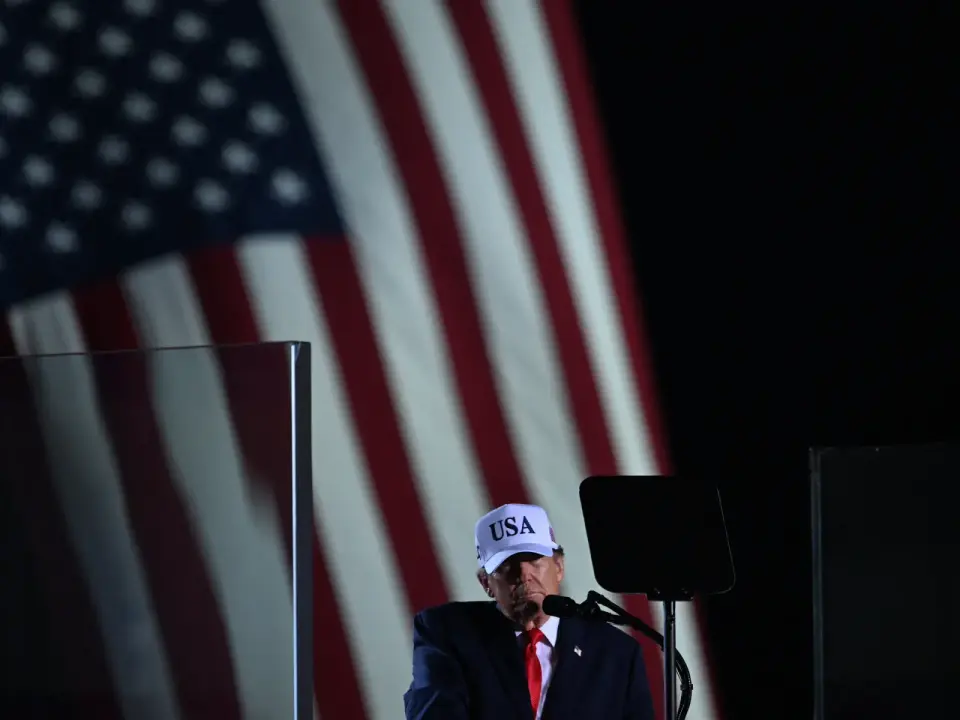
In his final campaign appearances before the November 3 midterms, President Donald Trump intensified Islamophobic rhetoric against Democratic Senate candidate Abdul El-Sayed in Iowa and Kansas. Trump labeled El-Sayed a 'jihadist' and demanded metal detectors for him, while also attacking Rep. Ilhan Omar. These rallies, rescheduled after a brief cancellation, aimed to energize Republican voters in swing states where polling suggests Democrats may gain ground. The Michigan race, a critical battleground for Senate control, saw Trump praise Haley Stevens for defecting to the GOP, while El-Sayed dismissed the attacks as distractions from economic issues.
Key points
- Trump held final in-person rallies in Iowa and Kansas on November 1, reversing a prior decision to switch to virtual events.
- He repeatedly called Michigan Senate candidate Abdul El-Sayed a 'jihadist' and member of the Muslim Brotherhood, unfounded claims El-Sayed denies.
- Trump joked that the Senate would need a special metal detector for El-Sayed if he won, drawing laughter from crowds but condemnation from critics.
- He attacked Rep. Ilhan Omar with unfounded claims about her marriage and children, and criticized Kansas Senate candidate Adam Hamilton for supporting trans rights.
- Trump praised Haley Stevens for endorsing his Republican opponent Mike Rogers, urging her to join the GOP, while El-Sayed dismissed the attacks as a distraction from cost-of-living concerns.
- Polling suggests Democrats could flip Iowa and Kansas, with Michigan’s Senate race considered one of the closest and most pivotal for congressional control.
Background
This escalation follows a month of chaotic campaigning, including a shift from in-person to virtual rallies due to fatigue, and prior anti-Muslim rhetoric in Michigan. Trump’s 2026 speeches have been noted for repetition and incoherence, while his approval ratings remain low. The Michigan race, where El-Sayed would become the first Muslim U.S. senator, has drawn national attention due to its tight margins and the high-profile defection of Haley Stevens.
How outlets are covering it
Al Jazeera and The Guardian emphasize the Islamophobic nature of Trump’s rhetoric, highlighting the 'jihadist' label and metal detector joke as brazenly racist. The BBC focuses on the backlash, including criticism from Arab American leaders and El-Sayed’s response, while also noting the 9/11 invocation and the Muslim Brotherhood claims. Bridge Michigan highlights the strategic importance of the Michigan race and Trump’s 11th-hour tele-rally appeal, contrasting it with Obama’s recent Democratic rally. All sources agree on the tightness of the races and the significance of the November 3 vote, but differ in emphasis: Al Jazeera and The Guardian focus on the rhetoric, the BBC on the backlash, and Bridge Michigan on the electoral stakes.
Why it matters
The outcome of the midterms will determine which party controls Congress during Trump’s final two years, with the Michigan Senate race potentially decisive. Trump’s Islamophobic tactics risk alienating moderate and Arab American voters, while Democrats argue the attacks distract from economic concerns. The rallies also signal the intensity of the 2026 campaign, with both parties mobilizing in swing states where polling is close.
What to watch
Voting occurs on November 3, with early voting having ended on November 1. The Michigan Senate race between El-Sayed and Rogers is expected to be one of the closest, potentially deciding Senate control. Trump is not expected to campaign further in Michigan, while Democrats continue to rally support. The results will shape the legislative agenda for the remainder of Trump’s term.
- Trump leans into Islamophobia and conspiracy in last-ditch campaign rallies Al Jazeera
- Trump launches racist diatribe against Abdul El-Sayed at Iowa rally The Guardian
- Backlash after Trump invokes 9/11 in attack on El-Sayed BBC
- Donald Trump phones Michigan voters in 11th hour election appeal Bridge Michigan
Want the full story? Read the original reporting
Read on Al Jazeera