
California Braces for Record El Niño and Kelvin Wave to Compound Coastal Flooding
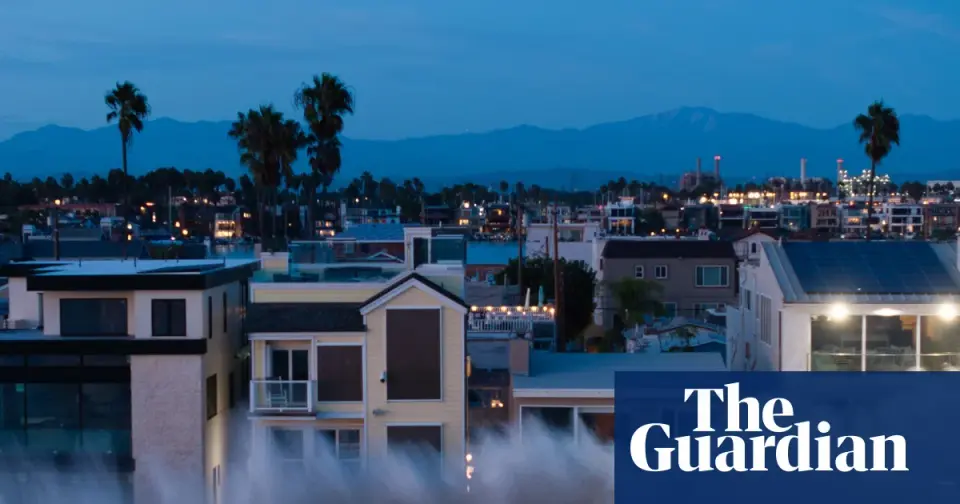
California is preparing for a historic winter as a massive Kelvin wave, driven by a record-breaking El Niño, raises sea levels by up to a foot. This surge compounds existing climate change trends, threatening to double the 8-12 inch rise seen over the last century. While the wave itself does not crash like a tsunami, it elevates tides, amplifying the impact of storms and high tides. Governor Gavin Newsom has declared a state of emergency as communities race to protect infrastructure, though experts warn that short-term defenses like seawalls may accelerate long-term beach erosion.
Key points
- A planetary-scale Kelvin wave is moving up the Pacific, expected to reach the San Francisco Bay Area by early October and Alaska shortly after.
- The wave is predicted to raise sea levels by up to 12 inches, potentially doubling the sea level rise already caused by climate change over the past century.
- Governor Gavin Newsom declared a statewide emergency, while local officials in Orange County and Marin County are deploying sandbags, clearing drains, and securing flood barriers.
- The highest tides are expected in November and December, coinciding with the wettest months, creating a 'double whammy' of high water and heavy rainfall.
- Experts warn that while seawalls and rock riprap protect homes and rail lines in the short term, they may destroy beaches and exacerbate erosion in the long run.
Background
Previous coverage noted the Kelvin wave's approach in September, with initial estimates of a 4-8 inch rise. Recent updates confirm the wave's intensity is linked to a 'super' El Niño, with surface temperatures in the Pacific warmer than during the 1997-1998 event. The 1997-1998 winter serves as a historical benchmark, where 21 of California's 58 counties were declared disaster areas due to similar conditions.
How outlets are covering it
The Guardian and USA Today emphasize the immediate threat of compounded flooding, citing climate scientist Daniel Swain’s warning that coastal flooding is 'practically certain.' The Los Angeles Times highlights a critical tension: while emergency measures like seawalls and rock barriers are necessary to protect homes and the Pacific Surfliner rail line, they may permanently destroy public beaches. The Atlantic focuses on the visible, immediate damage, such as sinkholes in Malibu and collapsed boardwalks in Long Beach, illustrating the current impact before the winter storms peak. All sources agree that the current El Niño is unprecedented in intensity, but they differ on the primary focus: immediate human safety versus long-term ecological and infrastructural trade-offs.
Why it matters
The convergence of a record El Niño, a Kelvin wave, and climate change-induced sea level rise creates a high-risk scenario for California’s coast. The potential for compounded flooding threatens critical infrastructure, including transportation arteries and tech hubs in the Bay Area, as well as residential areas in Southern California. The debate over coastal defense strategies reveals a broader conflict between short-term protection and long-term sustainability, with significant financial and environmental implications for the state.
What to watch
The Kelvin wave is expected to reach the San Francisco Bay Area by early October. The most severe impacts are anticipated in January, February, and March, when large storms and high tides coincide. Communities are currently implementing emergency measures, but the long-term effectiveness of these strategies remains uncertain. Further monitoring of sea levels and storm activity will be crucial in the coming months.
- California rushes to prepare for massive ‘Kelvin’ wave and predicted sea level rise The Guardian
- California’s plan to save coastal homes from El Niño could end up killing beaches Los Angeles Times
- The Edge of California Is Falling Into the Ocean The Atlantic
- What is a Kelvin wave? The underwater pulse that could impact California Yahoo
- Powerful planetary wave takes aim at West Coast as El Niño rages USA Today
Want the full story? Read the original reporting
Read on The Guardian