
El Niño’s Kelvin Wave Arrives in California, Lifting Sea Levels by Up to a Foot
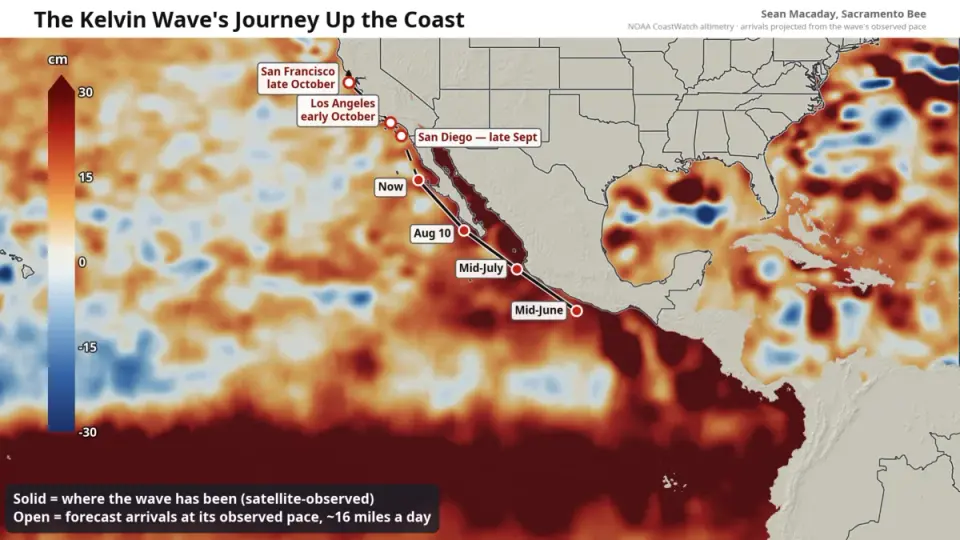
A massive coastally trapped Kelvin wave, driven by a strengthening El Niño, is moving north along the Pacific coast. It is expected to raise sea levels along California’s coastline by 6 to 12 inches by late October, significantly increasing the risk of coastal flooding, beach erosion, and marine heatwaves.
Key points
- The wave, moving at approximately 6 mph, is currently off the coast of Baja California and is projected to reach San Diego in late September and San Francisco by mid-to-late October.
- Sea levels are expected to rise by 6 to 12 inches, with some estimates suggesting a total increase of up to 14 inches when combined with existing El Niño effects and long-term climate change trends.
- The wave will cause a severe marine heatwave, with ocean temperatures in San Diego potentially reaching record highs and Central Coast waters warming from 55-60°F to nearly 70°F.
- Elevated sea levels will amplify the impact of high tides and winter storms, leading to increased coastal flooding, faster beach erosion, and potential disruptions to the Sacramento Delta region.
- This is the first major impact of what forecasters predict will be the strongest El Niño since 1950, with a 75% chance of being the most powerful on record.
Background
This development follows earlier coverage of Hurricane Marie's potential coastal impacts and the broader strengthening of El Niño conditions in the Pacific. The current Kelvin wave is part of a series of such waves that have already affected the region, with a previous wave passing through California in May and June. The current event is part of a larger pattern of El Niño-driven changes that have been building since the spring of 2026.
How outlets are covering it
The Sacramento Bee and Los Angeles Times emphasize the wave's role in raising sea levels and its potential to exacerbate coastal flooding and erosion, particularly when combined with high tides and storms. CNN highlights the wave as a clear signal that El Niño has arrived in California, noting its significance as one of the first major impacts of the event. KSBY focuses on community preparedness, with local officials and residents discussing the need for proactive measures to mitigate the risks associated with the El Niño-driven changes. All sources agree on the wave's potential to significantly impact California's coast, but they differ in their emphasis on the specific risks and the level of preparedness required.
Why it matters
The arrival of the Kelvin wave marks a critical phase in the 2026 El Niño event, with potential for widespread and lasting impacts on California's coast. The elevated sea levels and marine heatwaves could lead to increased coastal flooding, beach erosion, and disruptions to marine ecosystems, with long-term consequences for the state's infrastructure and economy. The event also underscores the need for proactive preparedness and adaptation strategies to mitigate the risks associated with climate change and El Niño-driven weather patterns.
What to watch
The wave is expected to continue moving north, reaching San Diego in late September and San Francisco by mid-to-late October. As it progresses, sea levels are likely to rise further, with the potential for record-breaking ocean temperatures and increased coastal flooding. The National Weather Service is expected to issue coastal flood advisories during high-tide windows, and residents are advised to monitor local conditions and take necessary precautions to protect their property and safety.
- El Niño-born ‘Kelvin waves’ are sneaking towards California. What to know Sacramento Bee
- Sudden sea level rise — tied to El Niño — is about to hit the California coast CNN
- 'Let's Talk': Preparing for El Niño's potential impacts this winter KSBY News
- El Niño-related Kelvin wave headed to SoCal could bring dangerously high sea levels ABC7 Los Angeles
- California coast braces for another battering as new El Niño-related wave emerges in Pacific Los Angeles Times
Want the full story? Read the original reporting
Read on Sacramento Bee