
Hurricane Isaias Kills Four and Leaves 630,000 Without Power as It Weakens
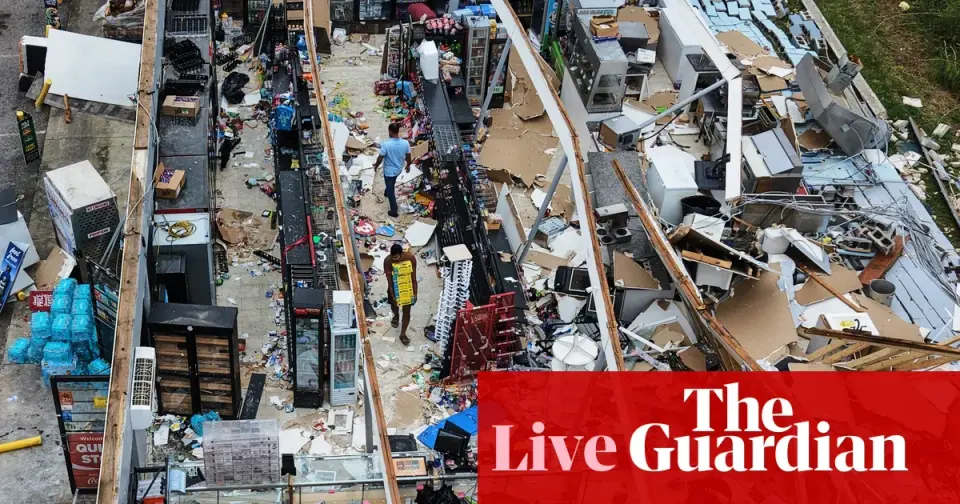
Hurricane Isaias, the first Atlantic hurricane of the 2026 season, has weakened to a post-tropical cyclone after making landfall in Florida. At least four people have died, and approximately 630,000 customers remain without power across the US South. The storm has caused widespread tree damage, flooding, and supply disruptions, prompting federal emergency declarations and an emergency release of crude oil from the strategic petroleum reserve.
Key points
- At least four deaths have been confirmed: two in Florida and two in Alabama, according to state governors Ron DeSantis and Kay Ivey.
- Power outages peaked at over 850,000 but have dropped to approximately 630,000 as of Saturday evening, with the majority of outages in Florida.
- The US Department of Energy authorized an emergency exchange of up to 4 million barrels of crude oil from the strategic petroleum reserve to address supply disruptions.
- President Donald Trump approved emergency declarations for Florida, Alabama, and Georgia, allowing FEMA to provide resources to manage the storm and potential tornadoes.
- Isaias made landfall near Destin, Florida, as a Category 2 hurricane with winds up to 105 mph before weakening to a post-tropical cyclone over central Alabama.
Background
Isaias is the first named hurricane of the 2026 Atlantic season. The storm's impact follows a pattern of severe weather events in the US South, including a nor'easter in Connecticut in September 2026 that caused widespread power outages and road closures. The current event highlights the ongoing vulnerability of the Gulf Coast to tropical systems, with officials emphasizing the risks of downed trees and flooding even as the storm weakens.
How outlets are covering it
The Guardian and ABC News both report on the four confirmed deaths and the widespread power outages, but ABC News provides more specific details on the landfall location (Destin, Florida) and wind speeds (105 mph). The New York Times emphasizes the weakening of the storm and the ongoing power outages, while The Guardian highlights the federal response, including the emergency oil release and FEMA resources. WLOX focuses on the local impact in South Mississippi, noting that while the storm's center passed to the east, wind and storm surge impacts were still felt. All sources agree on the severity of the storm's impact, but they differ in their emphasis on the federal response versus the local damage.
Why it matters
The impact of Hurricane Isaias underscores the significant economic and human costs of severe weather events in the US South. The emergency release of crude oil and federal emergency declarations highlight the scale of the disruption to energy supplies and infrastructure. The deaths and widespread power outages demonstrate the vulnerability of coastal communities to tropical storms, even as the storm weakens. The event also raises questions about the preparedness and response of local and federal authorities in the face of such disasters.
What to watch
The remnants of Isaias are expected to continue moving northeast, bringing additional rain and wind to the mid-Atlantic and Northeast. Officials warn of potential tornadoes in eastern Georgia and the Carolinas, as well as continued power outages and travel disruptions. The recovery effort will focus on restoring power, clearing debris, and assessing damage, with federal resources expected to play a key role in the response.
- Hurricane Isaias live updates: hundreds of thousands without power as storm batters US Gulf Coast The Guardian
- Live Updates: Isaias Moves Inland as Weaker Storm After Lashing Gulf Coast The New York Times
- Hurricane Isaias updates: Isaias downgraded to post-tropical cyclone ABC News - Breaking News, Latest News and Videos
- LIVE UPDATES: Tracking Hurricane Isaias and its impacts to Central Georgia 13WMAZ
- Pleasant weekend expected as Isaias moves away WLOX
Want the full story? Read the original reporting
Read on The Guardian