
Late-September Nor'easter Threatens Northeast with Tropical-Like Storm and Coastal Flooding
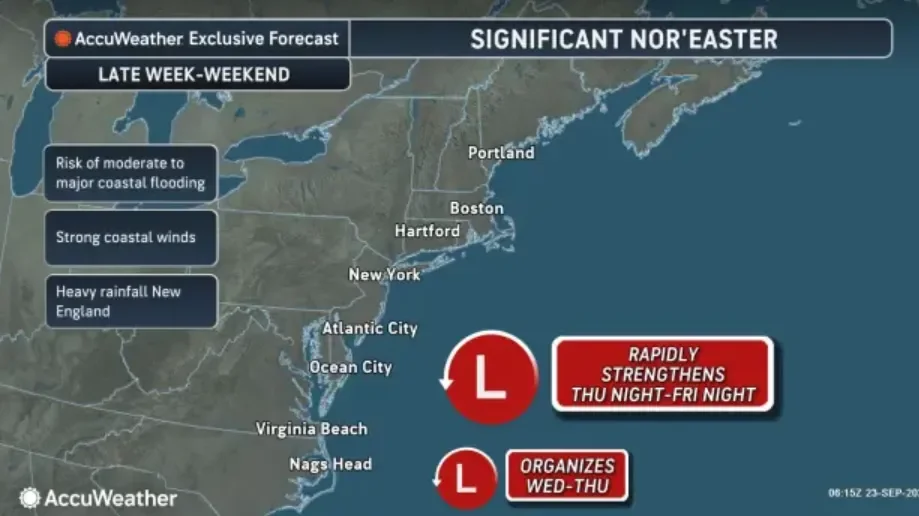
A powerful late-September nor'easter is expected to impact the Northeast coast from September 23 to 27, bringing strong winds, heavy rain, and significant coastal flooding. Major cities including New York, Boston, and Washington, DC, are at risk, with potential impacts extending to the Carolinas. The storm may develop tropical characteristics due to warm Gulf Stream waters, possibly earning a name from the National Hurricane Center. Forecasters warn of wind gusts up to 70 mph, waves up to 20 feet, and rainfall of 4-8 inches in parts of New England. Coastal flooding is expected to be exacerbated by astronomical high tides coinciding with the full moon. Uncertainty remains regarding the storm's exact track and duration, with different models predicting varying intensities and timelines.
Key points
- The nor'easter is forecast to impact the Northeast from September 23-27, with the most significant effects expected September 25-27.
- Major cities at risk include New York, Boston, and Washington, DC, with potential impacts extending to North and South Carolina.
- The storm may develop tropical characteristics due to warm Gulf Stream waters, potentially earning a name from the National Hurricane Center.
- Forecasters warn of wind gusts up to 70 mph, waves up to 20 feet, and rainfall of 4-8 inches in parts of New England.
- Coastal flooding is expected to be exacerbated by astronomical high tides coinciding with the full moon.
- Uncertainty remains regarding the storm's exact track and duration, with different models predicting varying intensities and timelines.
Background
This late-September nor'easter follows a pattern of significant weather events in the Northeast, including a previous nor'easter threat in September 2026 that warned of coastal flooding and gusty winds. The region also faces rising heating costs for the upcoming winter, with heating oil expected to average near $2,300 per household. The storm's timing coincides with the official start of fall, adding to seasonal weather challenges for the Northeast.
How outlets are covering it
AccuWeather emphasizes the potential for the storm to develop tropical characteristics due to warm Gulf Stream waters, warning of 'significant' impacts and urging coastal residents to treat the situation as a major nor'easter or strong tropical storm. The National Weather Service focuses on the multi-day threat of strong winds, pounding surf, and coastal flooding, with specific warnings for Boston regarding 40 mph winds and 20-foot waves. The Weather Channel highlights uncertainty in the storm's track, noting that different models predict varying intensities and timelines, with the European model suggesting a slower, more prolonged storm and the GFS model predicting a faster but potentially stronger storm by the weekend. WFSB notes that Connecticut may not receive the worst of the storm, with the brunt expected in eastern and southeastern Massachusetts and the Cape/Islands, while warning of potential power outages from wind gusts of 30-40 mph and 1-2 inches of rain across the state.
Why it matters
The nor'easter poses significant risks to millions of people in the Northeast, including coastal flooding, power outages, and travel disruptions. The potential for the storm to develop tropical characteristics adds to the severity and unpredictability of the event. Residents and visitors in affected areas are urged to prepare for possible impacts, including securing property, avoiding coastal areas, and having emergency supplies ready. The storm's timing coincides with astronomical high tides, increasing the risk of coastal flooding and erosion. Accurate forecasting and preparedness are crucial to mitigating the storm's impact on communities and infrastructure.
What to watch
Forecasters will continue to monitor the storm's track and intensity over the coming days, with updates expected as the system approaches the Northeast. Residents in affected areas should stay informed through local weather services and be prepared for possible impacts, including strong winds, heavy rain, and coastal flooding. The National Hurricane Center may assign a name to the storm if it develops tropical characteristics. Communities should review emergency plans and ensure they have necessary supplies and resources to cope with potential disruptions.
- Powerful nor'easter to slam Northeast, waves up to 20 feet expected USA Today
- A Powerful Nor’easter Is Taking Shape. How It Could Affect Your Forecast. The New York Times
- Nor'easter's flooding, strong winds a threat from NC to New England The Weather Channel
- Technical Discussion: A Coastal Storm Prompts Weekend First Alert Weather Days WFSB
- New York and Boston face weekend nor’easter with high winds The Guardian
Want the full story? Read the original reporting
Read on USA Today