
Record Rain and El Niño Drive Historic Floods Across Four Corners
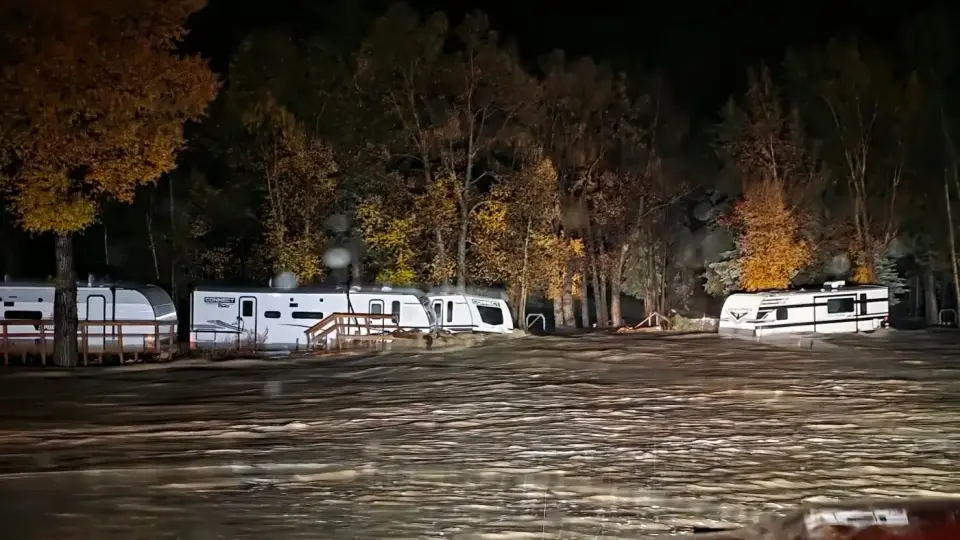
Rare, heavy rainfall from the remnants of Hurricane Trudy has triggered historic flooding across New Mexico, Colorado, Utah, and Arizona. Record precipitation levels have overwhelmed rivers, forcing mandatory evacuations, closing major highways, and damaging infrastructure. While no deaths have been reported in the latest surge, officials warn of rising water levels and contaminated sewage.
Key points
- Remnants of Hurricane Trudy brought record rainfall to the Four Corners region, with some areas receiving up to six inches of rain.
- Colorado Governor Jared Polis declared a disaster emergency for 11 counties and authorized National Guard assistance.
- The Animas River in Durango, Colorado, peaked at 11,200 cubic feet per second, far exceeding historical averages.
- Mandatory evacuations were ordered in Farmington, New Mexico, and parts of Utah, with residents rescued from rooftops.
- The Bloomfield sewage treatment plant was impacted, raising concerns about contaminated floodwaters.
- The Durango & Silverton Narrow Gauge Railroad suspended operations through Monday due to track damage and rockslides.
Background
This event follows a pattern of extreme weather in the Southwest. In September 2026, monsoon floods killed three people on the Navajo Nation. Climate scientists note that a strong El Niño and marine heat waves have increased moisture in the air, making such extreme precipitation events more likely this fall.
How outlets are covering it
NPR emphasizes the 'historic' nature of the flooding and the role of climate change in intensifying the storms. The Durango Herald provides detailed data on river levels and infrastructure damage, highlighting the closure of the Animas River and the railroad suspension. KOAT focuses on the immediate human impact in New Mexico, detailing specific evacuation zones and the risk of sewage contamination. All sources agree on the severity of the event but differ in their focus: NPR on the broader regional and climate context, the Durango Herald on local infrastructure, and KOAT on immediate safety warnings for residents.
Why it matters
The flooding highlights the increasing frequency and intensity of extreme weather events in the Southwest, driven by climate change. The economic and social impact on communities, including property damage, infrastructure loss, and displacement, underscores the need for improved preparedness and response strategies in vulnerable regions.
What to watch
Officials expect rivers to continue rising through the weekend, with crests anticipated late Friday or early Saturday. Thunderstorm watches remain active, and residents are advised to stay alert for further evacuations and safety risks. The Durango & Silverton Narrow Gauge Railroad aims to restore service by Tuesday, pending repairs.
- Severe flooding hits Four Corners region, more expected through the weekend NPR
- Tropical storm wreaks havoc on roads, property across Southwest Colorado Durango Herald
- ‘A terrible crisis’: Flooding prompts rescues, evacuations in San Juan County Santa Fe New Mexican
- Evacuations ordered in parts of Farmington due to severe flooding KOAT
- Severe flooding in US west triggers rooftop rescues and evacuation orders The Guardian
Want the full story? Read the original reporting
Read on NPR