
Widespread freeze hits U.S. as nor'easter leaves heavy snow in Northeast
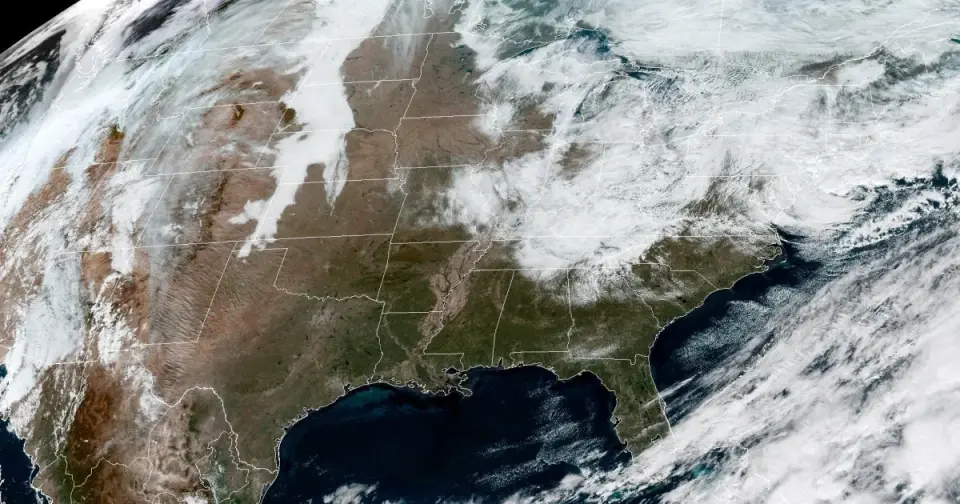
A departing nor'easter has left significant snow in parts of New York, while a subsequent cold front is bringing the season's first widespread freeze to millions across the eastern United States. Frost and freeze alerts are active from Oklahoma to the Carolinas, with wind chills dropping into the 20s and 30s in major cities. Meanwhile, a separate Pacific storm is delivering heavy rain to the West Coast and snow to the Sierra Nevada.
Key points
- Frost and freeze alerts are in effect from eastern Oklahoma to the coastal Carolinas, extending south to Alabama.
- Wind chill temperatures are forecast to reach 24 degrees in Chicago and 31 degrees in Atlanta on Saturday.
- New York State received up to 12.5 inches of snow in Hartwick, with additional snow in the Catskills and Adirondacks.
- A Pacific storm is bringing up to 3 inches of rain to northern California and 12-18 inches of snow to the Sierra Nevada.
- Heavy rain of 1-2 inches, with localized amounts up to 5 inches, is expected in Southeast Texas and western Louisiana.
Background
This cold snap follows a nor'easter that brought the first measurable snow of the season to Northeast mountains and a significant temperature drop to the Deep South. Earlier forecasts indicated temperatures would fall 5 to 15 degrees below average for nearly 200 million people east of the Mississippi, with the freeze expected to be short-lived.
How outlets are covering it
NBC News emphasizes the national scale of the freeze, highlighting specific wind chill temperatures in major cities like Chicago, New York, and Atlanta. WIS News 10 focuses on the agricultural impact in South Carolina, noting that the freeze will officially end the growing season. WYFF highlights the extreme wind chills in the teens and 20s for South Carolina, while WRIC ABC 8News notes the impact on the Richmond Marathon, advising participants to wear extra layers. All sources agree on the severity of the cold, but differ in their regional focus and specific temperature predictions.
Why it matters
The widespread freeze poses risks to agriculture, infrastructure, and public safety. The end of the growing season in the South could impact crops, while the heavy snow and rain in the Northeast and West Coast may cause travel disruptions and flooding. The cold temperatures also increase the risk of hypothermia and other cold-related health issues.
What to watch
Temperatures are expected to gradually warm up next week, according to WYFF. The active storm pattern will continue through the weekend, with the next storm system set to come into the Pacific Northwest Saturday night through Sunday. Heavy rain in Southeast Texas and western Louisiana could produce urban flooding on Sunday.
- Weekend storm brings season’s first widespread freeze to millions across U.S. NBC News
- FIRST ALERT WEATHER DAYS Saturday, Sunday for frost/freeze potential WIS News 10
- Snow in the mountains expected this weekend WYFF
- StormTracker8: First Freeze of the Season Expected this Weekend WRIC ABC 8News
- Freeze watch issued for Lowcountry for Sunday The State
Want the full story? Read the original reporting
Read on NBC News