
Trump demands Xi halt Iran aid amid stalled nuclear talks
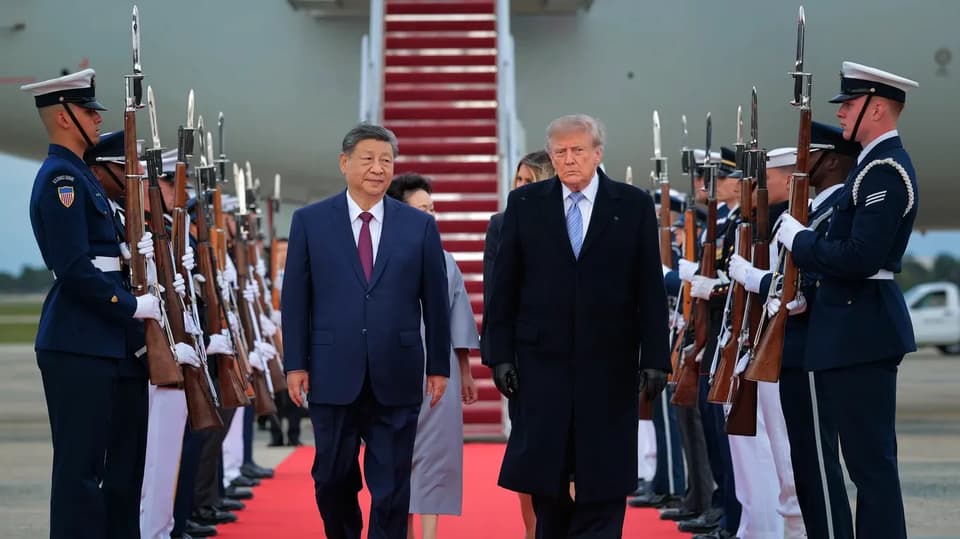
During a state visit, President Trump explicitly asked Chinese President Xi Jinping to stop supporting Iran, citing intelligence that Beijing provides satellite imagery and military parts. While the US claims China has partially complied, Xi urged Washington to de-escalate and return to a June nuclear memorandum. Simultaneously, indirect US-Iranian negotiations in New York stalled as Tehran demanded the lifting of naval blockades and sanctions in exchange for reopening the Strait of Hormuz.
Key points
- US Ambassador David Perdue stated Trump told Xi that any assistance to Iran, including intelligence or equipment, is unacceptable.
- US officials report Iran used Chinese commercial satellite imagery to target US bases and Navy ships, prompting changes in US military procedures.
- Xi urged Trump to de-escalate the conflict and return to the June memorandum of understanding for a nuclear deal.
- Indirect talks between US envoys and Iranian Foreign Minister Abbas Araghchi in New York failed to reach an agreement.
- Iran proposed reopening the Strait of Hormuz and resuming nuclear talks within a week if the US lifts its naval blockade and sanctions.
Background
This diplomatic friction follows months of US pressure on Iran and concerns over Chinese support. In August, analysts noted that Beijing was unlikely to back a hard push to destroy Iran’s economy, signaling limited cooperation. In September, Senator Elissa Slotkin urged Trump to press Xi regarding Chinese satellite imagery used in a July strike on a Jordanian base that killed three US service members. The current standoff occurs as the US war drags into its seventh month, with Iran adapting tactics to threaten US assets despite ongoing diplomatic efforts.
How outlets are covering it
Axios emphasizes the direct confrontation between Trump and Xi, highlighting Perdue’s claim that China has pulled back some support after being warned. CNN provides a detailed analysis of how Chinese geospatial data has significantly improved Iran’s targeting capabilities, noting that while the scope of assistance is difficult to quantify, it has been decisive in recent strikes. The Guardian offers a broader view of the summit, characterizing the US-China meeting as a failure to achieve substantive progress on trade or security, with Xi securing a mere two-month extension of a trade truce. While Axios and CNN focus on the specific Iran issue, The Guardian contextualizes it within a broader diplomatic stalemate where symbolic gestures outweighed concrete policy shifts.
Why it matters
The outcome of these negotiations determines the effectiveness of the US economic pressure campaign against Iran. If China continues to provide intelligence and military support, US efforts to isolate Tehran will be partially ineffective. Furthermore, the failure to reach a deal on the Strait of Hormuz threatens global oil markets, as current transit volumes remain below pre-war levels. The diplomatic deadlock also reflects deeper US-China tensions, where symbolic state visit rituals have not resolved fundamental disagreements on trade, Taiwan, or regional security.
What to watch
Qatari mediators are waiting for Trump’s response to Iran’s proposal to reopen the Strait of Hormuz. The US-China trade truce expires in November, with China reportedly seeking an extension until 2029. US officials continue to monitor Chinese compliance with demands to halt support for Iran, while indirect negotiations between Washington and Tehran may resume if the US lifts its naval blockade.
- Trump asked Xi to stop supporting Iran axios.com
- ‘They Assured Us’: US Ambassador to China Says Xi’s Word Is Good on Iran Aid Yahoo
- Intelligence from Chinese groups aiding in Iran’s increasingly effective targeting of US sites, sources say CNN
- Trump told Xi Jinping that China helping Iran is ‘unacceptable’, official says – live The Guardian
- Trump told Xi that China helping Iran is unacceptable, US ambassador says The Straits Times
Want the full story? Read the original reporting
Read on axios.com