
Georgia’s Pecan Harvest Continues Amid Scab Pressure and Hurricane Recovery
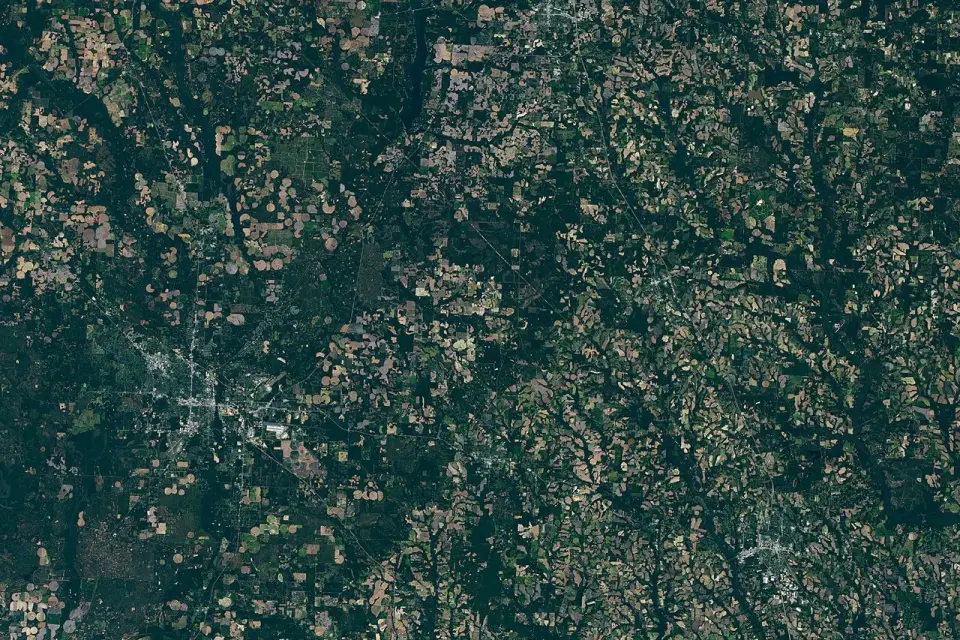
NASA’s Earth Observatory highlights the ongoing 2026 pecan harvest in southwest Georgia, where orchards along the Flint River remain a key production hub despite challenges from fungal scab and recovery from Hurricane Helene. While Georgia’s production has exceeded 100 million pounds in each of the past three years, recent wet conditions have intensified scab issues, and some growers are still rebuilding from storm damage. The state remains a leader in U.S. pecan production, though competition from Texas and New Mexico has grown in recent decades.
Key points
- Landsat 8 captured an image of the Albany area in Dougherty County on October 23, 2026, during the typical October-to-December pecan harvest season.
- Georgia’s pecan production has topped 100 million pounds in each of the past three years (2023-2025), according to USDA data.
- A wet summer in 2026 has helped scab, a fungal disease causing brown spots on twigs, leaves, and nut shucks, take hold in parts of the state.
- Some growers are still recovering from Hurricane Helene, which swept inland in September 2024, but reported the return of a solid crop in 2026.
- Pecan orchards in southwest Georgia benefit from well-drained sandy soils above the Floridan aquifer system, which supports irrigation needs.
Background
Georgia has historically led the nation in pecan production, with the state’s output exceeding 17 million pounds by the end of the 1950s. The region’s growth began in the early 1900s when thousands of acres were planted in Dougherty and Mitchell counties. In recent decades, other states like New Mexico and Texas have increased their production, but Georgia remains a major contributor. Hurricane Michael in 2018 and Hurricane Helene in 2024 have both damaged orchards, but the state has maintained high production levels despite these setbacks.
Why it matters
Georgia’s pecan belt is a critical part of the U.S. agricultural landscape, contributing significantly to national supply and supporting local economies. The ongoing challenges from scab and hurricane recovery highlight the vulnerability of crop production to climate and weather events, which could impact prices and availability for consumers. Additionally, the use of satellite imagery like Landsat 8 helps monitor crop health and inform agricultural planning, supporting both growers and policymakers.
What to watch
The pecan harvest season is expected to continue through December 2026. Growers will likely continue to manage scab pressure and assess the long-term impact of Hurricane Helene on orchard health. USDA and agricultural agencies will monitor production levels and crop conditions to provide updated forecasts for the 2026-2027 season.
Want the full story? Read the original reporting
Read on NASA Science (.gov)