
Farmelo’s Biography Reveals the Complex, Flawed Man Behind the Icon
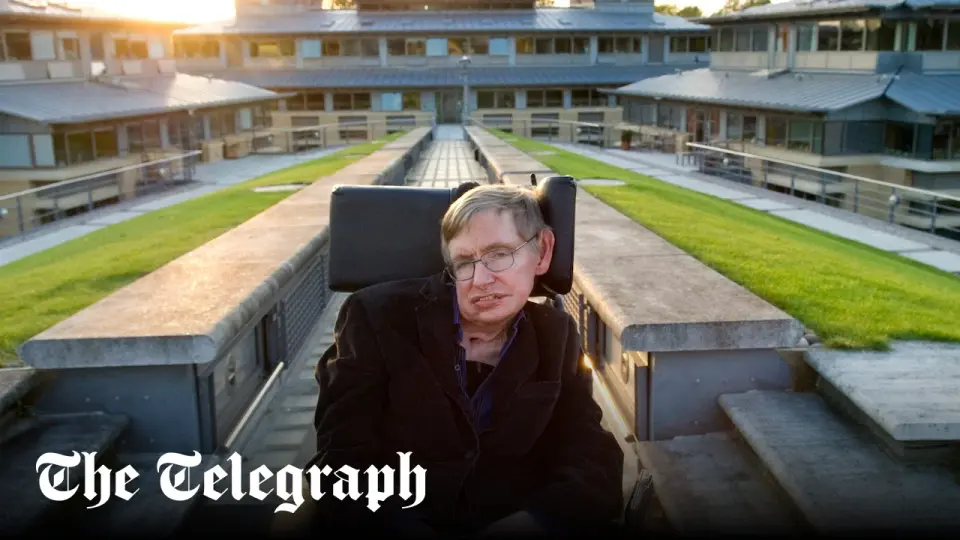
Graham Farmelo’s new authorized biography, 'Hawking: His Life and Work,' offers a comprehensive look at the physicist’s scientific achievements and personal flaws. While the book details his groundbreaking work on black holes and his battle with motor neurone disease, it also highlights his difficult personality, lack of credit for collaborators, and complex domestic life. Critics praise the scholarship but debate whether the book adds new insights to existing accounts.
Key points
- Graham Farmelo’s 'Hawking: His Life and Work' is the first authorized biography, using unpublished family archives.
- The book details Hawking’s 50-year career, including his work on black hole thermodynamics and 'A Brief History of Time.'
- It addresses controversial aspects of his life, including his refusal to credit collaborators like Roger Penrose and Andrew Farley.
- The biography covers his turbulent marriages to Jane Wilde and Elaine Mason, and his later relationship with carer Diana King.
- Critics note that while the science is well-explained, the personal narrative may feel familiar to those who have read Jane Hawking’s memoirs.
Background
Stephen Hawking, the British theoretical physicist who died in 2018, was already the subject of multiple books, including Jane Hawking’s 'Travelling to Infinity' and Charles Seife’s 'Hawking Hawking' (2021). Our previous coverage noted his status as a global icon who popularized cosmology and black hole physics. Farmelo’s new work aims to provide a definitive, authorized account that balances his scientific legacy with a more critical view of his character.
How outlets are covering it
The Telegraph’s Simon Ings praises the book for its 'economy and precision' in explaining Hawking’s science, while acknowledging his 'ghastly' personal behavior. Ings notes that Farmelo avoids sensationalizing the Epstein connection, stating it is unclear if Hawking visited Little St. James. New Scientist’s Liam White argues that the early chapters on Hawking’s childhood are 'well-trodden ground' and that the book fails to fully analyze the psychology behind his credit-stealing. The Week’s Irenie Forshaw highlights the 'uncomfortable truth' that Hawking’s sexism and controlling behavior were often ignored due to his disability, calling the book 'absorbing and informative' but noting that some aspects of his character were already known to the public.
Why it matters
This biography serves as a definitive, authorized record of Hawking’s life, moving beyond the hagiographic tone of previous works. It forces a re-evaluation of his legacy by juxtaposing his scientific genius with his ethical failings in academia and personal life. For readers, it provides a nuanced understanding of how disability and fame can obscure critical flaws, influencing how future generations view scientific icons.
What to watch
The book is available in the UK from September 24, 2026, and in the US from November 24, 2026. As Hawking’s death approaches its tenth anniversary, expect further critical reassessments of his legacy, particularly regarding his later scientific contributions and his impact on junior researchers.
- Should we still admire Stephen Hawking? The Telegraph
- Hawking by Graham Farmelo review: A new biography of Stephen Hawking gets to grips with a complicated man New Scientist
- Hawking by Graham Farmelo: the ‘uncomfortable but unavoidable truth’ about the physicist The Week
- Beyond the genius: New biography reveals the darker side of Hawking Aaj English TV
Want the full story? Read the original reporting
Read on The Telegraph