Tag

Stephen Hawking

All articles tagged with #stephen hawking

Bremont Unveils Hawking-Backed Supernova Limited Edition
business2 hours ago

Bremont Unveils Hawking-Backed Supernova Limited Edition

Bremont debuts the Supernova Hawking Limited Edition to celebrate Stephen Hawking, limited to 600 pieces; features a 41mm ultra-black DLC-coated 904L steel case, black ceramic bezel, meteorite sub-dials, and Hawking’s name with his black hole entropy equation on the dial. Powered by the BC77 (Sellita SW500-based) movement at 28,800 bph with a 62-hour power reserve and 100m water resistance. Availability begins July 26, 2026; price US$8,850 on rubber strap and US$9,150 on bracelet; part of Bremont’s Hawking family collaboration.

Hawking's youth labeled lazy by his father in new biography
world-news1 month ago

Hawking's youth labeled lazy by his father in new biography

A forthcoming biography cites Stephen Hawking’s father, in 1961 diaries, describing him as a lazy, unmotivated boy who hung around the house and didn’t study much—an image that contrasts with the later genius who defied ALS and authored "A Brief History of Time." The diary excerpts, referenced by The Guardian, appear in the book Stephen Hawking: His Life and Work and trace Hawking’s rise to world‑renowned physics.

Hawking’s Tiny 1974 Paper: Black Holes That Could Explode
science4 months ago

Hawking’s Tiny 1974 Paper: Black Holes That Could Explode

In 1974 Stephen Hawking published a short Nature paper proposing that tiny primordial black holes, formed in the early universe, could evaporate and explode via Hawking radiation, flipping the view that black holes only grow. The idea, which connects quantum mechanics to gravity, later sparked the black hole information paradox as it suggested information might be lost; Hawking and collaborators’ later work proposed mechanisms for information escape, including wormholes, though direct evidence remains elusive. Ongoing research, including gravitational waves and James Webb observations, continues to investigate primordial black holes and their potential cosmological signatures.

Hawking's Lawful Cosmos: Science Governs the Universe, Not Divine Interventions
science5 months ago

Hawking's Lawful Cosmos: Science Governs the Universe, Not Divine Interventions

The article uses Stephen Hawking’s famous line that the universe is governed by the laws of science—perhaps decreed by God but not intervened in—to explore the ongoing science-vs-religion debate, while recounting Hawking’s life from his 1942 birth and ALS diagnosis to his groundbreaking work (including Hawking radiation), his bestselling writings, his marriages, and his public portrayals in film, ending with his 2018 death and lasting legacy.

Hawking: Humans Are Special, Destined to Reach the Stars
science5 months ago

Hawking: Humans Are Special, Destined to Reach the Stars

Stephen Hawking’s famous line frames Earth as small and ordinary, yet humanity’s unique ability to understand the universe makes us special and capable of venturing beyond our planet. The article revisits his 1988 Der Spiegel quote, emphasizes space exploration as a potential path for human survival amid future crises (including climate threats), and underscores Hawking’s role as a public intellectual who brought complex cosmology to a broad audience.

Unraveling the Origins of the Universe
science11 months ago

Unraveling the Origins of the Universe

Most cosmologists agree the universe had a beginning, but the details remain mysterious. Stephen Hawking and Thomas Hertog proposed that physical laws evolved with the universe, rejecting multiverse theories and suggesting a natural selection-like process for the universe's properties, emphasizing the role of observers and the limits of scientific knowledge about the universe's origin.

Stephen Hawking's 2025 Predictions: Impressive 30-Year Outlook
science-and-technology1 year ago

Stephen Hawking's 2025 Predictions: Impressive 30-Year Outlook

Stephen Hawking's 1995 predictions for 2025 about technology, space exploration, and AI largely hit the mark, with accurate forecasts on global internet, AI integration, and private space ventures, though some, like asteroid mining and microchip implants, remain unfulfilled or in development. His foresight highlights the unpredictable nature of technological progress and his enduring legacy as a visionary thinker.

New Paper Proposes Solution to Hawking's Black Hole Paradox
science1 year ago

New Paper Proposes Solution to Hawking's Black Hole Paradox

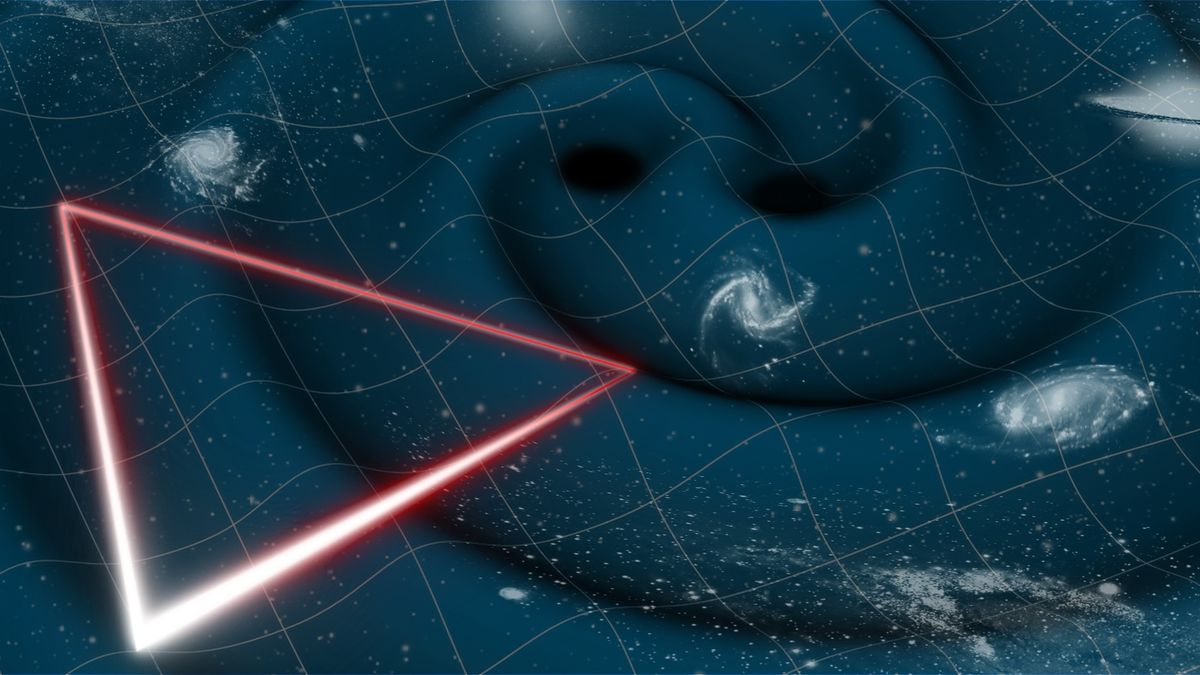
A new study suggests a potential solution to the black hole information paradox, a problem that has puzzled scientists since Stephen Hawking's discovery of Hawking radiation. The research proposes that black holes may leak information through nonviolent nonlocality, where quantum connections between the inside and outside of a black hole create subtle signatures in gravitational waves. While current detectors lack the sensitivity to confirm this hypothesis, future instruments might be able to test it, potentially resolving the paradox.

James Webb Telescope Unveils Physics-Defying Black Holes
science1 year ago

James Webb Telescope Unveils Physics-Defying Black Holes

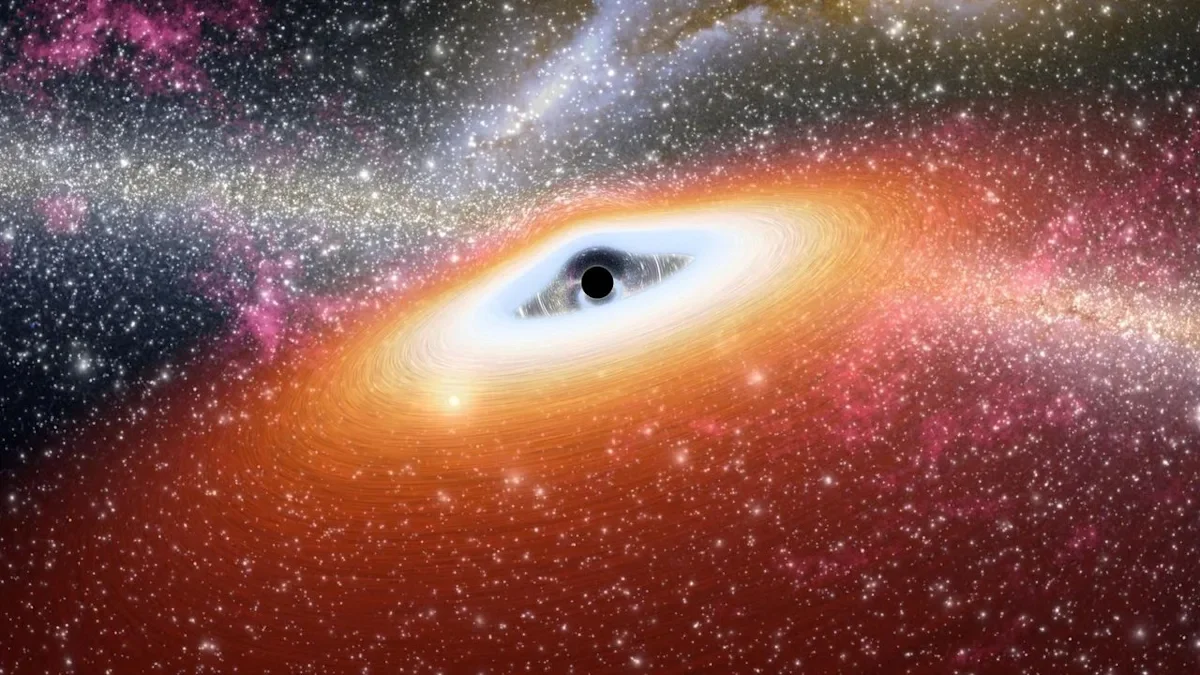
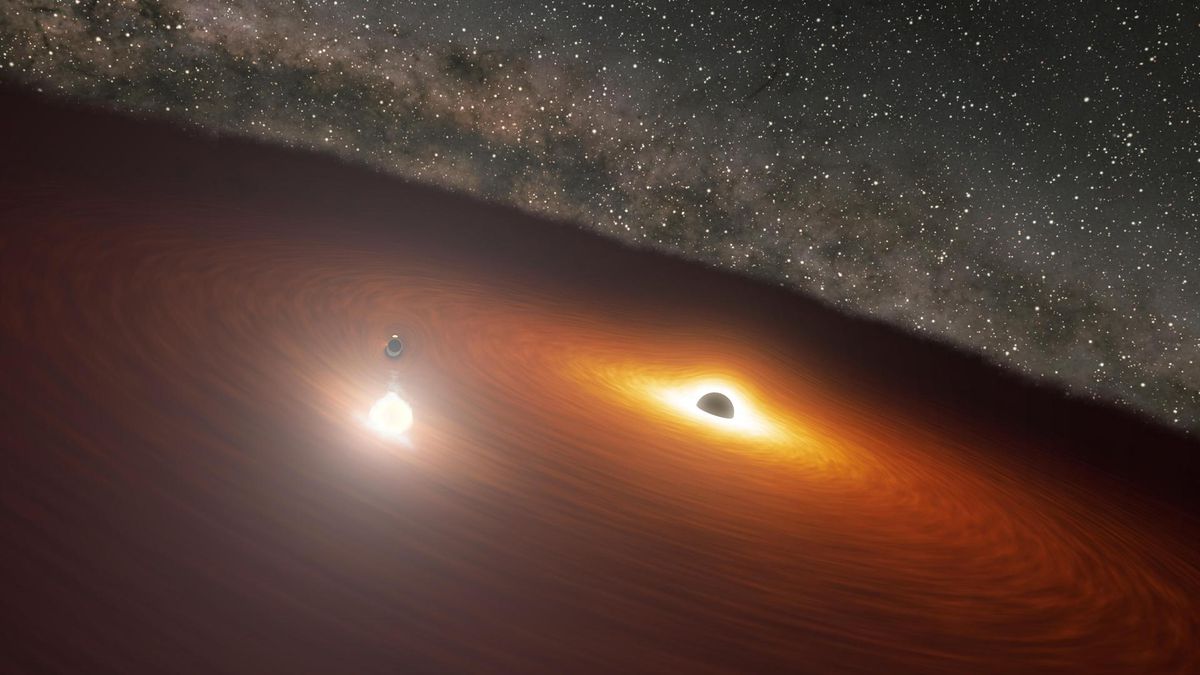
Astronomers have been puzzled by the existence of supermassive black holes in the early universe, as observed by the James Webb Space Telescope. A new hypothesis suggests these black holes may have originated as primordial 'seeds' formed directly from matter and energy fluctuations shortly after the Big Bang, rather than from the collapse of stars. This idea, initially proposed by Stephen Hawking, posits that even a small fraction of these primordial black holes could have grown rapidly in dense matter regions, reaching supermassive sizes alongside the first stars and galaxies. Researchers aim to test this hypothesis through simulations to better understand early cosmic development.

NASA Supports Hawking's Imminent End of World Prediction
science-and-environment1 year ago

NASA Supports Hawking's Imminent End of World Prediction

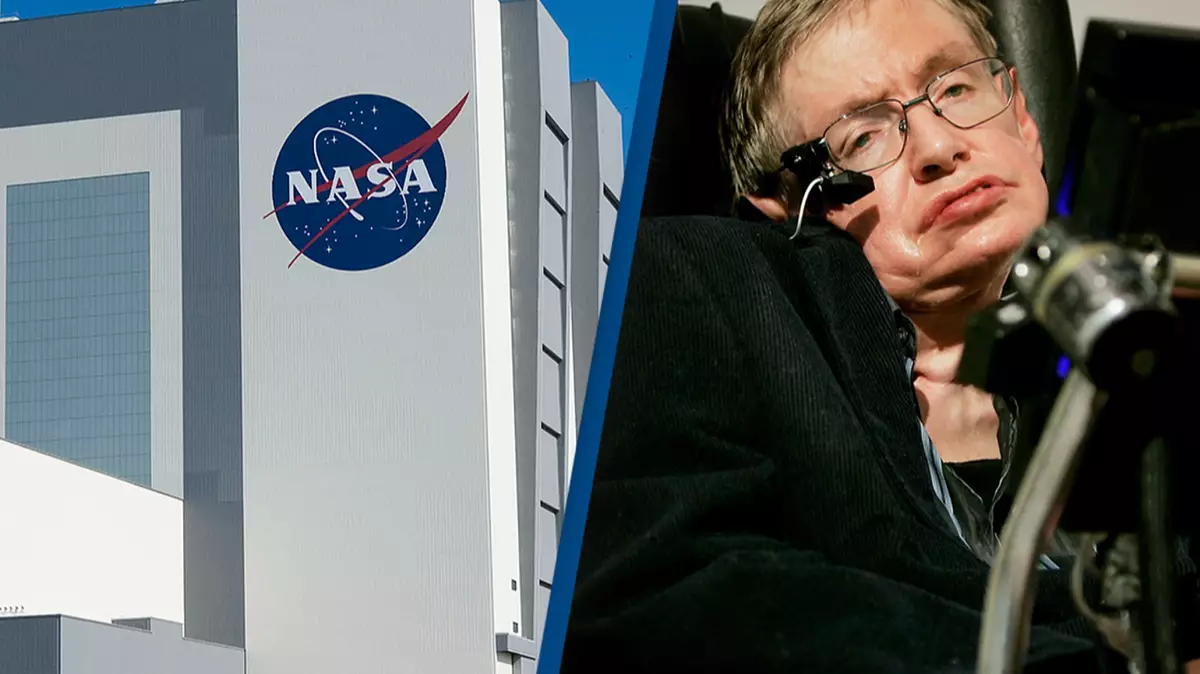
NASA has echoed Stephen Hawking's 2016 prediction about potential global threats leading to Earth's demise, including nuclear war, global warming, and genetically-engineered viruses. While NASA cannot confirm Hawking's suggested timeline of 2600, they share concerns about human-caused global warming, which is already having irreversible effects. Both Hawking and NASA emphasize the importance of recognizing and controlling these dangers, with NASA highlighting the potential to mitigate severe climate change impacts through reduced emissions.

NASA Validates Hawking's Imminent End of World Prediction
science1 year ago

NASA Validates Hawking's Imminent End of World Prediction

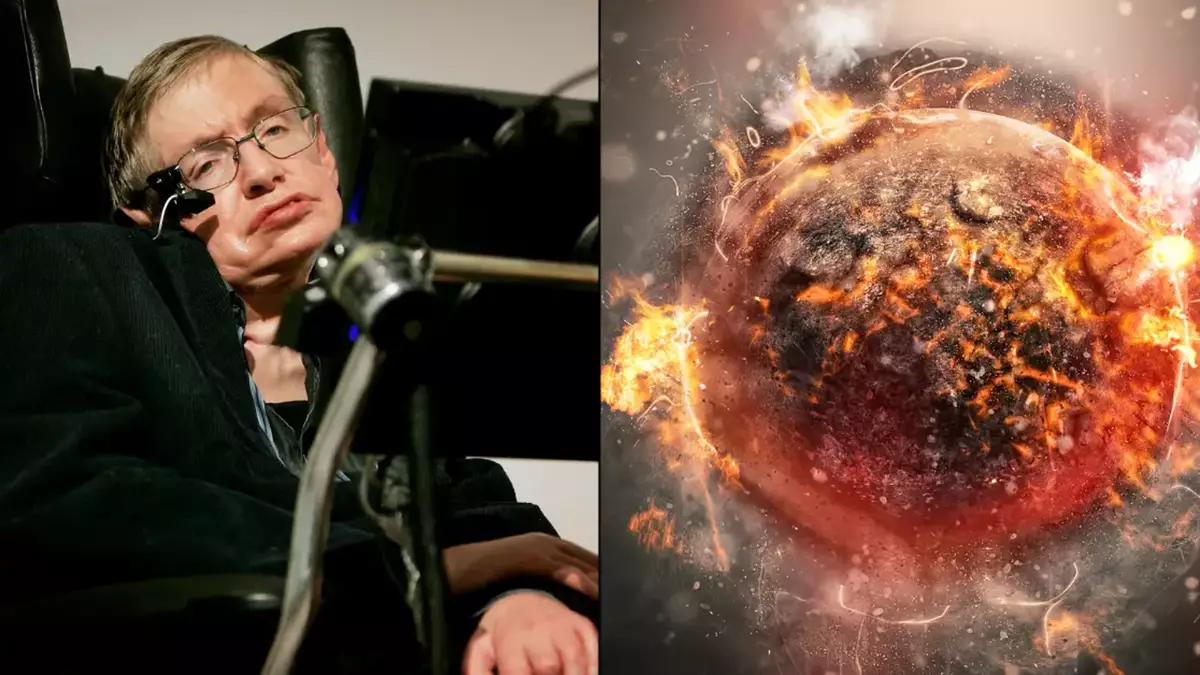
Stephen Hawking predicted that if current trends in population growth and energy consumption continue, Earth could become uninhabitable by 2600, turning into a 'giant ball of fire.' He highlighted global warming, climate change, nuclear war, artificial intelligence, and pandemics as existential threats. Although NASA has not confirmed Hawking's specific claims, they acknowledge the importance of studying global threats. Hawking emphasized the need for change to prevent these dire outcomes.

New Evidence Suggests Hawking Radiation May Soon Be Detectable
science2 years ago

New Evidence Suggests Hawking Radiation May Soon Be Detectable

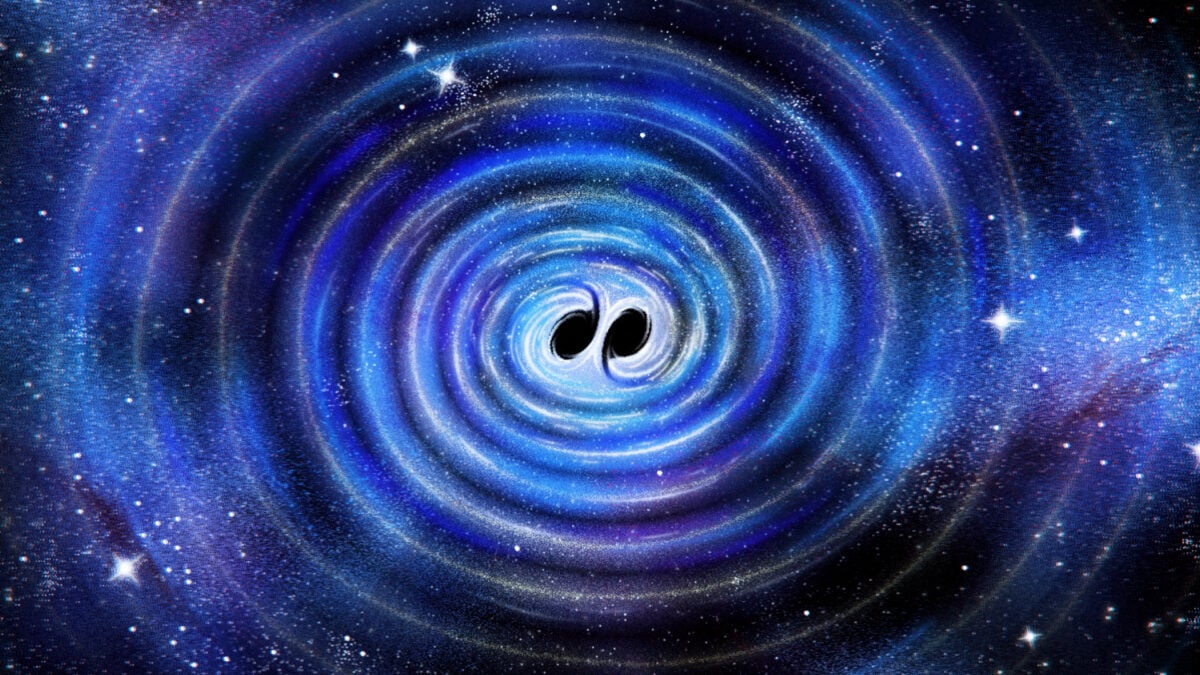
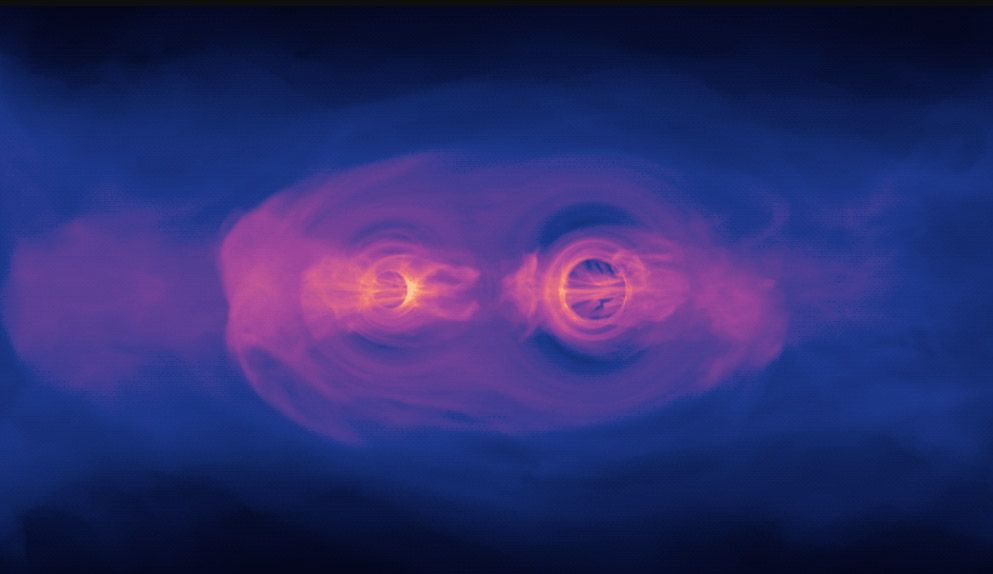
Scientists may be close to proving Stephen Hawking's theory that black holes emit thermal radiation, known as Hawking radiation. Researchers propose that tiny black holes, formed during the collision of larger black holes, could evaporate and explode in a detectable manner, providing evidence for Hawking's hypothesis. These "morsel" black holes, or "Bocconcini di Buchi Neri," could emit high-energy gamma-ray bursts, offering a unique signature for their existence. The team plans further research to confirm these findings and validate Hawking radiation.

science2 years ago

"Black Hole 'Morsels' May Validate Hawking's Theory"

Scientists may be close to proving Stephen Hawking's theory that black holes emit thermal radiation, known as Hawking radiation. Researchers propose that tiny black holes, formed during the merger of larger black holes, could evaporate and explode in a detectable manner, providing evidence for Hawking's hypothesis. These "morsel" black holes, or "Bocconcini di Buchi Neri," could emit high-energy gamma-ray bursts, offering a unique signature to confirm their existence and validate Hawking radiation.