
Canada's Final Epishelf Lake Vanishes After 2020 Ice Collapse
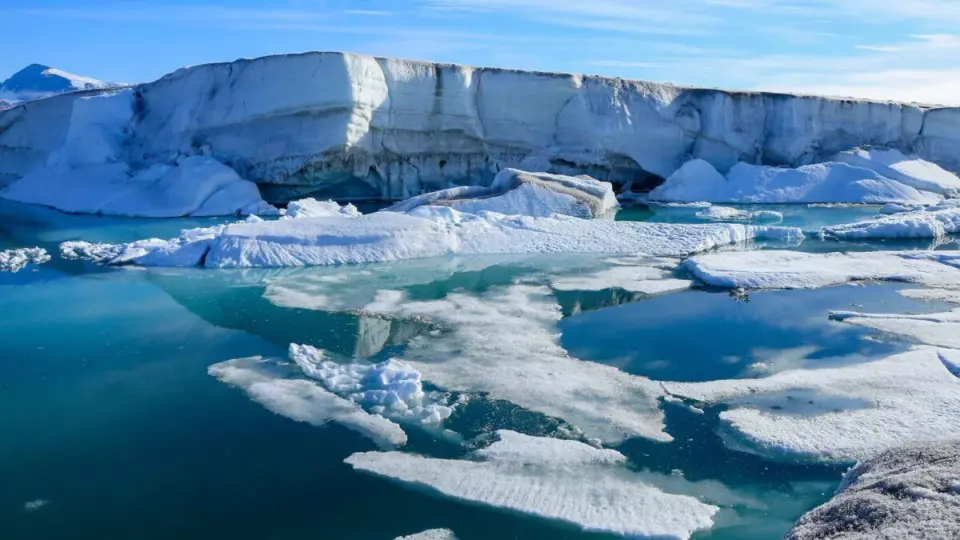
A new study confirms that Canada’s last epishelf lake, located in Milne Fiord on Ellesmere Island, has permanently disappeared. The freshwater lake, which existed for thousands of years above the Arctic Ocean, drained within months of the Milne Ice Sheet’s collapse in July 2020. Researchers from the University of Alberta, University of British Columbia, Université Laval, and Carleton University used a decade of data to document the loss. The ice sheet, which acted as a dam, lost over 40% of its surface area in two days. By autumn 2020, the unique freshwater layer was gone, replaced by brackish water. Scientists state that the ecosystem, which supported distinct marine and freshwater life, is not expected to return under current climate trajectories. The loss marks the end of a 4,000-year era for this specific habitat in Canada.
Key points
- The Milne Fiord epishelf lake, Canada’s last of its kind, vanished completely by autumn 2020 following the collapse of the Milne Ice Sheet.
- The ice sheet lost more than 40% of its surface area in just two days in July 2020, removing the natural dam that trapped freshwater above seawater.
- A study published in Scientific Reports used satellite imagery, field observations, and ocean measurements to reconstruct the lake’s drainage over a decade.
- By July 2022, brackish water had fully replaced the distinct freshwater layer, and annual monitoring shows no signs of recovery.
- The lake supported a unique ecosystem where freshwater organisms lived above marine species, separated by a thin boundary; this structure is now gone.
- Researchers note that the ice shelf cannot recover under current climate conditions, making the loss permanent on any human timescale.
Background
This development follows earlier coverage in September 2026 confirming that the Milne Fiord lake’s freshwater layer was replaced by brackish water by 2022. The lake was part of the Tuvaijuittuq Marine Protected Area, known in Inuktitut as 'the place where ice never melts,' highlighting the rapid change in the Canadian Arctic. While other epishelf lakes have disappeared in the region previously, the Milne Fiord was the last fully intact system in Canada, with a deep lake and an ice shelf spanning the entire fjord width.
How outlets are covering it
Gizmodo emphasizes the dramatic speed of the ice sheet’s collapse, noting the loss of 40% of its surface area in two days, and quotes Andrew Hamilton on the 'end of an era' for such systems. BBC Wildlife Magazine highlights the logistical challenges of the research, detailing how COVID-19 lockdowns delayed the retrieval of sensor data until 2022, and stresses the vulnerability of the 'Last Ice Area.' Your South Shore focuses on the ecological significance, noting that the lake supported life in underwater channels beneath the ice, including species like brittle stars and sea anemones. Mirage News provides context on the broader warming trend, quoting Hamilton on the inevitability of some climate changes and the need for immediate action to limit their extent. All sources agree on the permanence of the loss but differ in emphasis: Gizmodo on the physical collapse, BBC on the research process, Your South Shore on the biodiversity, and Mirage on the broader climate implications.
Why it matters
The disappearance of the Milne Fiord epishelf lake serves as a critical indicator of the vulnerability of Arctic sea ice to climate warming. It represents the loss of a unique, millennia-old ecosystem that cannot be recreated, highlighting the irreversible nature of some climate impacts. The event underscores the rapid changes occurring in the Canadian Arctic, even in areas previously considered stable, and signals potential risks for remaining epishelf lakes in Greenland and Antarctica. It also illustrates the challenges of monitoring remote Arctic environments and the long-term consequences of warming temperatures on marine and freshwater habitats.
What to watch
Researchers will continue to monitor the Milne Fiord area to track the ongoing transformation from a freshwater to a marine environment, although no recovery is expected. The study’s findings may influence future climate policies and conservation efforts in the Arctic, emphasizing the need to limit warming to prevent similar losses elsewhere. Scientists may also focus on understanding the broader impacts of ice shelf collapse on Arctic ecosystems and wildlife, such as polar bears and ringed seals, which depend on stable sea ice. The data collected could contribute to global models predicting the fate of other epishelf lakes and ice shelves in the Northern Hemisphere.
- This Lake Was the Last of Its Kind in Canada. And It Just Vanished Gizmodo
- This lake in Canada just vanished. And it's not coming back. BBC Wildlife Magazine
- The Very Last Epishelf Lake In The Canadian Arctic Has Vanished – And It’s Gone For Good IFLScience
- Canada’s last Epishelf Lake has disappeared Your South Shore
- Canada's Last Epishelf Lake Drains, Arctic Ecosystem Lost Mirage News
Want the full story? Read the original reporting
Read on Gizmodo