Tag

Scientific Reports

All articles tagged with #scientific reports

New DNA Analysis of Shroud of Turin Reveals Centuries of Contamination, Not Origin
science1 day ago

New DNA Analysis of Shroud of Turin Reveals Centuries of Contamination, Not Origin

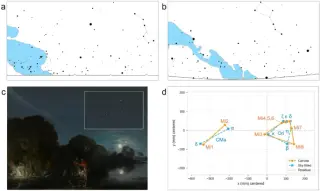
A comprehensive DNA study of the Shroud of Turin, published in Scientific Reports, identifies genetic traces from humans, animals, and plants, including American crops like maize and peanuts. The findings suggest the cloth accumulated biological material from the Late Middle Ages onward, reflecting centuries of handling and repair rather than its original age. While the analysis cannot confirm the cloth’s authenticity or link it to Jesus, it provides detailed insights into its environmental history and the impact of human interaction over time.

Study Reveals 4,139 Microscopic Animals Hidden Inside Pacific Mining Targets
environment6 days ago

Study Reveals 4,139 Microscopic Animals Hidden Inside Pacific Mining Targets

New research published in Scientific Reports reveals that polymetallic nodules in the Pacific Ocean harbor distinct ecosystems of microscopic animals within their internal cracks. Researchers found 4,139 individuals across 244 nodules in the Clarion-Clipperton Zone, with some rocks hosting up to 245 creatures. These nodules, which take millions of years to form, provide unique hard-surface habitats absent in surrounding soft sediment. The discovery highlights potential irreversible biodiversity loss from commercial deep-sea mining, which targets these rocks for critical metals like manganese and cobalt. While the industry is currently in trial phases, scientists warn that removing these non-renewable formations could eliminate specialized species, including single-celled organisms adapted solely to nodule crevices.

Simulations Suggest Comets Failed to Deliver Life's Building Blocks to Earth
science21 days ago

Simulations Suggest Comets Failed to Deliver Life's Building Blocks to Earth

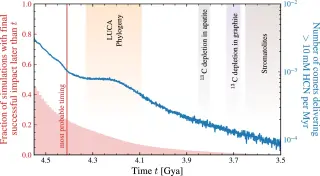
A new study by Richard Anslow and colleagues at the University of Cambridge challenges the long-held theory that comets seeded life on Earth. Using 100,000 computer simulations, the research indicates that the high velocity and steep impact angles of comets would have vaporized fragile organic molecules, specifically hydrogen cyanide (HCN), upon collision with Earth's surface. While comets contain these essential prebiotic compounds, the simulations suggest that successful delivery to Earth was an exceedingly rare 'fluke' rather than a steady source. The findings shift scientific focus toward alternative origins, such as asteroid impacts or endogenous synthesis, and suggest that Mars may have been a more viable target for cometary delivery due to its thinner atmosphere and lower impact velocities.

Cambridge simulations suggest comets likely failed to seed life on Earth
science22 days ago

Cambridge simulations suggest comets likely failed to seed life on Earth

A new study challenges the century-old theory that comets delivered the essential building blocks for life on Earth. Researchers at the University of Cambridge used 100,000 computer simulations to model early Earth's bombardment history, finding that comets struck the planet at velocities and angles that would have vaporized fragile organic compounds, specifically hydrogen cyanide (HCN), upon impact. While comets contain these essential building blocks, the study suggests that successful delivery to Earth was an exceedingly rare event. This shifts the focus of life's origins toward alternative sources, such as asteroids or endogenous synthesis, and suggests that Mars may have been a more viable target for cometary delivery due to its thinner atmosphere and lower impact velocities.

New 14-Year Study Links Moderate Daily Walking to Sharper Attention and Decision-Making
health1 month ago

New 14-Year Study Links Moderate Daily Walking to Sharper Attention and Decision-Making

A 14-year study by Baylor College of Medicine finds that walking 2,300 to 7,000 steps daily is associated with better cognitive performance, challenging the 10,000-step myth. Using Fitbit data from 3,093 participants, researchers found that moderate activity improves attention and decision-making, though causation is not proven.

14-Year Study Links Daily Step Counts to Better Attention and Decision-Making
health1 month ago

14-Year Study Links Daily Step Counts to Better Attention and Decision-Making

A 14-year analysis of 3,093 US adults shows that higher daily step counts are associated with better performance on tests of sustained attention, cognitive control, and reward decision-making. While the study found no direct link between activity and facial emotion recognition, it suggests that regular movement may support brain function, though it does not prove causation or establish a specific daily target.

German Study Finds Belly Button Odor May Distinguish Parkinson’s and Cognitive Decline
health1 month ago

German Study Finds Belly Button Odor May Distinguish Parkinson’s and Cognitive Decline

A small German study suggests that chemical signatures in belly button, nasal, and ear swabs could help distinguish Parkinson’s disease, mild cognitive impairment, and COVID-19 from healthy controls. Using laser spectroscopy, researchers found distinct volatile organic compound patterns in these hard-to-clean areas, offering a potential non-invasive screening tool, though larger trials are needed to confirm reliability.

Milne Fiord's freshwater layer vanishes, ending a 4,000-year Arctic era
science-and-environment2 months ago

Milne Fiord's freshwater layer vanishes, ending a 4,000-year Arctic era

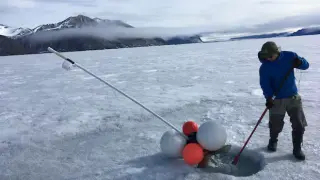
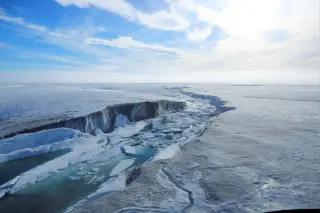
Canada's final epishelf lake, a rare freshwater layer floating on saltwater in Milne Fiord, has permanently disappeared. The loss was triggered by the 2020 collapse of the Milne Ice Shelf, which acted as a dam for the lake. A new study confirms the freshwater drained within months, destroying a unique dual-ecosystem that had existed for 4,000 years. Scientists warn that such systems are unlikely to return under current climate conditions.

Canada's Final Epishelf Lake Vanishes After 2020 Ice Collapse
environment2 months ago

Canada's Final Epishelf Lake Vanishes After 2020 Ice Collapse

A new study confirms that Canada’s last epishelf lake, located in Milne Fiord on Ellesmere Island, has permanently disappeared. The freshwater lake, which existed for thousands of years above the Arctic Ocean, drained within months of the Milne Ice Sheet’s collapse in July 2020. Researchers from the University of Alberta, University of British Columbia, Université Laval, and Carleton University used a decade of data to document the loss. The ice sheet, which acted as a dam, lost over 40% of its surface area in two days. By autumn 2020, the unique freshwater layer was gone, replaced by brackish water. Scientists state that the ecosystem, which supported distinct marine and freshwater life, is not expected to return under current climate trajectories. The loss marks the end of a 4,000-year era for this specific habitat in Canada.

Canada’s Last Epishelf Lake Vanishes Permanently After 2020 Ice Shelf Collapse
environment2 months ago

Canada’s Last Epishelf Lake Vanishes Permanently After 2020 Ice Shelf Collapse

A new study confirms that Canada’s final epishelf lake, located in Milne Fiord, Nunavut, has permanently disappeared following the breakup of the Milne Ice Shelf in July 2020. Researchers from the University of British Columbia, University of Alberta, Université Laval, and Carleton University analyzed a decade of data to show that the freshwater layer drained within months of the ice shelf's collapse. By autumn 2020, the unique ecosystem had largely vanished, and by July 2022, brackish water had fully replaced the freshwater layer. Annual monitoring since then shows no signs of recovery. The study concludes that the lake is not returning, as the ice shelf cannot recover under current climate trajectories. This loss marks the end of a millennia-old habitat that supported coexisting freshwater and marine wildlife, highlighting the vulnerability of even remote Arctic refuges to rapid warming.

Thailand's Nagatitan: A 27-Meter Sauropod Redefines Southeast Asian Dinosaur History
science3 months ago

Thailand's Nagatitan: A 27-Meter Sauropod Redefines Southeast Asian Dinosaur History

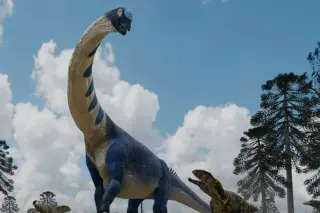
Researchers have officially described Nagatitan chaiyaphumensis, a massive sauropod dinosaur discovered in Thailand. Measuring 27 meters and weighing approximately 27 tons, it is the largest dinosaur ever found in Southeast Asia. The study, published in Scientific Reports, details the excavation of remains found a decade ago, highlighting the creature's significance as a potential 'last titan' in the region's geological record.

Ancient Egyptian engineering helps the Great Pyramid shrug off earthquakes
science6 months ago

Ancient Egyptian engineering helps the Great Pyramid shrug off earthquakes

A new study finds the Great Pyramid’s resilience to earthquakes comes from engineering features like the internal pressure-relieving chambers above the King's Chamber, a massive base and symmetrical geometry that dampen seismic vibrations; sensors show pyramid vibrations (2.0–2.6 Hz) differ from ground motion, reducing resonance through historic quakes.