
The Science Behind Why Time Feels Faster as You Age
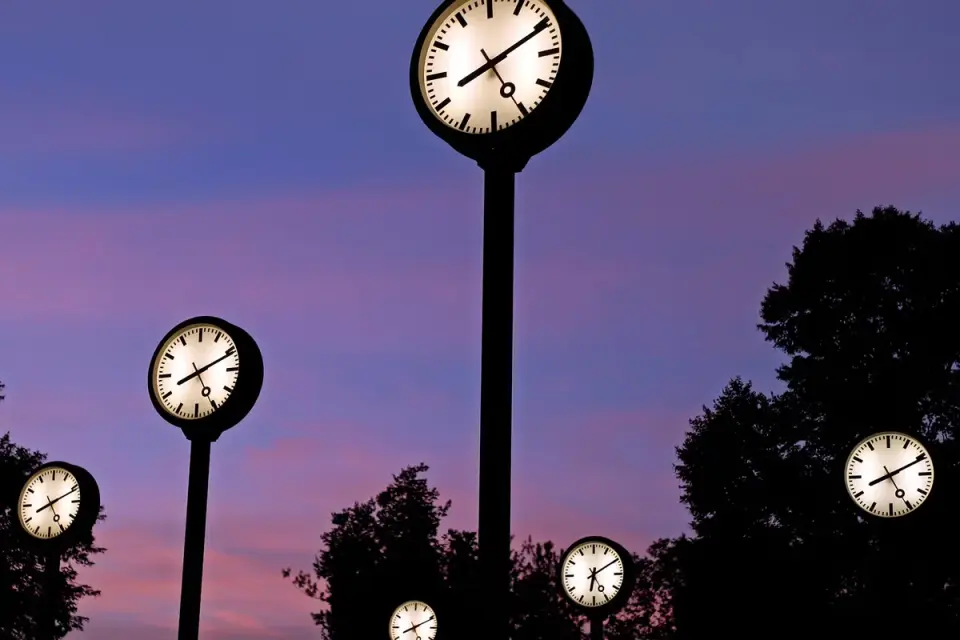
Scientific theories suggest that the perception of time accelerates with age due to proportional changes in life experience, reduced novelty, and shifts in brain chemistry. While clock time remains constant, 'mind time' compresses as routine replaces new experiences, making years feel shorter in hindsight.
Key points
- A 2019 Cambridge University Press study identifies a 'misalignment between mental-image time and clock time' as the core reason time feels faster with age.
- The 'Proportional Theory' posits that a single year represents a smaller fraction of total life experience as one ages (e.g., 10% at age 10 vs. 2% at age 50).
- Mental healthcare firm ReachLink cites five factors for time compression: proportional theory, novelty deficit, attention absorption, emotional flattening, and dopamine changes.
- Experts suggest that breaking routine and seeking new experiences can create distinct memories, thereby slowing the perceived passage of time.
Background
This topic relates to broader discussions on how subjective experiences, such as sleep quality, often diverge from objective measurements, as noted in recent studies on wearable technology. While previous archive items focused on biological mechanisms like immune memory or vaccine efficacy, this story highlights the psychological and neurological aspects of aging.
How outlets are covering it
The Independent frames the issue as a general scientific inquiry into changing time perception, while The News International provides specific theoretical frameworks and actionable advice. The News International explicitly cites a 2019 Cambridge University Press study and data from ReachLink, detailing five specific mechanisms including 'novelty deficit' and 'dopamine changes.' The Independent’s coverage is more general, focusing on the existence of multiple theories without detailing the specific five-point breakdown provided by The News International. Both sources agree that the phenomenon is real and scientifically explainable, but The News International offers more granular detail on the causes and potential countermeasures.
Why it matters
Understanding why time feels faster can help individuals manage the psychological aspects of aging. By recognizing that routine and lack of novelty compress perceived time, people can actively choose to engage in new activities to create richer memories and potentially slow down the subjective experience of aging.
What to watch
Researchers may continue to explore the neurological underpinnings of time perception, particularly how dopamine levels and memory formation interact. There is potential for future studies to develop interventions or lifestyle recommendations that help individuals maintain a sense of temporal expansion as they age.
Want the full story? Read the original reporting
Read on The Independent