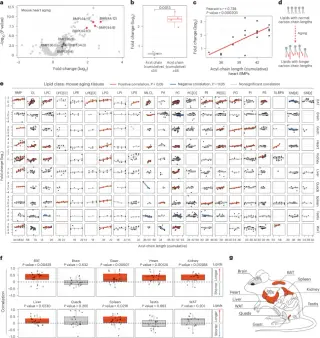
A study in Nature Aging identifies the lengthening of lipid acyl chains as a conserved hallmark of aging in mice, worms, flies, and humans. The research links this molecular shift to the gene Plb1, which regulates lipid remodeling. Interventions that shorten lipids, such as dietary restriction or genetic knockdown, extend lifespan, suggesting a causal link between lipid chain length and longevity.
Falls are the leading cause of injury death for adults over 65, but risks can be mitigated through exercise, home safety adjustments, and medication reviews. While aging increases vulnerability, proactive measures significantly reduce the likelihood of serious injury.
Recent reports emphasize that maintaining cognitive health in older age depends less on mental puzzles and more on physical habits. Experts highlight the importance of specific exercise zones, a Mediterranean-style diet, and social engagement to combat brain shrinkage and reduce dementia risk.
Dr. Michael Hall, a Miami Beach longevity physician, has outlined ten core principles for extending healthy years, arguing that basic lifestyle habits are more effective than expensive supplements or biohacks. His framework, detailed in his new book 'Infinite Youth,' prioritizes sleep, movement, strength, real food, purpose, social connection, challenge, curiosity, and maintaining physiological resilience. While Hall emphasizes accessible, low-cost strategies, other experts like Dr. Pamela Brar of Mayo Clinic and Dr. Ariela Orkaby of Mass General Brigham highlight the distinction between lifespan and healthspan, noting that healthspan typically peaks in the mid-60s. They recommend following established guidelines such as the American Heart Association’s Life Essential 8, which include nutritious diets, exercise, and quality sleep. Meanwhile, scientists are exploring whether aging itself can be treated as a medical condition, with researchers at Albert Einstein College of Medicine and Columbia University investigating biological markers to intervene before age-related diseases develop. Although clinical trials for human longevity interventions are not yet complete, experts agree that foundational habits like sleep, exercise, and social connection remain the most reliable methods for extending healthy years.
Actor Anson Williams, 77, posted a shirtless mirror selfie on Instagram to challenge ageism, claiming he is healthier and more creative now than at 40. He credited his wife, discipline, and adventure for his vitality, urging older adults to remain active.
Anson Williams, 77, posted a shirtless mirror selfie on Instagram, flexing his muscles and declaring he is 'more alive' at 77 than at 40. He credited his wife, discipline, and adventure for his vitality, urging Boomers not to let age diminish their worth. Fans praised his physique and message, while outlets highlighted his recent directing work and 2025 cast reunion.
A new study links low cognitive scores in adults aged 60-69 to a significantly higher risk of stroke, but this association disappears in older age groups.
A 12-week study from Texas A&M University indicates that daily creatine supplementation can increase lean muscle mass and strength in sedentary adults aged 45-65, even without structured exercise. While exercise combined with creatine yields greater results, the supplement alone showed significant benefits for muscle preservation and cognitive function in older adults.
Medical experts distinguish between lifespan, the total duration of life, and healthspan, the period of life free from limiting chronic conditions. While average US life expectancy has risen to 79 years, healthspan typically peaks around age 65, leaving a gap of 15 years or more where individuals may manage disabilities or illnesses. Doctors emphasize that extending healthspan requires consistent lifestyle habits rather than quick fixes, focusing on heart and brain health to maintain independence and quality of life into old age.
Dr. Mason Pimsler, a geriatrician at NYC Health + Hospitals/Lincoln, outlines four common habits that undermine healthy aging. He argues that relying solely on Pilates, substituting protein shakes for whole meals, neglecting social connections, and dismissing Tai Chi are significant errors. Pimsler emphasizes that progressive resistance training is essential for maintaining muscle and bone density, while whole foods provide superior nutritional value compared to supplements. He also highlights the critical role of social interaction in cognitive health and recommends Tai Chi for improving balance and fall prevention. These insights aim to help older adults maintain independence and reduce the risk of chronic disease through targeted lifestyle adjustments.
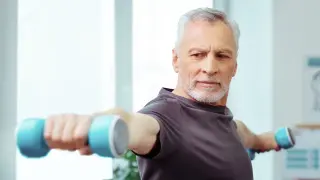
A certified personal trainer recommends five at-home exercises to address upper arm softness in adults over 60. The routine targets the triceps, which constitute roughly two-thirds of arm muscle mass but are often underused in daily life. The recommended moves include chair tricep presses, wall push-ups, overhead tricep extensions, tricep kickbacks, and close-grip wall push-ups. These exercises require only body weight and light dumbbells, aiming to rebuild muscle firmness and counteract age-related muscle loss.
A new study published in JAMA Network Open indicates that having a parent who lived past 100 is associated with significantly delayed mortality and lower risks of age-related diseases in their children. The research analyzed data from 4,030 participants across three major cohorts in the US and UK, finding that offspring of centenarians had reduced risks of cardiovascular disease, high blood pressure, and early death compared to those whose parents died by age 73. While only about 101,000 people in the US are centenarians, the findings suggest that genetic and environmental factors contributing to extreme longevity may be heritable, offering a model for identifying mechanisms that promote healthy aging.
Fitness experts argue that adults over 40 can maintain muscle and mobility with just 10 minutes of daily resistance training, rather than long gym sessions. This approach is particularly relevant for users of GLP-1 weight-loss medications who risk losing lean mass. While some experts emphasize daily consistency, others suggest that two to three sessions per week are sufficient for maintenance.
A new review in Science argues that X and Y chromosomes directly influence immunity, cancer, and aging, independent of sex hormones. Researchers found that loss of the Y chromosome in men is linked to cancer and heart disease, while X chromosome dynamics in women affect brain aging. The study suggests these genetic factors should shape clinical trial design and personalized treatments.
A fitness expert outlines four wall-based exercises to assess and build arm strength in adults over 65, emphasizing low-impact movements to overcome injury fears and maintain independence.