
Invisible Hydrogen Cracks in 1973 Mississippi Bridge Force Federal Inspection Mandate
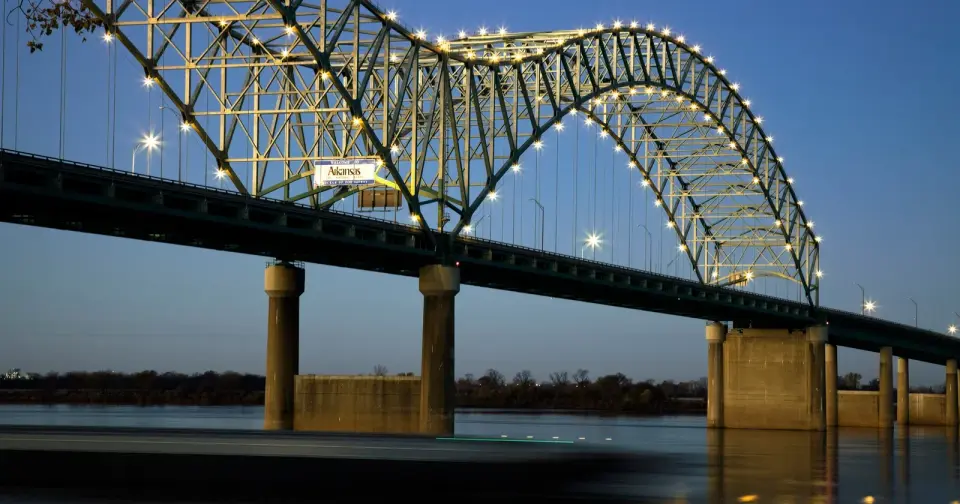
A routine inspection in 2021 revealed a critical fracture in a steel tension tie of the Hernando de Soto Bridge, leading to the discovery of twelve additional hidden cracks and a new federal mandate for non-destructive testing of similar structures.
Key points
- On May 11, 2021, inspectors found a steel tension tie on the Hernando de Soto Bridge fractured across nearly half its cross-section, forcing the immediate closure of both directions of Interstate 40.
- The bridge, built in 1973, carries approximately 41,000 vehicles daily between Memphis and West Memphis and is one of only two major crossings of the Mississippi River in the region.
- Ultrasonic testing revealed twelve additional butt welds with hydrogen cracks that were invisible to the naked eye, highlighting the limitations of visual inspections.
- Investigations by Wiss, Janney, Elstner Associates traced the defects to fabrication weld repairs made before the bridge opened, which contained hydrogen-assisted cracks that developed over decades.
- The incident prompted the Federal Highway Administration to issue a December 2021 memo requiring state departments to use non-destructive testing for older fracture-critical steel members.
Background
This incident echoes the 2011 closure of the Sherman-Minton Bridge in Louisville, which also suffered from hydrogen-assisted cracking in a tension tie. Both bridges utilized high-strength T-1 steel fabricated before modern fracture-control standards. The earlier closure led to advisory recommendations, but the Hernando de Soto incident escalated these to mandatory requirements. Recent infrastructure concerns, such as the heat-related closure of Chicago's Lake Shore Drive in September 2026, underscore the ongoing vulnerability of aging public works to environmental and structural stress.
Why it matters
The discovery of hidden defects in a major interstate bridge underscores the critical importance of advanced non-destructive testing in infrastructure maintenance. It demonstrates how flaws from decades ago can persist undetected until catastrophic failure, prompting nationwide regulatory changes to prevent similar risks in other aging structures.
What to watch
State transportation departments are now required to identify older fracture-critical T-1 steel members and supplement visual inspections with non-destructive testing of butt welds, unless adequate previous testing is documented. This shift aims to proactively detect hidden defects before they lead to structural failures.
Want the full story? Read the original reporting
Read on Space Daily