
Voyager 1 Hits One Light-Day Mark Amid Data Glitch
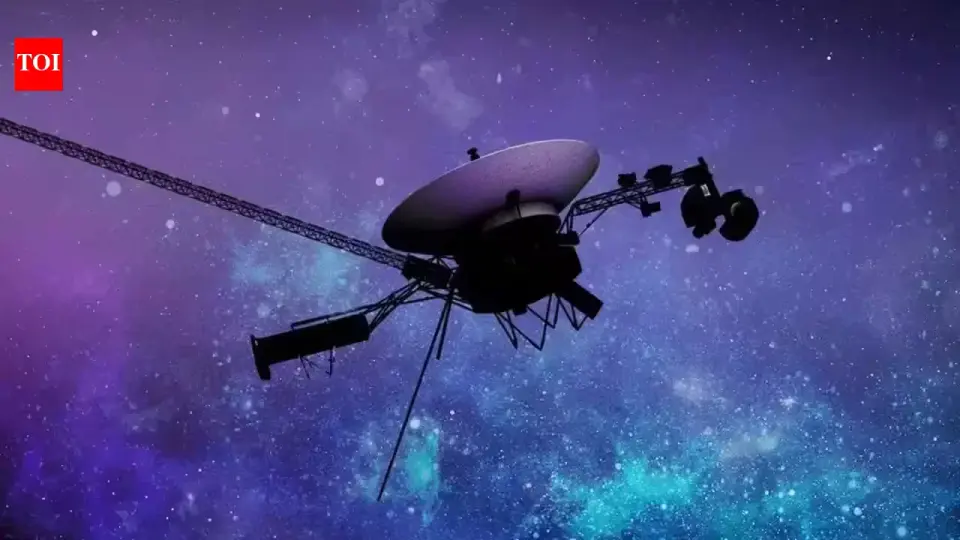
NASA’s Voyager 1 reached a distance of one light-day from Earth on November 18, 2026, after nearly 49 years of travel. The spacecraft is now approximately 16.1 billion miles away, meaning radio signals take 24 hours to reach it and another 24 hours to return. Although the probe has not transmitted science data since November 14, it continues sending a carrier signal, confirming its operational status. Engineers are investigating the data outage, which may take weeks to resolve due to the extreme communication delays.
Key points
- Voyager 1 achieved the one light-day milestone at 2:16 a.m. PST on November 18, 2026, traveling at approximately 38,000 mph.
- The spacecraft has not sent science or engineering data since November 14, but it transmits a carrier signal that confirms it is pointed at Earth and functioning.
- NASA engineers are analyzing the data issue, which may be related to a previous 48-hour communication gap in October or a malfunctioning onboard computer.
- Voyager 1 continues to study interstellar magnetic fields and plasma, despite losing about 4 watts of power annually from its nuclear generator.
- Microsoft AI CEO Mustafa Suleyman praised the mission on X, highlighting the resilience of 1970s technology in maintaining contact after nearly half a century.
Background
Voyager 1 was launched on September 5, 1977, and entered interstellar space in 2012. It is the farthest human-made object from Earth. The probe has previously faced communication issues, including a similar data outage in 2023 and a 48-hour loss of contact in October 2026. Engineers have implemented power-saving measures, including a 'Big Bang' redistribution of power earlier this year, to extend the mission's life. Voyager 2, its twin, is expected to reach the one light-day mark in 2035.
How outlets are covering it
NASA and JPL emphasize the engineering challenges of maintaining contact with Voyager 1, noting that the data outage is being investigated but the carrier signal confirms the spacecraft is operational. The New York Times frames the milestone as a 'rhetorical shift' signaling ambition for future faster space missions. Space.com highlights the ongoing scientific value of measuring interstellar magnetic fields and plasma, despite the power constraints. The Times of India focuses on the public reaction, including praise from Mustafa Suleyman, and the historical significance of the probe's longevity. All sources agree on the milestone's achievement but differ in emphasis: NASA and JPL focus on technical troubleshooting, while NYT and Space.com highlight the broader implications for space exploration and science.
Why it matters
The one light-day milestone underscores the vastness of space and the resilience of 1970s technology. It highlights the challenges of deep-space communication and the importance of maintaining long-duration missions. The data outage raises concerns about the spacecraft's future, but the carrier signal confirms it is still operational. This milestone also serves as a reminder of the enduring legacy of the Voyager missions and the dedication of the engineers who continue to support them.
What to watch
NASA engineers will continue to analyze the data issue, which may take weeks or longer to resolve due to the 48-hour communication loop. The team will monitor the spacecraft's power levels and ensure the remaining science instruments remain operational. Voyager 1 is expected to continue transmitting data until at least its 50th anniversary in 2027, after which major changes to operations may be necessary. The mission will also continue to study interstellar magnetic fields and plasma, providing insights into the Sun's influence on interstellar space.
- As NASA's Voyager 1 reaches one light-day from Earth, Microsoft AI CEO Mustafa Suleyman says: Built with The Times of India
- After 49 Years, Voyager 1 Is a Mind-Blowing One Light-Day From Earth The New York Times
- Voyager 1 Engineers Analyze Data Issue, Ready to Confirm Light-day NASA Science (.gov)
- What's next for NASA interstellar Voyager 1 probe after passing 1 light-day from Earth? Space
- Voyager 1 stops sending science data ahead of its light-day milestone — but NASA has a plan to fix it Live Science
Want the full story? Read the original reporting
Read on The Times of India