
The Limits of Mechanical Metaphors in Modern Health
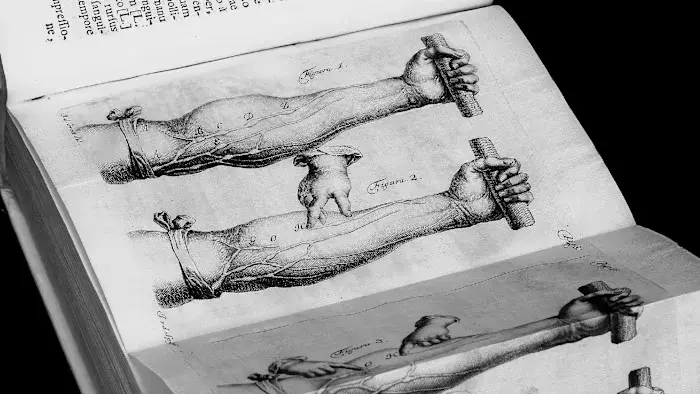
Guru Madhavan argues that while viewing the body as a machine has driven medical progress, this reductionist metaphor now harms how we live. He contends that treating humans as optimizable systems ignores complex biological networks and evolutionary compromises, advocating for a holistic perspective that values clarity over productivity.
Key points
- The author, a systems engineer, critiques the modern obsession with 'optimizing' the body, a mindset rooted in 17th-century mechanical metaphors.
- Historical figures like William Harvey, René Descartes, and Julien Offray de La Mettrie established the view of the body as an automata or pump, influencing later scientific thought.
- Frederick Winslow Taylor's 1911 'scientific management' spread the drive for productivity from factories to personal health, sleep, and diet.
- Madhavan cites evolutionary medicine pioneer Randolph Nesse, who calls the belief in precise biological engineering 'tacit creationism.'
- Biological examples like the recurrent laryngeal nerve and the eye's blind spot illustrate that natural selection creates compromises, not perfect designs.
- The author suggests that ancient yoga philosophy, which distinguishes material nature from pure consciousness, offers a better framework for understanding human existence than mechanical reductionism.
Background
This opinion piece contrasts with recent local news regarding physical dangers, such as the July 2026 recovery of a body in Mississippi rip currents, by shifting focus from external physical risks to internal conceptual frameworks. While the archive covers immediate physical hazards, this article addresses the philosophical and psychological risks of viewing the human body as a machine to be optimized.
Why it matters
The article challenges the dominant cultural narrative that treats human health as a series of metrics to be maximized. By highlighting the limitations of mechanical metaphors, it encourages readers to reconsider how they approach wellness, potentially reducing the stress and anxiety associated with constant self-optimization and promoting a more sustainable relationship with the body.
What to watch
There are no specific future events or policy changes mentioned, as this is an opinion piece. However, the argument suggests a potential shift in how wellness industries and individuals might approach health, moving away from strict optimization toward more holistic or philosophical frameworks.
Want the full story? Read the original reporting
Read on Financial Times