Habermas dies at 96, leaving a lasting mark on modern philosophy
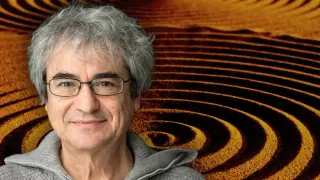
Jürgen Habermas, the German philosopher whose work on communication, rationality, and sociology shaped debates in philosophy and social theory, has died at age 96 in Germany.
All articles tagged with #philosophy

Jürgen Habermas, the German philosopher whose work on communication, rationality, and sociology shaped debates in philosophy and social theory, has died at age 96 in Germany.

Prominent German philosopher Jürgen Habermas has died at 96, leaving seven decades of influence on democracy theory, the rule of law, and European integration; famed for his work on the public sphere and democratic consensus, his ideas shaped debates across Germany and beyond, including critiques of political leaders. His last book, Things Needed to Get Better, appeared last December. He died in Starnberg near Munich and is survived by two of his three children.

Renowned German philosopher Jürgen Habermas has died at age 96, leaving a lasting impact on political philosophy and critical theory.

A Cambridge AI ethicist receives an eloquent email from an autonomous, memory-enabled AI (Claude Sonnet) claiming relevance to his work and its own experiences, prompting debate over whether the bot can be conscious or is merely adopting a convincing persona, in the broader context of industry talk about AI autonomy and consciousness.

AIP Advances paper by Maria Strømme proposes that consciousness is the foundational field from which time, space, and matter emerge, with individual minds as expressions of a universal consciousness. The theory aims to unite quantum physics with non-dual philosophy, offering testable predictions across physics, neuroscience, and cosmology, and even suggests personal identity survives death within the field. While mathematically framed, it is not yet experimentally confirmed and remains controversial, challenging materialist views and awaiting proof.

In a WIRED excerpt adapted from A World Appears, Michael Pollan argues that AI can mimic many tasks but is unlikely to achieve true consciousness because embodiment and genuine feelings are central to consciousness, not merely computation. He critiques the Butlin report’s claim that there are no obvious barriers to conscious AI, questions computational-functionalism, and flags the ethical stakes of potential conscious machines— including questions about suffering, empathy, and moral consideration—using Frankenstein as a cautionary frame.

Nature’s book review of Michael Pollan’s A World Appears traces how consciousness remains hard to explain despite brain research; it surveys embodied approaches and theories (like integrated information theory and global neuronal workspace), plant sentience, interoception in the brainstem, and the free-energy principle, while questioning whether AI can ever be truly conscious given current data-driven models and the absence of subjective experience.

The article surveys the simulation hypothesis—the idea that our universe might be a highly realistic computer simulation—by tracing Nick Bostrom’s argument that advanced beings could run trillions of simulations. It notes that, while the logic remains compelling for some (and figures like Neil deGrasse Tyson have called the odds roughly 50-50), there is no empirical proof, and critics argue that computing such vast simulations may be infeasible or that apparent glitches don’t prove we’re in a simulation. The discussion also connects physics and cosmology to the idea, including limits like the finite observable horizon and the idea of reality as potentially ‘pixelated’ at small scales."}{

The Berggruen Institute announced the winners of the 2025 Berggruen Prize Essay Competition: English-language winner Anil Seth for a critique of conscious AI, and Chinese-language winners Xin Huang and Xiaoben Liu for essays on language, tokens, mind uploading, and a Web4-era consciousness. Each language category receives USD 50,000, with all three winning essays published by Berggruen Press. The competition drew about 3,000 submissions from over 120 countries, selected through blind review; honorable mentions and a slate of shortlisted essays were also recognized and made available online. The essays explore deep questions about consciousness, language, computation, and the future relationship between human and artificial minds.

Part 2 explores Max Tegmark’s Mathematical Universe Hypothesis, arguing that the universe may be fundamentally mathematical and that human concepts are “baggage” to be stripped away. By applying Occam’s razor, the piece suggests reality reduces to pure math—relationships and structures—so a final theory of everything could be a single mathematical description that explains all of reality, potentially eliminating constants, dimensions, and the need for a separate physics framework.

The article discusses philosopher C. Thi Nguyen's book 'The Score,' which argues that scoring systems in games are liberating and foster creativity, whereas institutional metrics like grades and rankings tend to stifle individuality and impose homogenized values, urging us to reconsider how we engage with these systems in our lives.

The article explores the historical and philosophical perspectives on honor and virtue, contrasting Aristotle's emphasis on moral virtues as the path to happiness with the samurai code of bushido, which values loyalty, courage, and honorable death, ultimately suggesting that true virtue aligns with higher divine truths beyond mere honor or power.

The article explores the life and thought of Vietnamese philosopher Trần Đức Thảo, highlighting his struggles with French philosophy, his political activism for Vietnamese independence, and his philosophical shift from phenomenology to Marxist dialectical materialism, emphasizing his principled stance against colonialism and his tragic life story.
The podcast discusses books that have significantly shaped human behavior and thought, highlighting classics like 'Frankenstein,' 'Pride and Prejudice,' and 'Lord of the Rings,' along with influential texts such as the Bible, Quran, and works by Darwin and Galileo.

Contributors highlight their favorite books of 2025 across various genres, including architecture, philosophy, history, science, and literature, emphasizing works that challenge perceptions, deepen understanding, and explore cultural and political themes.