
Ancient Giant Cephalopod Bears Clues of Deadly Chase in Manitoba Fossil
TL;DR Summary
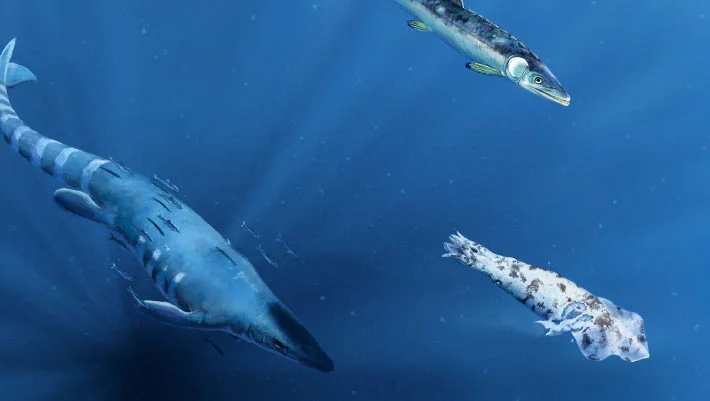
Researchers studying Enchoteuthis's gladius from the Cretaceous Pierre Shale (about 81 million years ago) identified two bite-mark pathologies: a front mark indicating a fatal attack with no healing, and a second, ambiguous mark; while the predator cannot be identified from tooth spacing, plausible culprits include mosasaurs such as Latoplatecarpus and predatory fish like Cimolichthys, illustrating predator–prey dynamics in the Western Interior Seaway. The findings, based on 3D scans and silicone casts of the fossilized gladius, were published August 28, 2026 in Cretaceous Research.
Reading Insights
Total Reads
1
Unique Readers
3
Time Saved
8 min
vs 9 min read
Condensed
95%
1,630 → 83 words
Want the full story? Read the original article
Read on Sci.News