paleontology8.475 min read
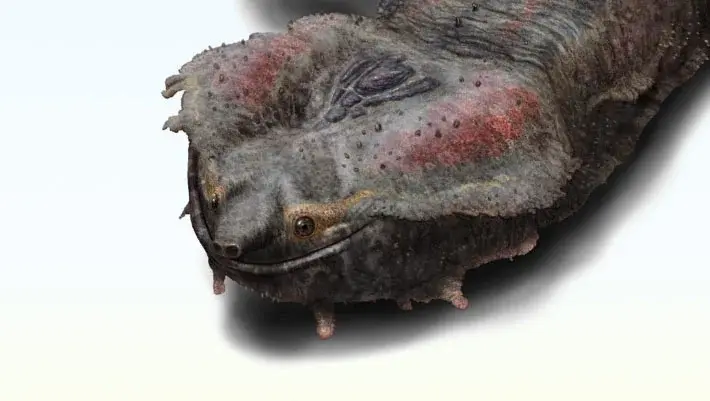
Peruvian Fossil Reveals Record-Breaking Size for Extinct Freshwater Turtle
4 days ago•Source: Sci.News

The latest paleontology stories, each synthesized from multiple sources with added background and context.
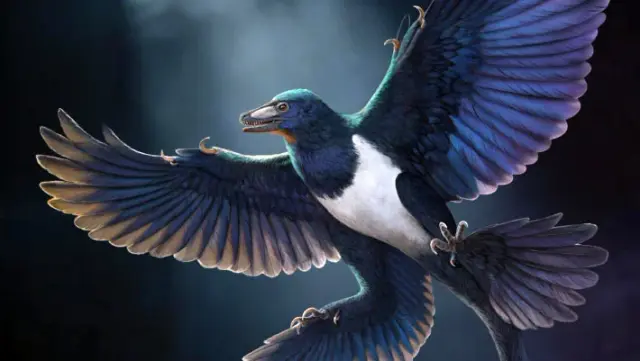
A newly described 57-centimeter dinosaur, Norellraptor barsboldi, from 120-million-year-old Chinese rock beds, provides strong evidence that flight evolved independently in birds and their closest non-avian relatives. While sharing about 30% of anatomical features with birds, the sequence of these adaptations differs, challenging the idea of a shared ancestral flight blueprint.
Sci.News•18 days ago
Sci.News•26 days ago
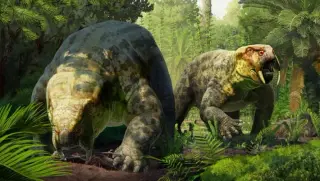
Paleontologists describe a new Tanzanian dicynodont, Dinodontosaurus isiyavamanda, extending the genus outside South America and linking Lifua Member rocks to a younger late Ladinian–Carnian age (≈242–227 Ma), which reshapes timelines for early dinosaurs and related fossils like Nyasasaurus.
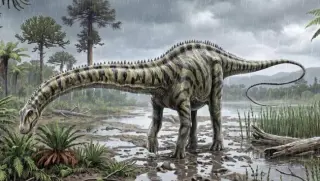
Spanish researchers identify a 25-meter Diplodocus at La Tejería, Teruel—the first confirmed Diplodocus outside North America—strengthening evidence that Late Jurassic dinosaurs dispersed between Europe and North America via fleeting land bridges.
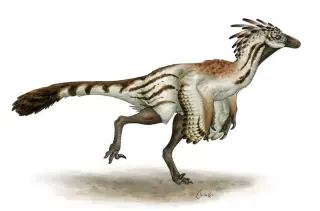
New Montana Troodon formosus fossils provide a near-complete record of pelvic and hindlimb ontogeny from embryo to adult, revealing mostly consistent bone shapes across growth with stage-specific changes in bone strength, texture, and fusion; the femur lengthens relative to the tibia in adults, indicating steady growth. The sample also shows adult size variation and common foot pathologies, and it underpins a proposed taxonomic shift away from a tooth-based type specimen to pelvic/hindlimb fossils, pending ICZN approval. Together, the findings illuminate locomotion and life history in troodontids.
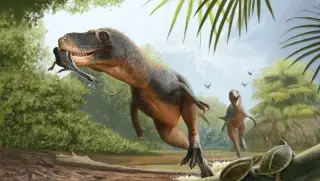
Paleontologists in Montana have found exceptionally preserved feathers from an ancient aquatic bird inside a large dinosaur coprolite from the Hell Creek Formation. The find includes the first known hesperornithiform feathers and reveals a mix of modern-like waterproof feathers and smaller primitive feathers, suggesting an evolutionary middle ground between living birds and their dinosaur ancestors. The feathers likely came from the same bird that produced the coprolite, possibly a theropod predator (such as Tyrannosaurus Rex or Nanotyrannus), and offer rare insights into predator–prey interactions and feather evolution around the end-Cretaceous extinction. The study by Jingmai O’Connor and colleagues is published in Current Biology.
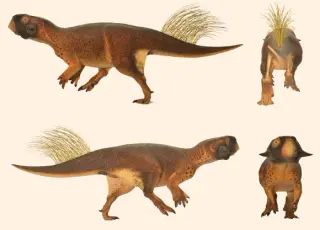
Scientists recovered the 208GPV01 dinosaur fossil from a 473 m deep drill core in the Bayan Gobi Formation’s western Yin’gen-Ejinaqi Basin, Inner Mongolia, dating to about 115 million years ago. The specimen, consisting mainly of tail vertebrae and associated elements, is an ornithischian with vertebral proportions most similar to Psittacosaurus, but due to limited material it is not assigned to a genus or species. The find expands the known geographic range of Bayan Gobi fossils and was published Sept. 5, 2026 in Earth History and Biodiversity.
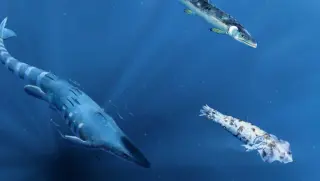
Researchers studying Enchoteuthis's gladius from the Cretaceous Pierre Shale (about 81 million years ago) identified two bite-mark pathologies: a front mark indicating a fatal attack with no healing, and a second, ambiguous mark; while the predator cannot be identified from tooth spacing, plausible culprits include mosasaurs such as Latoplatecarpus and predatory fish like Cimolichthys, illustrating predator–prey dynamics in the Western Interior Seaway. The findings, based on 3D scans and silicone casts of the fossilized gladius, were published August 28, 2026 in Cretaceous Research.
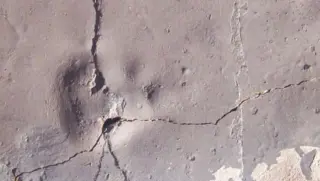
A partial manus-pes footprint from King George Island’s Fossil Hill Formation dates to about 55 million years ago (the Eocene) and represents the first mammal track found in Antarctica, likely from a small sparassodont-sized predator. The find suggests land mammals occupied Antarctic forests after the dinosaur extinction and points to a more complex early Antarctic ecosystem with connections to South American predators via ancient land bridges.
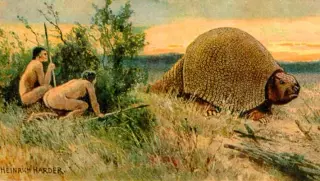
A 19th-century glyptodont skull from Lagoa Santa, Brazil, is described as Glyptotherium deuterophractum, a new species that lived 60,000–17,000 years ago across Brazil and into Venezuela, underscoring how older museum collections can hide previously unrecognized biodiversity.
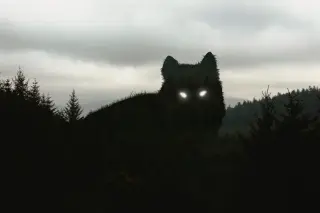
Epicyon haydeni was a bear-sized early canid (about 2.5 m long, 1 m tall, ~125 kg) that specialized in crushing bones during the Miocene across North America. A top predator among borophagines, it likely hunted in bursts with powerful jaws and may have hunted in packs. It went extinct around 2.5 million years ago, with cats migrating into North America as a key factor that outcompeted borophagines and helped shape the rise of modern dogs and wolves.
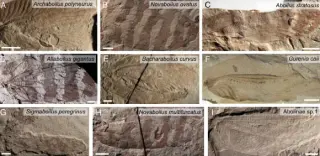
Researchers reconstructed the calls of 165‑million‑year‑old insects from fossilized wings found in Inner Mongolia, China, using lasers, computer models and AI. Most species produced low calls around 5 kHz, but Sigmaboilus peregrinus likely vocalized above 20 kHz (ultrasonic), making it the oldest known ultrasonic animal vocalization and predating bats. The findings challenge the idea that bat predation was the sole driver of ultrasonic signaling and suggest predators beyond bats and acoustic niche competition shaped early insect communication. The work combined phylogenetics, laser vibrometry, wing‑vibration simulations, and machine learning, and was published in PNAS.