
James Webb Telescope Challenges Our Understanding of the Universe's Galaxies.
TL;DR Summary
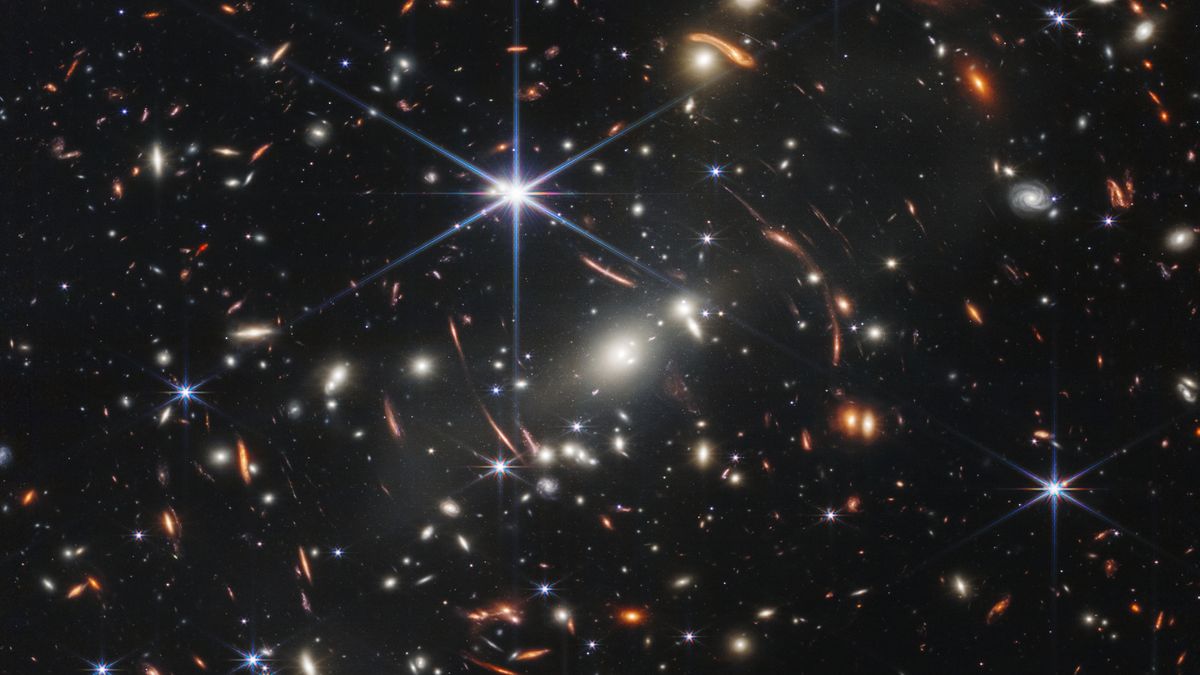
The warped and repeated galaxies seen in some James Webb Space Telescope (JWST) images are the result of gravitational lensing, a phenomenon predicted by Einstein's theory of general relativity. Gravitational lensing occurs when light from a distant object passes through the warped space-time caused by a massive object, causing the light to bend and making the object appear in a different location in the sky. Gravitational lensing can be useful to astronomers in studying the early universe and revealing how matter is distributed in galaxies and galactic clusters.
Topics:science#astronomy#galaxies#gravitational-lensing#james-webb-space-telescope#science-and-astronomy#space-time
- Why do some James Webb Space Telescope images show warped and repeated galaxies? Space.com
- Galactic Surprise: James Webb Space Telescope Unveils Hidden Companion Galaxy SciTechDaily
- Scientists warn newly discovered galaxies shouldn’t exist indy100
- James Webb discoveries are challenging what we know about the universe’s evolution Yahoo Entertainment
- Small but Mighty: James Webb Telescope Unveils a Star-Generating Juggernaut in the Early Universe SciTechDaily
Reading Insights
Total Reads
0
Unique Readers
12
Time Saved
4 min
vs 5 min read
Condensed
91%
928 → 88 words
Want the full story? Read the original article
Read on Space.com