
Historical Note: Ole Rømer’s 1676 Discovery of Light’s Finite Speed
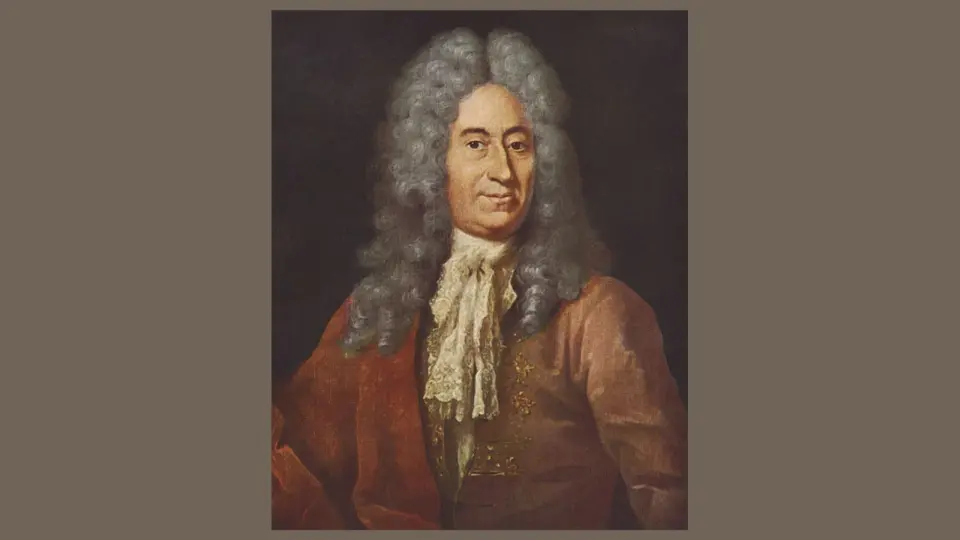
On November 21, 1676, Danish astronomer Ole Rømer presented evidence to the Royal Academy of Sciences that light travels at a finite speed, overturning the prevailing belief that light was instantaneous. This discovery emerged from his long-term observations of Jupiter's moon Io, where he noticed discrepancies in eclipse timing relative to Earth's distance from Jupiter. The finding laid the groundwork for modern physics and our ability to measure cosmic distances.
Key points
- Ole Rømer presented his findings on the finite speed of light to the Royal Academy of Sciences on November 21, 1676.
- Rømer's discovery stemmed from observing Io's 42-hour orbital cycle and its eclipses behind Jupiter over several years.
- He observed that Io's eclipses occurred 11 minutes earlier when Earth was closer to Jupiter and 11 minutes later when farther away.
- Prior to this discovery, scientists generally believed light traveled instantaneously or at infinite speed.
- Rømer's work established the speed of light as a constant, which became fundamental to measuring the scale of the universe and developing modern physics.
Background
This historical event is part of a broader narrative in astronomy where observational anomalies lead to fundamental physical discoveries. Recent archive coverage has highlighted how gravitational interactions can alter planetary orbits, such as the disappearance of the exoplanet TOI-2535 b, and how technological advancements in space, like Reflect Orbital's light tests, continue to impact astronomical observation. While those are modern developments, Rømer's 17th-century work remains the foundational moment for understanding light's behavior in space.
Why it matters
Rømer's realization that light has a finite speed was a pivotal shift in scientific understanding. It provided the first quantitative evidence against the idea of instantaneous light propagation, enabling future scientists to calculate the speed of light more accurately. This concept is central to modern physics, acting as a universal speed limit for objects with mass and serving as the basis for measuring vast cosmic distances. Without this foundational insight, the development of relativity and our current understanding of the universe's scale would not have been possible.
What to watch
As a historical event, there are no immediate future developments. However, the principles established by Rømer continue to underpin modern astronomical measurements and physics research. Contemporary discussions about light pollution, such as those surrounding Reflect Orbital's satellite tests, highlight the ongoing importance of managing light in both terrestrial and orbital environments, a concept rooted in the fundamental understanding of light's properties that Rømer helped establish.
Want the full story? Read the original reporting
Read on Space