
Murdoch University confirms first long-term survival of lab-incubated Perth snake-necked turtle
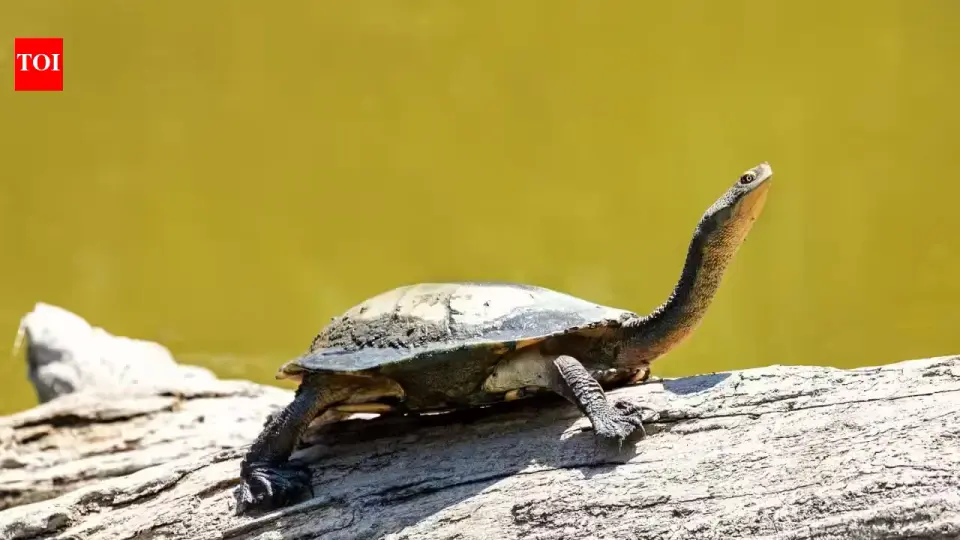
A southwestern snake-necked turtle hatched in a lab at Murdoch University and released in July 2025 was recaptured in October 2026, weighing 100 grams compared to its 4.77-gram release weight. This marks the first confirmed long-term survival of an artificially incubated hatchling of the species in the wild. The finding validates a conservation strategy aimed at reversing population declines in Perth, where juveniles are scarce due to nest predation and habitat loss. Researchers plan to continue monitoring released turtles to assess the viability of their restocking program.
Key points
- The recaptured turtle was originally incubated at Murdoch University and released into Manning Lake in July 2025 at a weight of 4.77 grams.
- In October 2026, PhD candidate April Sturm and Dr. Anthony Santoro recaptured the turtle during routine population surveys, finding it had grown to 100 grams.
- This event provides the first scientific proof that lab-incubated southwestern snake-necked turtles can survive long-term in the wild after release.
- The species is not currently listed as threatened, but populations in Perth are declining, with studies showing a lack of juveniles and a skew toward males.
- The 'Saving Our Snake-Necked Turtle' project uses citizen science volunteers to protect nests and monitor populations across Western Australian wetlands.
Background
Western Australia’s Department of Biodiversity, Conservation and Attractions reports that Perth’s snake-necked turtle populations face significant risk of local extinction if unmanaged. Key threats include the destruction of nests by predators such as foxes and ravens, loss of native vegetation around urban wetlands, and changing climate conditions. In response, Murdoch University launched an incubation program in 2021–22 in partnership with the City of Cockburn. The program aims to boost turtle numbers in Perth’s southern suburbs by hatching eggs in controlled environments and releasing the young turtles into sheltered wetlands like Bibra Lake. Previous efforts included protecting nearly 280 nests across 12 wetlands during the 2022 season through a citizen science initiative called Turtle Trackers.
Why it matters
The confirmation of long-term survival for a lab-incubated hatchling is a critical milestone for conservation efforts in Western Australia. It demonstrates that artificial incubation and release programs can successfully contribute to the population of a species facing local extinction risks. This success provides a tangible metric for evaluating the effectiveness of the 'Saving Our Snake-Necked Turtle' project and similar citizen science initiatives. It also offers hope for reversing the decline of juvenile turtles in Perth’s wetlands, which are currently lacking young individuals and skewing male. The finding validates the strategy of removing eggs from the danger zone of predation and provides a model for other regions dealing with declining reptile populations.
What to watch
Researchers at Murdoch University plan to continue their annual population surveys to catch and identify more artificially incubated hatchlings. This will help determine the broader survival rates and success of the incubation program. The 'Saving Our Snake-Necked Turtle' project is expected to expand to more councils and wetlands, with volunteers continuing to monitor nesting turtles and protect nests using mesh covers. The team aims to gather more data on the long-term viability of released turtles to refine their conservation strategies and potentially scale up their efforts.
Want the full story? Read the original reporting
Read on The Times of India