
Newton’s 1679 Tower Drop Puzzle: Why Falling Objects Drift East
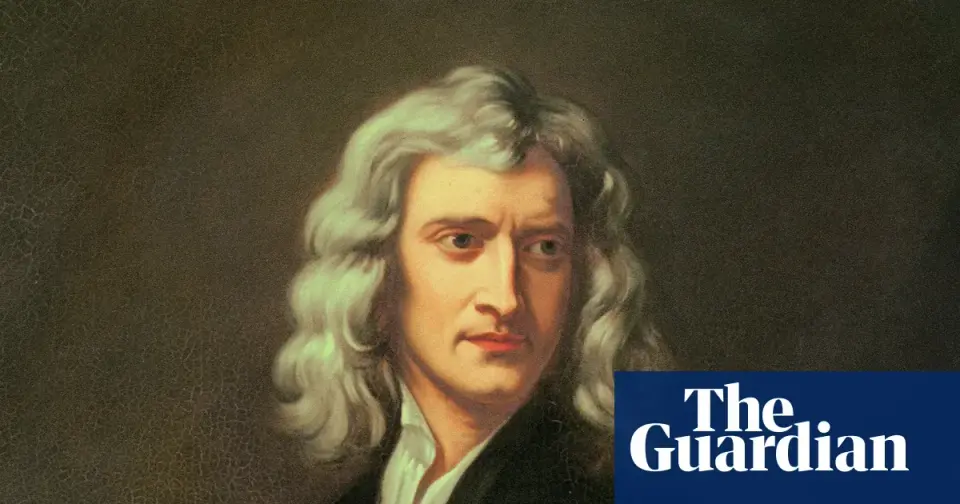
The Guardian highlights Isaac Newton’s 1679 puzzle regarding where an object dropped from a tower lands relative to its base. The counter-intuitive answer is that it lands slightly to the east due to the conservation of angular momentum as the object’s distance to Earth’s center decreases. This historical problem, posed by Newton to Robert Hooke, played a pivotal role in the development of classical physics and is featured in David Acheson’s new book, Wonders in Motion.
Key points
- Isaac Newton posed the tower drop puzzle to Robert Hooke in 1679, asking where an object dropped from a high tower would land considering Earth’s rotation.
- The counter-intuitive answer is that the object lands slightly to the east, contrary to the common belief that it would land directly below or to the west.
- The phenomenon occurs because the falling object conserves angular momentum; as it gets closer to Earth’s center, its rotational velocity increases, causing it to outpace the Earth’s surface rotation.
- The puzzle was suggested by David Acheson, an emeritus professor of mathematics at Oxford, and is featured in his new book, Wonders in Motion: The Story of Dynamics.
- Newton’s correspondence with Hooke on this topic rekindled his interest in gravity and motion, ultimately leading to the mathematical foundations of classical physics in the Principia.
Background
The Guardian has been featuring this puzzle on alternate Mondays since 2015. The archive notes that the effect is measurable but small, estimated at approximately 11 centimeters for a drop from the Eiffel Tower if it were located on the equator. The puzzle was first diagrammed in Claude Dechales’ Cursus seu Mundus Mathematicus in 1674.
Why it matters
The tower drop puzzle illustrates the counter-intuitive effects of Earth’s rotation on falling objects and highlights the historical significance of Newton’s correspondence with Hooke in the development of classical physics. It also serves as an accessible entry point to understanding angular momentum and dynamics for a general audience.
What to watch
The Guardian will publish the solution to the puzzle at 5pm UK time. Readers are encouraged to discuss their favorite seventeenth-century scientists in the comments without spoiling the answer.
Want the full story? Read the original reporting
Read on The Guardian