Tag

Angular Momentum

All articles tagged with #angular momentum

Newton’s 1679 Tower Drop Puzzle: Why Falling Objects Drift East

Newton’s 1679 Tower Drop Puzzle: Why Falling Objects Drift East

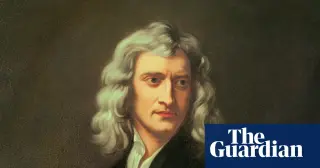
The Guardian highlights Isaac Newton’s 1679 puzzle regarding where an object dropped from a tower lands relative to its base. The counter-intuitive answer is that it lands slightly to the east due to the conservation of angular momentum as the object’s distance to Earth’s center decreases. This historical problem, posed by Newton to Robert Hooke, played a pivotal role in the development of classical physics and is featured in David Acheson’s new book, Wonders in Motion.


Newton’s 1679 Tower Puzzle: Why Falling Objects Drift East
science11 days ago

Newton’s 1679 Tower Puzzle: Why Falling Objects Drift East

The Guardian published the solution to a 1679 puzzle posed by Isaac Newton to Robert Hooke, asking where an object dropped from a tower lands relative to the tower's base. The counter-intuitive answer is that the object lands slightly to the east. This occurs because the falling object conserves angular momentum; as its distance to Earth's center decreases, its rotational velocity increases, causing it to outpace the Earth's surface rotation. The effect is measurable but small, estimated at approximately 11 centimeters for a drop from the Eiffel Tower if it were located on the equator.

Seven quirky sprinklers upend Feynman and Mach on reverse sprayers
science2 months ago

Seven quirky sprinklers upend Feynman and Mach on reverse sprayers

New York University researchers tested seven deliberately odd “silly” sprinkler designs to pit Mach’s angular-momentum idea against Feynman’s suction-based theory. Across all designs, rotation depended on the sprinkler’s central hub where the arms meet, not on how water carried momentum inside the arms or on nozzle geometry. The results debunk both classical explanations and suggest a unified view: the hub’s dynamics govern the spin. This insight could inform engineering designs that convert fluid flow into rotation, with potential applications for turbines and energy-harvesting devices.

Moon's Gentle Tug Lengthens Earth's Day, Not a Heist
space4 months ago

Moon's Gentle Tug Lengthens Earth's Day, Not a Heist

Earth’s rotation is slowing due to tidal interactions with the Moon, lengthening the day while the Moon slowly drifts outward at about 3.8 cm per year. The transfer conserves angular momentum, so nothing is stolen—past days were shorter, with a lengthy pause around 19 hours for roughly a billion years before the gradual increase resumed. The present rate and historical timeline vary with continental configurations and tidal dynamics.

Crystal Lattice Spins Backward: Quantum Angular Momentum Reversal Revealed
science4 months ago

Crystal Lattice Spins Backward: Quantum Angular Momentum Reversal Revealed

Researchers used terahertz laser pulses to drive circular lattice vibrations in a crystal and tracked how angular momentum transfers between vibrational modes; during the transfer the rotation can flip direction due to the lattice’s rotational symmetry, offering a direct quantum signature of angular momentum conservation with potential implications for magnetism and ultrafast control of quantum materials.

Giant Rotating Cosmic Filament Rewrites How Galaxies Get Their Spin
astronomy7 months ago

Giant Rotating Cosmic Filament Rewrites How Galaxies Get Their Spin

An Oxford-led team identifies a giant, razor-thin cosmic filament about 140 million light-years away that is rotating with galaxies aligned to its spin, offering new insights into how galaxies acquire angular momentum and evolve. The finding, enabled by MeerKAT’s MIGHTEE survey and complemented by DESI and SDSS data, challenges existing models of galaxy formation within the cosmic web.

"Chiral Electron Paths: A Twist in Physics Revolutionizing Technology"
physics2 years ago

"Chiral Electron Paths: A Twist in Physics Revolutionizing Technology"

Researchers in Germany have successfully sent single electrons along structured chiral paths, achieving chirality in electron matter waves without angular momentum. This work, which parallels earlier research with photons, could have significant applications in electron microscopy and the study of magnetic materials. However, some scientists are skeptical about the claim of chirality without angular momentum and the lack of citation of previous related work.