
Kangaroo Carcass Study Reveals Seasonal Shifts in Apex Scavenger Feeding Preferences
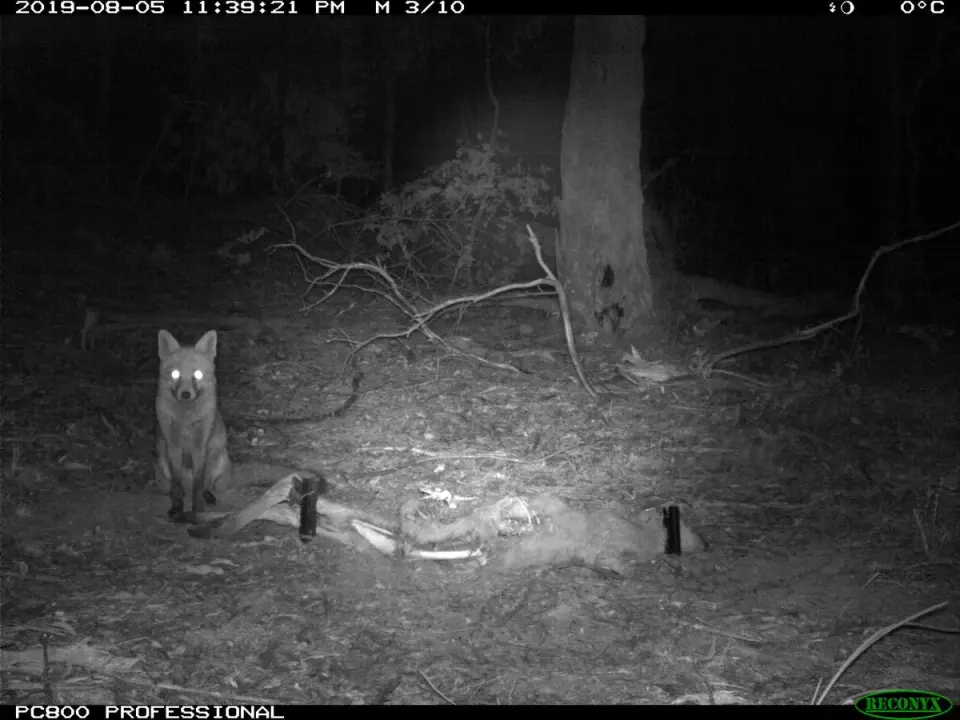
Researchers from the University of Sydney and the University of Glasgow placed 40 eastern grey kangaroo carcasses in Wolgan Valley, New South Wales, to study scavenger behavior. Using camera traps over 30 days, they observed that apex scavengers like dingoes and wedge-tailed eagles exhibit selective feeding habits, targeting specific body parts for non-protein energy. The study, published in Royal Society Open Science, found that these preferences shift with seasons and decomposition stages, a first for carnivores, while smaller mesoscavengers like red foxes showed less variation.
Key points
- Forty eastern grey kangaroo carcasses, sourced from local damage mitigation culls, were deployed across Wolgan Valley in New South Wales, with twenty placed in warm seasons and twenty in cool seasons.
- Camera traps recorded activity from apex scavengers (dingoes and wedge-tailed eagles) and mesoscavengers (red foxes) over a 30-day period.
- Wedge-tailed eagles primarily targeted the head and abdomen, while dingoes favored the tail, both prioritizing non-protein energy sources.
- Apex scavengers out-competed red foxes for preferred body parts, potentially impacting the survival and fitness of smaller scavengers.
- Feeding behaviors for eagles and dingoes shifted during the cool season, with increased focus on the abdomen, and changed as carcasses decomposed, whereas red foxes maintained consistent feeding patterns.
- The findings, led by PhD student Niraj Meisuria, provide the first evidence of selective feeding behaviors in carnivorous scavengers influenced by season and time, challenging the notion that only herbivores feed selectively for nutritional targets.
Background
This study builds on recent ecological research indicating that wild animals feed selectively to meet nutritional needs, a phenomenon previously well-documented in herbivores but largely unexplored in carnivores. The archive contains no related background on this specific topic, as previous coverage focused on technology and consumer electronics.
Why it matters
Understanding selective feeding behaviors in apex scavengers is crucial for ecosystem management, as these animals act as nature's clean-up crew, preventing disease spread and structuring scavenger communities. The findings highlight how seasonal changes and decomposition stages influence food web dynamics, offering insights into the competitive interactions between apex and mesoscavengers that could impact biodiversity and population stability in Australian ecosystems.
What to watch
Researchers may expand studies to other regions or species to validate these findings and explore how climate change or habitat loss could alter scavenger feeding patterns. Further investigation into the long-term ecological impacts of apex scavenger competition on mesoscavenger populations is likely, as well as studies on how parasite loads in carcasses influence scavenger behavior.
Want the full story? Read the original reporting
Read on BBC Wildlife Magazine