
The Overview Effect: How Seeing Earth Whole from Orbit Reshapes Human Perception
A 1968 photograph of Earth rising over the Moon, taken by Apollo 8 astronaut William Anders, is widely credited with catalyzing the modern environmental movement. Decades later, astronauts who view the planet from orbit consistently report a profound psychological shift known as the 'overview effect,' characterized by a sudden sense of global interconnectedness and fragility. While scientists acknowledge that current evidence relies heavily on anecdotal testimony rather than rigorous clinical data, the phenomenon remains a significant area of study in space psychology.
Key points
- The 'Earthrise' photo taken by William Anders on Christmas Eve 1968 was the first image to show Earth as a whole, finite, and borderless entity, preceding the first Earth Day by less than eighteen months.
- The term 'overview effect' was coined by space philosopher Frank White in 1985, describing the cognitive and emotional shift astronauts experience when viewing Earth as a single, fragile system from space.
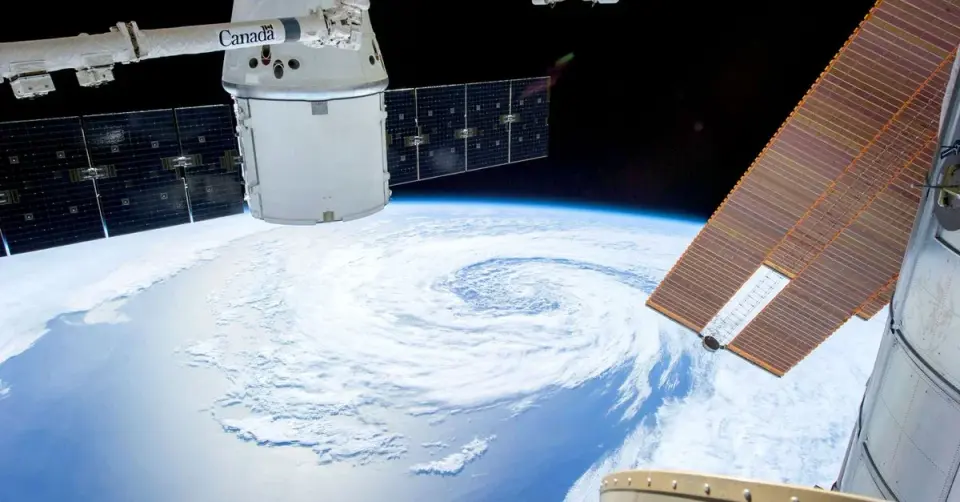
- Astronauts frequently describe the atmosphere as an impossibly thin, fragile blue band, a visual detail that reinforces the sense of vulnerability and interconnectedness reported during the overview effect.
- Scientific validation remains limited; a 2016 analysis by psychologist David Yaden treated the effect as a form of awe, but researchers note that current data relies on self-selected astronaut accounts rather than controlled experiments.
- Commercial spaceflight may soon democratize this experience, raising questions about whether the overview effect will remain a transformative insight or become a normalized, fleeting visual for a broader population.
Background
This story builds on our earlier coverage of the 'Pale Blue Dot' image captured by Voyager 1 in 1990, which similarly shifted human perspective by showing Earth as a tiny speck in the cosmos. Additionally, our July 2026 report noted that the overview effect has been documented from Apollo missions through the 2026 Artemis II flyby, with suborbital flights triggering milder versions of the phenomenon. The current article expands on these historical instances by focusing on the psychological mechanisms and the potential future of the effect as space travel becomes more accessible.
Why it matters
The overview effect highlights a fundamental shift in human consciousness that began only about sixty years ago. As commercial space travel expands, understanding whether this psychological shift can be replicated or if it will lose its impact is crucial for predicting how future generations will perceive environmental responsibility and global unity. It challenges the assumption that such profound changes in worldview are limited to a small, elite group of astronauts.
What to watch
Researchers are using virtual reality and planetarium domes to attempt to recreate the overview effect, though results remain modest. The primary question for the coming decade is whether the widespread availability of suborbital and orbital flights will lead to a mass adoption of this perspective or if it will become just another visual spectacle that people photograph and forget.
Want the full story? Read the original reporting
Read on Space Daily