
Europe’s First Total Solar Eclipse Since 1999 Draws Global Attention to Remote Villages
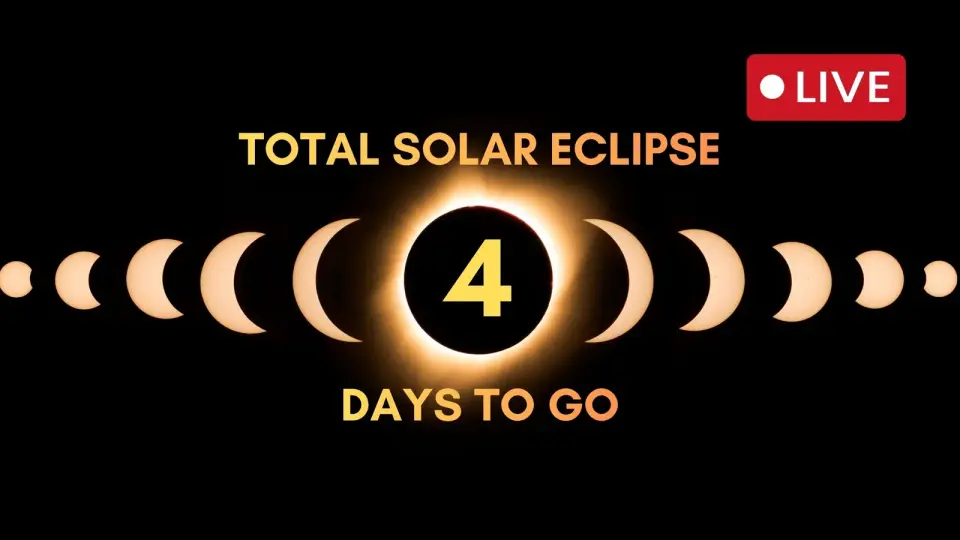
On August 12, 2026, a total solar eclipse will sweep across Greenland, Iceland, northern Spain, and the Balearic Islands, marking the first such event in Europe since 1999. While millions across Europe and North America will witness a partial eclipse, a narrow path of totality is drawing significant attention from media, scientists, and tourists. Key locations include Scoresby Sund in Greenland and several villages in Spain, where logistical challenges and economic opportunities are emerging. NASA has selected the formerly abandoned village of Villalibado in Burgos for a major broadcast, while other communities brace for unprecedented visitor numbers.
Key points
- The path of totality crosses Greenland, Iceland, northern Spain, a corner of Portugal, and northern Russia, with a partial eclipse visible across much of Europe and parts of North America.
- NASA has chosen Villalibado, a village in Burgos, Spain, for a live broadcast, citing its unobstructed horizon and infrastructure; the village was abandoned for decades before being restored for rural tourism.
- In Somosierra, a small mountain village near Madrid, officials expect up to 2,000 visitors despite offering only 400 registration slots, raising concerns about parking, water, and food supply.
- The Spanish government has established a special committee to oversee a series of eclipses from 2026 to 2028, projecting 446,000 additional visitors and €342 million in revenue from the August 2026 event alone.
- Live coverage is being provided from multiple locations, including Scoresby Sund in Greenland by Space.com and Valoria la Buena in Spain, alongside broadcasts from NASA, ESA, and other international partners.
Background
This event is part of a 'golden age' of eclipses predicted between 2026 and 2028, which includes a six-minute total eclipse in August 2027 and a 'ring of fire' eclipse in January 2028. Previous coverage noted that up to 15.2 million people are in the path of totality, while approximately 980 million will see a partial eclipse. The 2026 eclipse is the first total solar eclipse visible in Europe since 1999, making it a rare astronomical milestone for the continent.
How outlets are covering it
Space.com emphasizes live, on-the-ground reporting from two specific locations along the path of totality: Scoresby Sund in Greenland and Valoria la Buena in Spain, highlighting the personal experiences of journalists and the challenges of weather and logistics. The Guardian focuses on the socioeconomic impact on small Spanish communities, particularly Somosierra, detailing the strain on local infrastructure and the economic opportunities for businesses. Euronews highlights the unique story of Villalibado, a village revived from abandonment, which was selected by NASA for its broadcast, emphasizing the global reach of the event. Sky & Telescope provides a practical overview of online viewing options, listing various broadcasters and emphasizing the accessibility of the event for those not in the path of totality. While all sources agree on the astronomical facts, they differ in focus: Space.com on live journalism, The Guardian on local impact, Euronews on the specific NASA location, and Sky & Telescope on global accessibility.
Why it matters
The August 12, 2026, total solar eclipse is a rare astronomical event that has significant implications beyond science. It is driving a surge in astrotourism, particularly in Spain, where local communities are preparing for unprecedented visitor numbers. The event is expected to generate substantial economic benefits, with projections of €342 million in additional revenue for Spain alone. It also highlights the importance of infrastructure and planning in remote areas, as seen in the preparations in Villalibado and Somosierra. Furthermore, the global broadcast by NASA and other organizations will make the event accessible to a worldwide audience, fostering public interest in astronomy and science.
What to watch
In the immediate term, the focus will be on the live coverage of the eclipse on August 12, 2026, from various locations along the path of totality. Following the event, attention will shift to the analysis of the data collected and the economic impact on the affected regions. In the longer term, the 'golden age' of eclipses will continue, with the next major total solar eclipse in Europe expected in August 2027, and a 'ring of fire' eclipse in January 2028. These events are likely to further boost astrotourism and astronomical research in the region.
- Total solar eclipse Aug. 12, 2026 live updates — 4 days to totality Space
- Where to See the August 12th Solar Eclipse Online Sky & Telescope
- Spanish mountain village braces for astrotourists lured by total solar eclipse The Guardian
- How and When You Can Watch August's Stunning Partial Solar Eclipse From the U.K. and Ireland Time Magazine
- Once-abandoned Spanish village becomes NASA's eclipse hotspot Euronews.com
Want the full story? Read the original reporting
Read on Space