
"Deciphering the Hunt: How Predatory Bacteria Identify and Invade Their Prey"
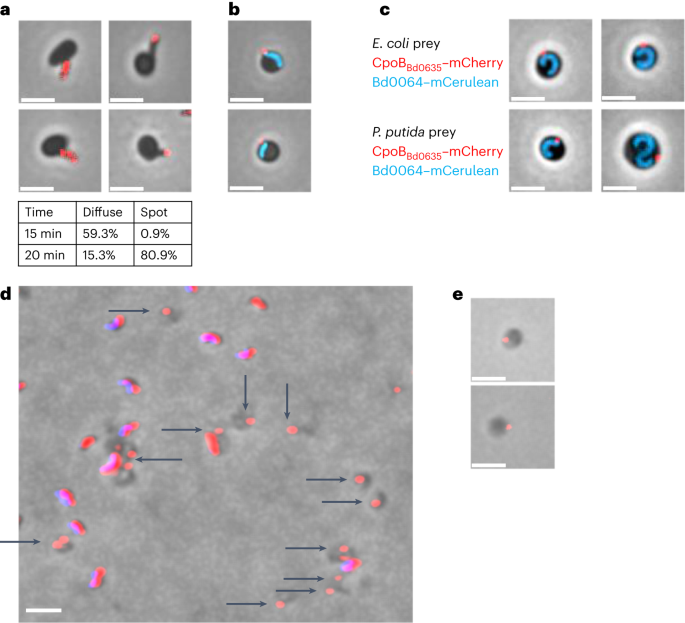
Researchers have discovered how the predatory bacterium Bdellovibrio bacteriovorus recognizes and invades a wide range of Gram-negative bacterial hosts. It uses a family of chimeric fibre proteins, similar to phage tail fibres, with diverse adhesin domains that allow it to interact with various bacterial surfaces. These proteins are part of a large mosaic adhesive trimer (MAT) protein repertoire, which enables the predator to traverse the prey's cell envelope without causing lysis. The study also revealed that B. bacteriovorus deposits a vesicle containing these proteins into the prey's periplasm, which persists even after the predator exits, suggesting a complex mechanism of bacterial predation and potential implications for antibacterial strategies.
- Bdellovibrio bacteriovorus uses chimeric fibre proteins to recognize and invade a broad range of bacterial hosts Nature.com
- Scientists solve mystery of how predatory bacteria recognizes prey Phys.org
- Unveiling Predatory Bacteria's Secret: Pathway to Focused Bacterial Elimination BNN Breaking
- How natural antimicrobial predatory bacteria recognize prey? Mild Sauce News
Reading Insights
0
13
55 min
vs 56 min read
99%
11,071 → 108 words
Want the full story? Read the original article
Read on Nature.com