
UVM Secures $19M NSF Grant for National Connectomics Observatory
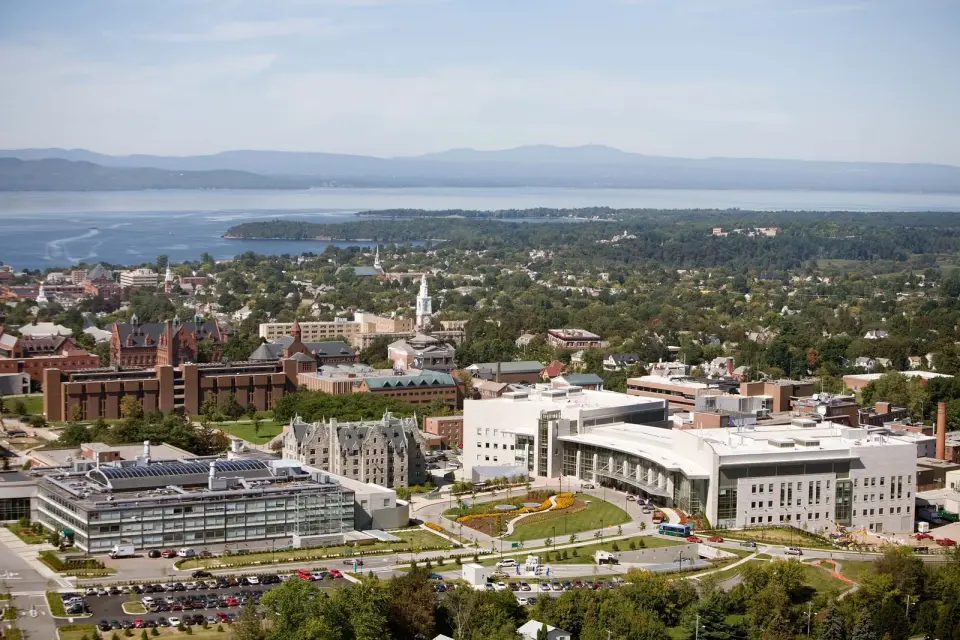
The University of Vermont (UVM) has secured a $19 million National Science Foundation grant to establish the National Connectomics and Ultrastructure Volume Observatory. This five-year initiative, led by neuroscientist Davi Bock, aims to map neural structures at a microscopic scale. The project partners with UC San Diego to combine high-resolution imaging in Vermont with advanced computing in California, targeting mouse brains, shark eyes, and parasites before eventually scaling to human neural mapping.
Key points
- UVM received a $19 million NSF grant to build a national observatory for connectomics research, with $16 million allocated to UVM and $3 million to UC San Diego.
- The observatory will pilot four projects over five years, including studies on mouse learning, shark vision in murky water, and single-celled protists, with data expected within two to three years.
- The facility will integrate high-tech electron microscopy in Burlington with supercomputing and AI analysis at UC San Diego’s National Center for Microscopy and Imaging Research.
- The project builds on Bock’s 2024 achievement of mapping the first complete adult fruit fly brain, containing over 130,000 neurons, and aims to eventually map human brains.
- UVM officials highlight the economic and scientific benefits, positioning the university as a national hub for biological data analysis and potential medical breakthroughs in diseases like Parkinson’s.
Background
This development follows UVM’s recent designation as an R1 research institution and builds on the 2024 publication of the first complete wiring diagram of an adult fruit fly brain by Davi Bock and international collaborators. The broader field of connectomics has seen increased attention in 2026, with recent publications exploring brain plasticity and network dynamics, though this grant specifically focuses on ultrastructure imaging and computational mapping rather than theoretical models.
How outlets are covering it
VTDigger emphasizes the grant’s significance for UVM’s status as a top research university and the economic impact on Vermont, citing Dean Richard Page’s comments on the university’s underrecognized research history. WPTZ focuses on the technological aspect, describing the observatory as a 'high-tech microscope' that makes advanced imaging accessible to scientists nationwide, highlighting the partnership between Vermont’s imaging capabilities and California’s computing power. Vermont Public frames the project as a bridge between basic biological discovery and human health applications, noting Bock’s vision of understanding the 'galaxy' of neurons in the human skull and potential implications for diseases like multiple sclerosis. All sources agree on the $19 million figure and the five-year timeline, but differ in emphasis: VTDigger highlights institutional prestige, WPTZ highlights technological accessibility, and Vermont Public highlights medical potential.
Why it matters
The establishment of a national connectomics observatory in Vermont positions UVM as a key player in the future of neuroscience and artificial intelligence. By creating a shared resource for mapping neural structures, the project could accelerate discoveries in understanding brain function, leading to potential therapies for neurodegenerative diseases. It also demonstrates how smaller institutions can lead in big science through strategic partnerships, potentially influencing future funding models for research infrastructure in the US.
What to watch
The observatory will begin its four pilot projects, with initial data expected within two to three years. Researchers will first focus on normal tissue and smaller organisms like mice and sharks before scaling up to more complex systems. Long-term, the goal is to apply this technology to human brain mapping, though officials acknowledge this is years away. The project will also expand access to advanced imaging and computing resources for scientists across the country, potentially leading to new collaborations and discoveries in fields beyond neuroscience, such as immunology and respiratory biology.
- UVM receives $19M grant to build a national neuroscience observatory VTDigger
- UVM Launches $19 Million National Observatory to Unlock Secrets of Neurobiology University of Vermont
- A new neurobiology center in Vermont aims to democratize brain-mapping technology The Boston Globe
- Research partnership looking at cells to call University of Vermont home WPTZ
- UVM receives $19M grant to create a national neuroscience hub Vermont Public
Want the full story? Read the original reporting
Read on VTDigger