
GPS Data Reveals Barred Owls Seize 64% of Spotted Owl Habitat in California
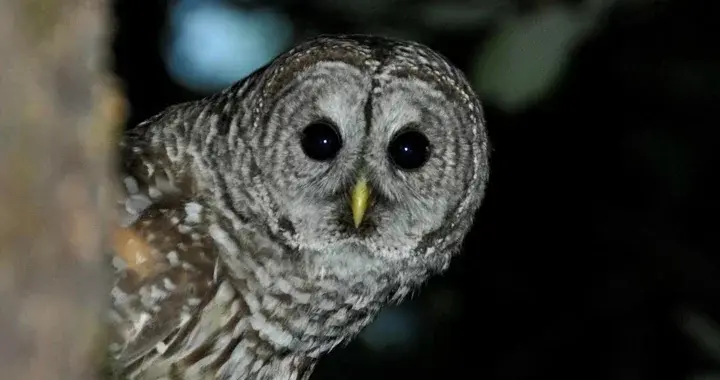
A new study in Biological Conservation shows invasive barred owls are taking over the best old-growth forests in northwestern California, directly displacing native spotted owls. GPS tracking of 56 barred owls revealed they select the tallest, most complex trees, with 64% of their home ranges overlapping mapped spotted owl habitat. Each barred owl claims a territory 28 times larger than in its native range, exerting outsized pressure on the ecosystem. However, the study also offers hope: removing barred owls from an area quickly reopens habitat for spotted owls. Researchers estimate that 1,171 barred owls removed under a regional program have freed up over 1,800 square kilometers of habitat, including 1,150 square kilometers of prime nesting areas. The findings underscore that managing the invasive species is as critical as protecting the forest itself, as barred owls also prey on broader old-growth food web species.
Key points
- GPS telemetry on 56 barred owls across 4,070 sq km in northwestern California shows they prefer the oldest, tallest forest structures.
- 64% of a barred owl’s home range overlaps with mapped spotted owl habitat, and 38% is the highest-quality nesting/roosting forest.
- Barred owl territories in California average 6.7 sq km, roughly 28 times larger than in their native Louisiana range.
- Removing barred owls from a territory reopens several square kilometers of habitat for spotted owls to reclaim.
- 1,171 barred owls removed under a regional program have freed over 1,800 sq km of spotted owl habitat, including 1,150 sq km of prime nesting areas.
- Barred owls compete for prey like flying squirrels and tree voles, and also hunt species spotted owls rarely touch, such as salamanders and western spotted skunks.
Background
This study builds on ongoing conservation efforts in California to protect the northern spotted owl, a species threatened by habitat loss and invasive species. Previous coverage has highlighted the importance of old-growth forests in California, including recent board actions to strengthen protections for old-growth trees in Lower Redway. The current findings provide concrete, GPS-based evidence of how invasive barred owls are actively displacing spotted owls from their preferred habitats, reinforcing the need for long-term management strategies. The study also connects to broader ecological concerns, as barred owls impact the entire old-growth food web, not just spotted owls.
Why it matters
The study provides critical, quantifiable evidence that invasive barred owls are a primary driver of habitat loss for the endangered northern spotted owl in California. By showing that barred owls select the highest-quality old-growth forests and occupy territories 28 times larger than in their native range, the research highlights the disproportionate impact of this invasive species. The finding that removing barred owls quickly reopens habitat for spotted owls offers a clear, actionable conservation strategy. This is significant for policymakers and conservation groups, as it demonstrates that managing the invader is as important as protecting the forest itself. The study also raises concerns about the broader impact on the old-growth food web, suggesting that the threat extends beyond spotted owls to other species in the ecosystem.
What to watch
The findings will likely inform and strengthen ongoing regional efforts to manage barred owl populations in California, involving partners such as the University of Wisconsin-Madison, U.S. Department of Agriculture, Hoopa Valley Tribe, U.S. Forest Service, and California Department of Fish and Wildlife. Conservationists may push for expanded removal programs based on the study’s estimates of habitat freed up. Further research may explore the broader impacts of barred owls on the old-growth food web, as suggested by the study’s authors. The data could also influence policy decisions regarding the protection of old-growth forests and the management of invasive species in California.
Want the full story? Read the original reporting
Read on Lost Coast Outpost