Tag

Invasive Species

All articles tagged with #invasive species

Budget-friendly grass carp wipe hydrilla from Florida's Lake Baldwin
science1 day ago

Budget-friendly grass carp wipe hydrilla from Florida's Lake Baldwin

Florida wildlife managers used sterile triploid grass carp to cut hydrilla cover on Lake Baldwin from about 95% to under 1%, at a recorded cost of $8,499 (roughly $43 per acre). The approach—rapid, plant-eating carp—offers an affordable alternative to herbicides or mechanical removal, but carries trade-offs like potential loss of submerged vegetation and shifts in native fish communities; containment and permits are required, and Lake Baldwin is cited as a reference case for how far the method can work when properly managed.

Daylight-Active Asian Tiger Mosquitoes Surge Across Chicago Suburbs
health-and-wellness5 days ago

Daylight-Active Asian Tiger Mosquitoes Surge Across Chicago Suburbs

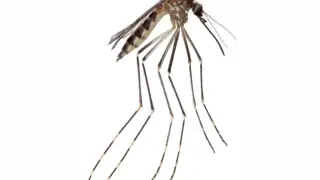
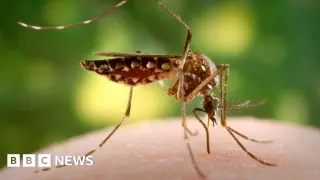
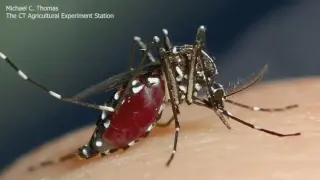
Chicago-area mosquito districts report higher populations of the invasive Asian tiger mosquito, which is active in daylight and can take multiple blood meals, making residents feel more bites this summer. Researchers say it’s now the third-most common species in traps around the north suburbs, partly due to warm, damp conditions that boost breeding near homes. The species can transmit diseases like West Nile, so residents should eliminate standing water and use bug spray to protect themselves outdoors.

Raccoons in Germany: debunking Nazi-origin myths and tracing an urban invasion
science9 days ago

Raccoons in Germany: debunking Nazi-origin myths and tracing an urban invasion

New research shows that Germany’s raccoons were released in 1934 for wildlife enrichment, not personally by Hermann Göring, and later DNA analysis reveals additional releases creating distinct gene pools; today about two million raccoons span Germany and parts of Europe, fueling debate over their ecological impact while scientists say evidence of major harm to native species is inconclusive and managers pursue options from hunting to sterilisation to coexistence.

Tiny beetle, massive bill: the global invasion jeopardizing forests and economies
world12 days ago

Tiny beetle, massive bill: the global invasion jeopardizing forests and economies

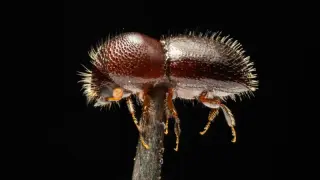
Scientists warn that the polyphagous shot-hole borer, a tiny beetle native to Southeast Asia, is spreading across every continent except Antarctica and carries a fungus that causes fusarium dieback, killing trees and threatening habitats. In South Africa it has already invaded most provinces, and economists estimate potential costs around 275 billion rand (about $18.5 billion) over the next decade due to tree removals and related damage. Eradication is unlikely, so containment relies on public prevention, costly removals, and exploration of biological controls, with climate change potentially accelerating future spread.

Europe’s 6,000-km Ant Megapolis: The World’s Largest Invasive Supercolony
science20 days ago

Europe’s 6,000-km Ant Megapolis: The World’s Largest Invasive Supercolony

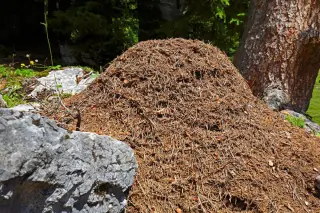
The Argentine ant Linepithema humile forms vast, interconnected supercolonies that stretch along 6,000 km of Europe’s coast (Portugal to Italy), housing millions of nests and billions of workers, with urban-like features such as ventilation, food storage, nurseries, toilets and highways, illustrating how an invasive species can organize into a city-scale ecosystem.

Giant East Asian hornet poses bee threats with credit-card wingspan
science22 days ago

Giant East Asian hornet poses bee threats with credit-card wingspan

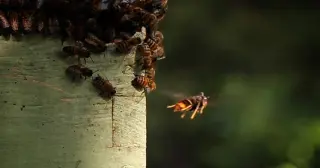
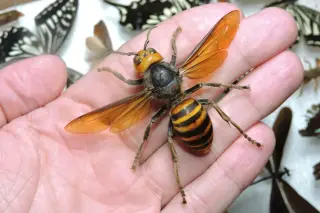
Scientists in the United States and Canada are monitoring sightings of Vespa mandarinia, the large East Asian hornet nicknamed the “murder hornet,” after nests were found and destroyed in the Pacific Northwest. The wasp can reach about 1.6 inches in length with a wingspan of roughly 2.8 inches (about a credit card’s width) and a 6 mm stinger, and its powerful jaws can slice through honeybees. If established, it could seriously threaten pollinator populations, ecosystems, and crop yields. Officials urge not to disturb nests, to report sightings, and to support pollinator-friendly practices to help protect bees.

Stalled Gulf Fleet Could Trigger Global Marine Invasions, Scientists Warn
environment27 days ago

Stalled Gulf Fleet Could Trigger Global Marine Invasions, Scientists Warn

Scientists warn that the closure of the Strait of Hormuz has left about 1,500 ships idle, allowing hulls and ballast water to accumulate marine life that could hitchhike to ports worldwide when shipping resumes. This could trigger a marine bio-invasion ‘super-spreader’ event, threatening ecosystems, fisheries, and power-plant cooling systems. The Gulf’s warm, salty conditions may boost invasives; ports from India to Singapore are seen as high risk. The study urges pre-departure ship cleaning, stronger port monitoring, and rapid-response plans, with the IMO pursuing binding biofouling rules. Early detection and prevention are urged, mirroring infectious-disease containment.

Rats rewire Indian Ocean reefs by starving seabirds and reshaping food webs
science28 days ago

Rats rewire Indian Ocean reefs by starving seabirds and reshaping food webs

New research shows invasive rats on Indian Ocean islands decimate seabirds, cutting nutrient inputs to coral reefs and rewiring reef food webs. The loss of seabird-derived nutrients shifts the base of the ecosystem from cryptobenthic fishes to invertebrates, altering predator energy pathways and illustrating a complex, uneven nutrient impact across rat-infested and rat-free reefs.

Diploid Hybrid Drives Fast Spread of Invasive Salvinia Fern
science1 month ago

Diploid Hybrid Drives Fast Spread of Invasive Salvinia Fern

New genome analysis shows Salvinia molesta is a diploid hybrid, not the previously assumed allopentaploid, causing meiotic mispairing and preventing sexual reproduction; instead, the fern spreads clonally by fragments that become genetically identical plants, forming dense mats that disrupt freshwater ecosystems. This clonality could make management more predictable and potentially reduce time and costs to restore affected lakes and ponds.

Texas Fire Ants: From Invasion to Practical Control
science1 month ago

Texas Fire Ants: From Invasion to Practical Control

The piece traces the red imported fire ant’s westward invasion from Mobile in the 1930s to Texas-wide presence, examines how scientists at UT’s Brackenridge Field Laboratory introduced natural predators (phorid flies) to dampen populations, and outlines current management approaches (bait products, boiling-water mound treatment) since eradication is unlikely. It also notes that stings can be painful and long-lasting, but fire ants play a minor role in soil aeration and the food chain.

Pacific Northwest Faces Invasive Asian Giant Hornet: Deadly Venom and Hive Raids
science2 months ago

Pacific Northwest Faces Invasive Asian Giant Hornet: Deadly Venom and Hive Raids

An invasive Asian giant hornet (Vespa mandarinia) reached Washington State in 2019, where nests have numbered up to 1,500 and the hornet’s venom can kill, sometimes in severe stings; a single hunting raid can decapitate 30,000 honeybees to feed larvae, in a three‑phase attack that alarms beekeepers. Washington ran an aggressive eradication program through 2021 and 2024, and officials say the hornet is eradicated in the U.S., though introductions via shipping remain possible. In its native Asia, native honeybees have defenses while some predators, like certain frogs, can eat hornets; the broader risk to beekeeping and ecosystems persists.

Invasive yellow-legged hornet spotted in Pacific Northwest
local-news2 months ago

Invasive yellow-legged hornet spotted in Pacific Northwest

A live yellow-legged hornet (Vespa velutina) was found April 30 aboard a ship at the Port of Vancouver on the Lower Columbia River and is being monitored after traps were set; experts warn this invasive, more mobile hornet—smaller than the notorious northern giant hornet—could threaten Northwest honeybees and agriculture and might spread coast-to-coast, though no further nests have been found yet.