
Baltic Study Finds Ocean Releases 10x More Gases Than Previously Modeled
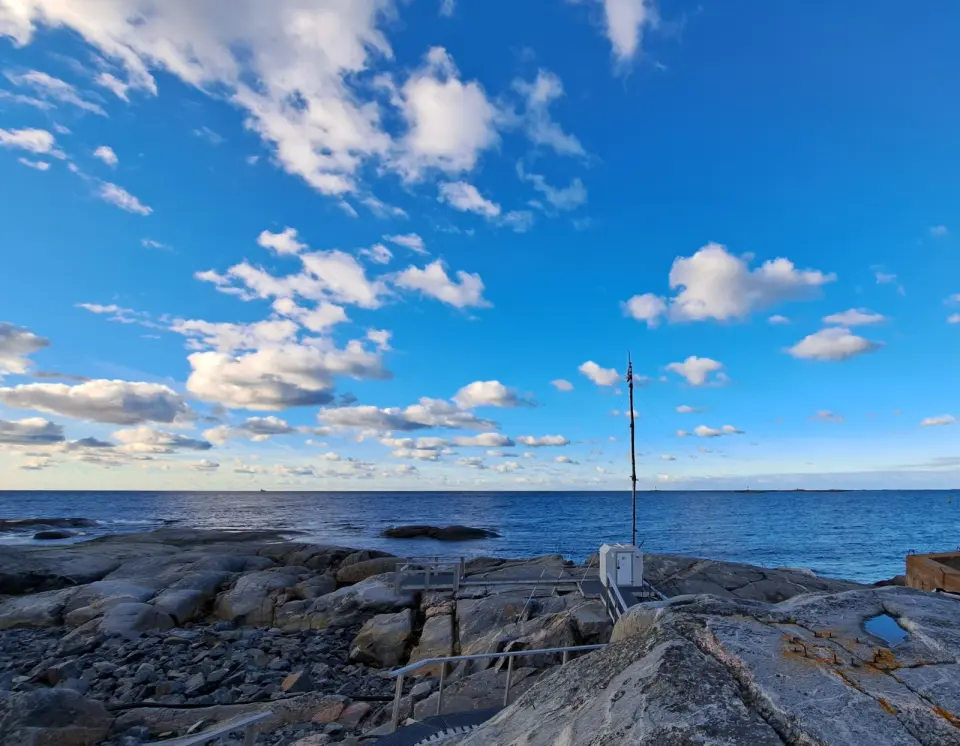
A new study published in Nature Communications reveals that the ocean exchanges significantly more gases with the atmosphere than previously assumed. Researchers measured 73 volatile compounds over 51 days in the Baltic Sea, finding that seasonal shifts drastically alter emissions. This complexity suggests current climate models may underestimate the ocean's role in regulating air quality and cloud formation.
Key points
- Researchers measured 73 gases, identifying 48 chemically, which is roughly ten times more than typical previous studies.
- Continuous monitoring on Utö Island showed that seasonal changes, such as cooling water and declining cyanobacteria, cause specific gas emissions like dimethyl sulfide (DMS) to drop to near zero.
- A link was found between late-summer cyanobacterial blooms and DMS release, a gas that contributes to cloud formation and cooling the Earth's surface.
- Senior author Riikka Rinnan warns that assuming simple seasonal patterns in climate models could lead to inaccurate estimates of global warming mitigation.
Background
This research builds on broader concerns about the accuracy of environmental models. Recent studies, such as the October 2026 satellite analysis on groundwater depletion, have highlighted how previous estimates of environmental changes were significantly underestimated. Similarly, this ocean study suggests that atmospheric chemistry is more dynamic than older models accounted for. While unrelated to the recent geopolitical tensions in the Baltic Sea regarding the Sparta II incident, the scientific findings underscore the region's critical role in global climate regulation.
How outlets are covering it
Both Phys.org and Bioengineer.org report the same core findings from the University of Copenhagen-led team. However, Bioengineer.org places greater emphasis on the technical methodology, detailing the mass spectrometer's ten-times-per-second analysis rate and the specific wind measurement setup. Phys.org focuses more on the implications for climate policy, highlighting the risk of inaccurate climate models if seasonal complexity is ignored. Neither source reports disagreement on the data, but Bioengineer.org provides a more granular breakdown of the identified compounds, including formic acid and acetone, whereas Phys.org emphasizes the broader impact on atmospheric sulfur levels.
Why it matters
Accurate climate models are essential for predicting future weather patterns and temperature rises. If the ocean releases more diverse and variable gases than currently modeled, the cooling effects of clouds and aerosols may be misestimated. This could lead to flawed projections of global warming trajectories, affecting international climate agreements and adaptation strategies. Understanding these complex exchanges is crucial for improving the precision of long-term environmental forecasts.
What to watch
Researchers plan to conduct similar multi-gas measurements in other marine regions to verify if these patterns hold globally. They also aim to investigate the specific bacterial mechanisms driving DMS production during cyanobacterial blooms. Future studies will likely focus on how changing marine ecosystems due to global warming will alter these gas exchanges, potentially requiring updates to existing climate models to reflect this new complexity.
Want the full story? Read the original reporting
Read on Phys.org