
Bonobo Louise Recognizes Sister After 26-Year Separation, Setting New Record for Ape Social Memory
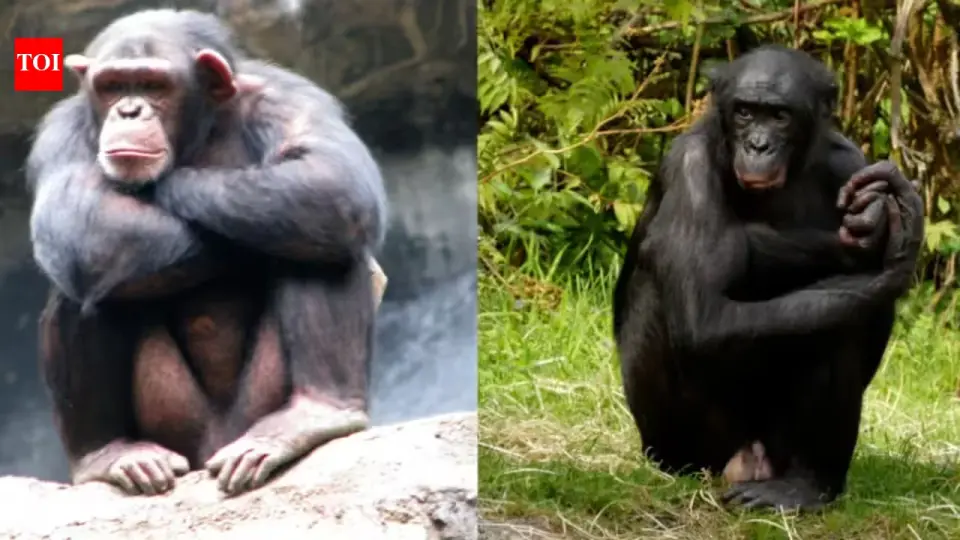
A 2022 study by Johns Hopkins University researchers, published in the Proceedings of the National Academy of Sciences, reveals that bonobos and chimpanzees retain long-term social memories. Using infrared eye-tracking, scientists found that 26 apes across Europe and Japan spent 11% to 14% more time looking at former companions than strangers. The standout case involved Louise, a 46-year-old bonobo in Japan, who recognized her sister Loretta after 26 years apart, surpassing previous records for non-human social memory.
Key points
- Johns Hopkins University team led by Christopher Krupenye and Laura Simone Lewis tested 26 chimpanzees and bonobos in European and Japanese facilities.
- Infrared eye-tracking cameras measured gaze duration on paired photos of former groupmates versus strangers over a three-second window.
- Apes spent 11% to 14% more time viewing familiar faces, indicating recognition of individuals not seen for decades.
- Bonobo Louise, aged 46, recognized her sister Loretta after 26 years of separation, setting a new record for non-human social memory.
- Memory strength correlated with positive past relationships, such as grooming or resting together, rather than kinship alone.
- The findings suggest apes may retain detailed social memories for much of their 40 to 60-year captive lifespans.
Background
This finding builds on earlier research into ape social behaviors, such as the 2026 observation that physical contact like hugging and touching serves as a mechanism for building trust and cooperation among chimpanzees and bonobos. While previous studies, such as a 2013 report on bottlenose dolphins, noted recognition of former podmates after 20 years, the current research extends this timeline significantly for primates. The study also contrasts with unrelated recent events involving Johns Hopkins University, such as the detention of a public health researcher by immigration authorities, which is not related to this scientific discovery.
Why it matters
The discovery challenges previous assumptions about the duration of social memory in non-human animals, suggesting that great apes maintain complex relational memories for decades. This has practical implications for animal welfare, as it indicates that separating related or bonded individuals in zoos and sanctuaries may cause significant psychological distress. Understanding these long-term cognitive abilities helps refine ethical standards for the care and management of captive great apes.
What to watch
Researchers may expand eye-tracking studies to other primate species to determine if similar long-term social memory capabilities exist across the primate family. Conservation and welfare organizations may review current policies on the transfer and separation of bonded animals in zoos and breeding programs to account for these enduring social bonds.
Want the full story? Read the original reporting
Read on The Times of India