Johns Hopkins Study Links JWST 'Little Red Dots' to Primordial Black Holes
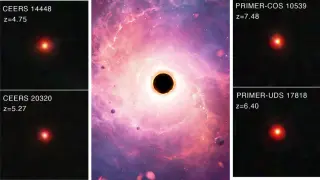
Researchers from Johns Hopkins University have proposed that mysterious 'little red dots' observed by the James Webb Space Telescope may be primordial black holes formed shortly after the Big Bang. Published in Physical Review Letters, the study focuses on object Abell 2744-QSO1, suggesting it grew from a small primordial seed by accreting gas, offering a potential explanation for supermassive black holes existing in the early universe.