
Fungi Form Fairy Rings to Escape Their Own Toxic Wake, Study Suggests
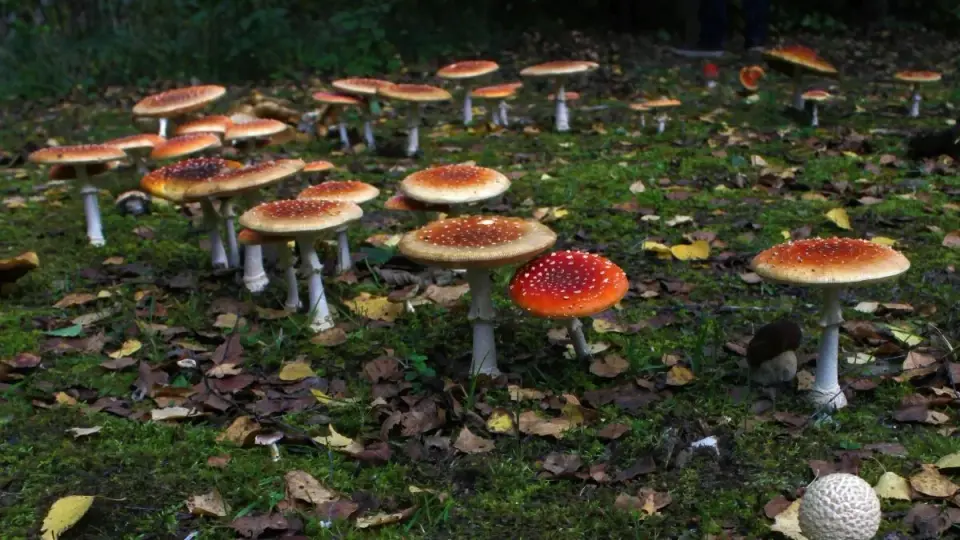
Researchers at Stockholm University have provided preliminary evidence that fairy rings form because fungi actively avoid inhospitable conditions left behind by their own expanding growth. By analyzing DNA in soil samples and conducting transplantation experiments with Marasmius oreades, the team found that mycelium concentrates at the outer edge of the ring while the center becomes barren. This supports the 'transient-escape hypothesis,' suggesting the fungus moves forward to avoid nutrient depletion or self-produced toxins, though the exact mechanism remains unconfirmed.
Key points
- Mycologist Hanna Johannesson and colleagues investigated Marasmius oreades fairy rings in a cemetery in Uppsala, Sweden.
- DNA sequencing revealed high fungal concentrations at the outer rim of the rings, while the center and exterior showed background levels, confirming the mycelium itself forms a ring shape.
- Transplantation experiments, where fungal sections were rotated or moved 14 months prior, supported the 'transient-escape hypothesis' over other models like compass orientation or self-communication.
- The study suggests the fungus advances to avoid temporary inhibitory factors, possibly caused by nutrient depletion or toxin release, but the specific cause requires further laboratory validation.
- The findings were published in Royal Society Open Science and highlight the potential of using soil DNA analysis to study vegetative fungal growth in natural environments.
Background
Fairy rings have long been subjects of folklore, often attributed to supernatural entities, yet the biological reasons for their circular formation remained unclear. Previous research, such as the 2026 study on Lanmaoa asiatica, explored other fungal mysteries but did not address the structural formation of rings. This new study builds on the understanding that the visible mushroom is merely the fruiting body of a larger subterranean mycelial network.
Why it matters
This research offers a concrete biological explanation for a phenomenon previously shrouded in myth, demonstrating that fungal growth patterns can be driven by self-avoidance mechanisms. It also validates the use of environmental DNA analysis for studying underground fungal structures, opening new avenues for mycological research.
What to watch
Further studies are required to determine the specific inhibitory factors, such as whether nutrient depletion or toxin release is the primary driver. Researchers plan to combine data from more rings with controlled laboratory experiments to confirm the causal mechanisms behind the observed growth patterns.
Want the full story? Read the original reporting
Read on ScienceAlert