
UBC Researchers Unveil Two New Sea Spider Species in Salish Sea After Century Gap
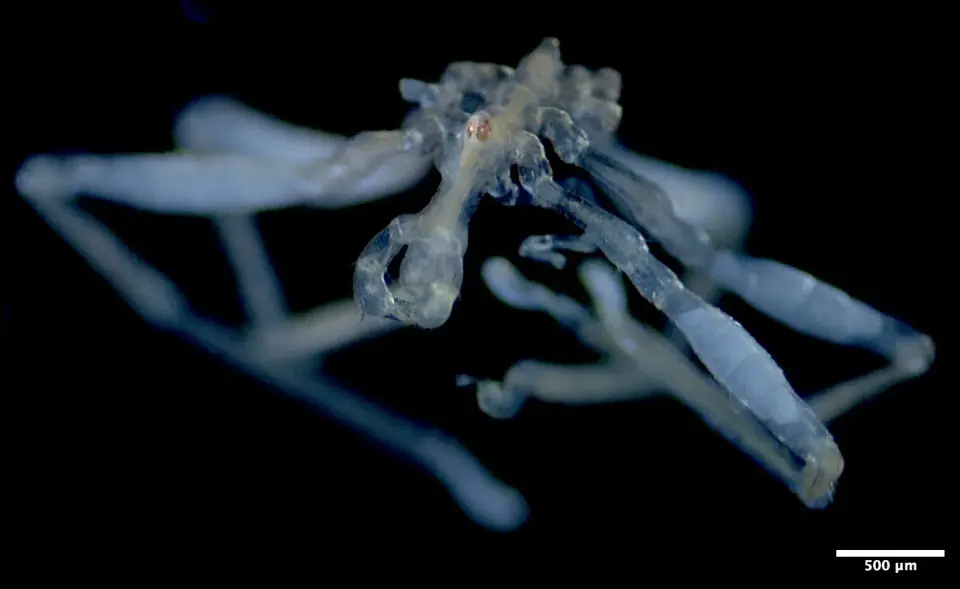
University of British Columbia researchers have described two new species of sea spiders in the Salish Sea, marking the first such discovery in the region in nearly a century. The study, published in Organisms Diversity & Evolution, identifies Callipallene pilosuspedes and Tanystylum kiixin among five total species found in shallow waters. These tiny arachnids, which lack abdomens and breathe through their skin, highlight significant gaps in marine biodiversity data and raise concerns about the impact of climate change on undocumented marine invertebrates.
Key points
- Researchers from the University of British Columbia identified two new sea spider species, Callipallene pilosuspedes and Tanystylum kiixin, in the Salish Sea.
- The findings represent the first new sea spider discoveries in the Pacific Northwest region in approximately 100 years.
- Callipallene pilosuspedes is characterized by hairy legs, red eyes, and a three-lipped mouth, while Tanystylum kiixin hosts microscopic parasites on its body.
- The study analyzed over 150 specimens collected from depths up to 60 feet between September 2023 and August 2024.
- Lead author Cormac Toler-Scott emphasized that these discoveries underscore the urgent need for biodiversity data to assess climate change impacts on marine communities.
Background
Sea spiders are ancient arachnids related to scorpions and horseshoe crabs, having evolved over 500 million years ago. While roughly 1,400 species are documented globally, they are often overlooked due to their small size and cryptic nature. Previous coverage noted that these creatures lack abdomens, storing organs in their legs, and some species have been found to consume methane via bacteria. The recent discovery in the Salish Sea follows other recent findings, such as bioluminescent sea spiders in Australian deep-sea samples, illustrating the ongoing revelation of marine diversity.
How outlets are covering it
Nautilus and Smithsonian Magazine both highlight the physical distinctiveness of the new species, with Nautilus focusing on the 'Sarlacc' appearance of Callipallene pilosuspedes and Smithsonian emphasizing the 'horror movie' aesthetic of the red-eyed creature. Both outlets agree on the scientific significance of the discovery but differ in tone; Nautilus presents a more neutral scientific overview, while Smithsonian uses sensationalist language to engage a general audience. Axios provided no substantive content, only a cookie consent notice, offering no perspective on the story. All sources agree that the discovery underscores the fragility of marine biodiversity and the need for conservation efforts before climate change alters these ecosystems.
Why it matters
The discovery of new species in a well-studied region like the Salish Sea indicates that significant gaps remain in our understanding of marine biodiversity. As climate change and human activity alter marine communities, the lack of baseline data for many invertebrate species makes it difficult to assess the full impact of environmental changes. These findings serve as a reminder that even familiar coastal areas may harbor undiscovered life forms that could vanish before being documented.
What to watch
Researchers will continue to monitor the populations of these new species to understand their ecological roles and vulnerabilities. The study calls for increased funding and expeditions to document marine invertebrates in the Pacific Northwest before anthropogenic disturbances and climate change alter these communities. Future research may focus on the symbiotic relationships between sea spiders and their hosts, as well as the potential for other undiscovered species in similar habitats.
- There’s a New Sea Spider in Town Nautilus | Science Connected
- Scientists Discover Two New Species of Sea Spider in the Pacific Northwest—and They Look Like They Came Straight Out of a Horror Movie Smithsonian Magazine
- Scientists discover hairy-legged, red-eyed "nightmare fuel" sea spiders Axios
- Scientists Discover 2 Bizarre Sea Spider Species Off North America’s Pacific Coast, the First in Almost 100 Years People.com
- A species new to science, tiny sea spiders suck jellyfish dry in Canada's Salish Sea Yahoo
Want the full story? Read the original reporting
Read on Nautilus | Science Connected