
US Space Nuclear Push Faces Fuel Bottlenecks and Political Fragility
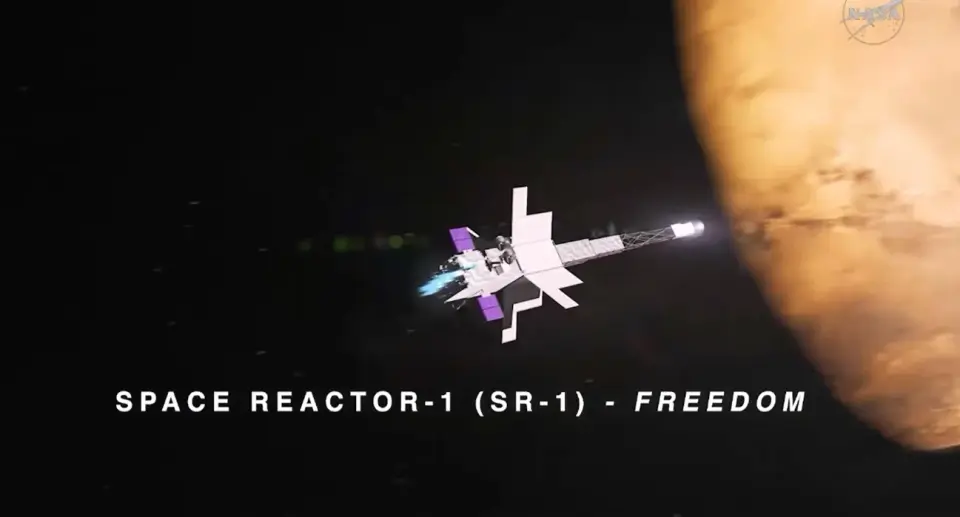
US space nuclear programs are advancing rapidly but face critical hurdles, including a shortage of high-assay low-enriched uranium (HALEU) fuel, a limited workforce, and the risk of funding cuts after the current administration ends.
Key points
- NASA’s Space Reactor 1 (SR-1) Freedom mission, targeting a late-2028 launch to Mars, and the Lunar Reactor 1 (LR-1) program are central to US deep-space exploration.
- The Department of Energy (DOE) is the sole domestic supplier of HALEU fuel, creating a potential bottleneck as demand grows for both space and terrestrial small modular reactors.
- The US Army’s Janus microreactor program competes for the same nuclear resources and expertise, though officials emphasize collaboration over competition.
- Former NASA officials warn that current support is 'positional' rather than 'structural,' risking cancellation if the administration changes in 2029.
- NASA Glenn Research Center in Cleveland is a key hub for developing nuclear propulsion, with NASA Administrator Jared Isaacman highlighting its critical role in future missions.
Background
In July 2026, NASA estimated the SR-1 Freedom mission would cost approximately $2.1 billion, with funding planned for fiscal years 2026–2029. The mission involves reusing the Gateway’s Power and Propulsion Element and includes a SkyFall science payload. This follows broader US efforts to expand nuclear capabilities, including a July 2026 agreement with Saudi Arabia for peaceful nuclear cooperation.
How outlets are covering it
SpaceNews and Energy Intelligence highlight the 'generational opportunity' of space nuclear but stress near-term supply chain issues, particularly HALEU availability. News 5 Cleveland emphasizes the local impact on NASA Glenn, noting new business in Northeast Ohio and the strategic importance of nuclear power for lunar bases. Zamin.uz focuses on the systemic risks of fuel shortages and workforce limitations, citing a 2025 study that warns of potential program cancellations after a change in administration. All sources agree on the urgency of securing multiyear congressional funding to prevent a repeat of the 1965 SNAP-10A cancellation.
Why it matters
The success of US space nuclear programs is critical for maintaining a competitive edge against China and Russia, which have announced joint efforts to place a reactor on the Moon by the mid-2030s. Failure to secure long-term funding and fuel supply could delay US lunar and Mars missions, impacting national security and scientific exploration.
What to watch
The US Army is expected to soon announce five companies selected for its Janus microreactor program. NASA is urged to begin work on the SR-2 mission before SR-1 launches and to push Congress for multiyear appropriations. The DOE is to complete a 60-day assessment on HALEU production readiness for space applications.
- Space nuclear programs face near- and long-term challenges SpaceNews
- NASA Glenn leads nuclear-powered spacecraft development aimed at moon base and deep space exploration News 5 Cleveland WEWS
- US Charges Ahead on Nuclear to Support Space Missions Energy Intelligence
- US Space Nuclear Power Faces Fuel Shortage Zamin.uz
- Panelists point to cost, production as key challenges for space nuclear power and propulsion Aerospace America
Want the full story? Read the original reporting
Read on SpaceNews