
From 19th-Century Brick Satellites to Von Braun’s Rotating Wheels: The Evolution of Space Station Concepts
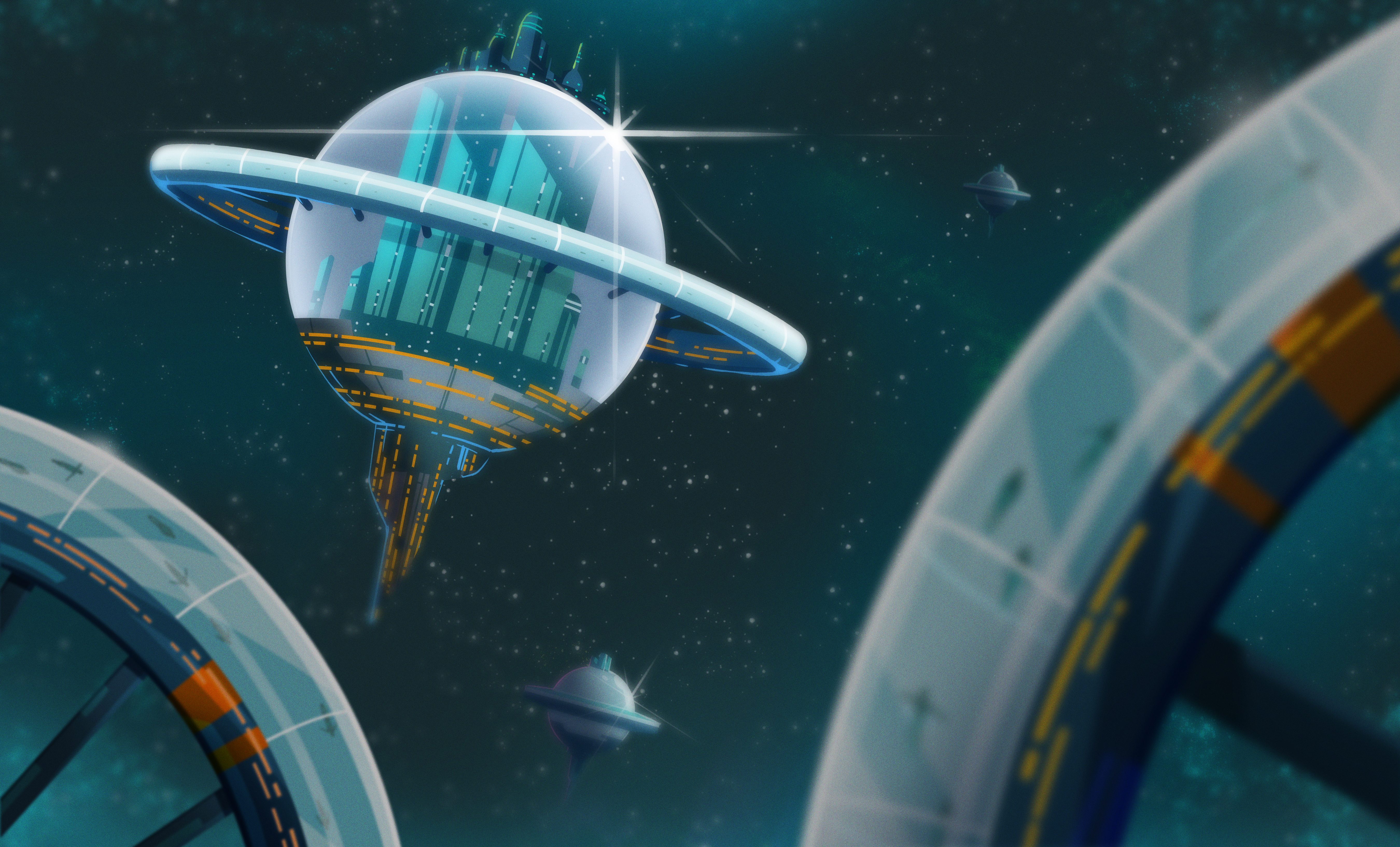
The concept of space stations predates actual spaceflight, originating in 1869 with Edward Everett Hale’s fictional 'Brick Moon.' Early 20th-century pioneers like Konstantin Tsiolkovsky and Hermann Noordung developed technical designs for orbital habitats, with Noordung’s 1929 rotating 'Wohnrad' influencing later popular depictions. Wernher von Braun popularized the rotating wheel station in the 1950s, though practical engineering challenges regarding artificial gravity and Coriolis effects have prevented such designs from being realized in current stations.
Key points
- Edward Everett Hale’s 1869 story 'The Brick Moon' is considered the first fictional artificial satellite and space station, depicting a 200-foot brick sphere launched for navigation.
- Konstantin Tsiolkovsky and Hermann Oberth advanced the theory of orbital habitation in the early 20th century, with Oberth proposing a permanently inhabited station in 1923.
- Hermann Noordung’s 1929 book detailed the 'Wohnrad,' a rotating ring station designed to provide artificial gravity, which NASA cites as an early technical design.
- Wernher von Braun popularized the rotating wheel concept in 1952 through Collier’s magazine and 1955 Disney television specials, influencing public perception of space stations.
- Engineering constraints, such as the need for large diameters or high rotation speeds to simulate Earth gravity, make rotating stations impractical due to Coriolis effects and cost.
Background
This historical overview complements recent coverage of early space station milestones, such as the 1979 re-entry of Skylab, NASA’s first station, which demonstrated long-duration spaceflight but did not utilize rotating gravity systems. It also aligns with broader discussions on lunar exploration history, including the 1960s Ranger program and recent Falcon 9 lunar impacts, highlighting the evolution of space technology from theoretical concepts to operational infrastructure.
Why it matters
Understanding the origins of space station concepts reveals how early theoretical designs, such as rotating wheels for artificial gravity, shaped public expectations and engineering challenges. While these ideas remain influential in popular culture, practical limitations have led to non-rotating stations, impacting current approaches to long-duration spaceflight and habitat design.
What to watch
Future developments may focus on overcoming the engineering challenges of artificial gravity, potentially leading to new designs for long-duration space missions. Additionally, advancements in orbital infrastructure could revisit rotating concepts if cost and technical barriers are addressed.
Want the full story? Read the original reporting
Read on Hackaday