Tag

Space Station

All articles tagged with #space station

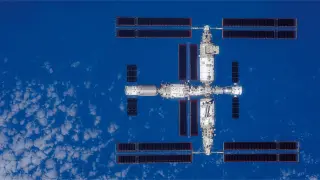
China Tests Stem-Cell Embryos in Orbit to Assess Space Reproduction Feasibility
sciencespace1 day ago

China Tests Stem-Cell Embryos in Orbit to Assess Space Reproduction Feasibility

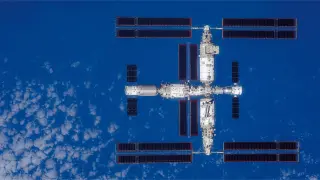
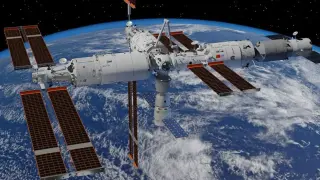
China conducted an on-orbit study aboard the Tiangong station using artificial embryos made from human stem cells to examine early development in microgravity. The two embryo models (one simulating uterine attachment and another using a microfluidic chip to mimic tissue formation) were cultured for about five days on the Tianzhou-10 supply ship, then frozen and returned to Earth for analysis, with Earth-based controls for comparison. The goal is to understand potential risks to human reproduction during long-term space habitation, not to create real babies in space.

ISS 2025 Highlights: Robotic Surgery, Bioprinted Bones, and Space-Ready Batteries
science5 days ago

ISS 2025 Highlights: Robotic Surgery, Bioprinted Bones, and Space-Ready Batteries

NASA's 2025 ISS Highlights show 750+ investigations advancing life in space, Earth benefits, and future Moon/Mars exploration, including a microgravity robotic surgery demo, magnetic-levitation bioprinted bone grafts, melanin-enhanced shielding materials, long-duration space battery tests with minimal degradation, and studies of post-flight piloting performance, reflecting global collaboration and thousands of publications.

ISS Faces Fresh Leak From Russian Module, Reigniting Talks on Its Future
space5 days ago

ISS Faces Fresh Leak From Russian Module, Reigniting Talks on Its Future

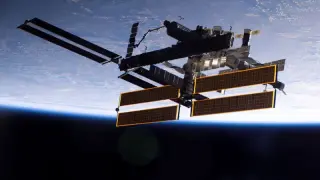
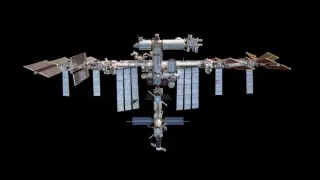
NASA confirmed renewed atmospheric leakage from the Russian PrK transfer tunnel of the International Space Station, at about one pound per day, after a period of stability. There are no crew impacts, but the reoccurrence complicates plans for maintaining ISS operations into the 2030s (or beyond) and intensifies debate over extending the station’s life versus transitioning to private commercial platforms, with NASA and Roscosmos coordinating on next steps.

Catch a Glimpse of the ISS: When and Where to Look Up
space20 days ago

Catch a Glimpse of the ISS: When and Where to Look Up

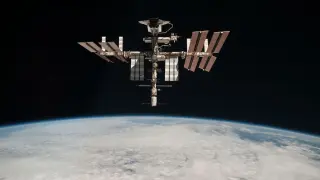
The International Space Station orbits Earth about every 90 minutes and is often visible at dawn or dusk when it reflects sunlight. It can be seen with the naked eye (binoculars help) as a bright, fast-moving point across the sky. For precise times and locations of passes, use NASA's Spot the Station app or the European Space Agency's online tracker. The ISS is a bright marker in the night sky and continues to host astronauts and international research.

In-Flight Illness on ISS Stumps NASA; Cause Still Unknown
science2 months ago

In-Flight Illness on ISS Stumps NASA; Cause Still Unknown

NASA says astronaut Mike Fincke suddenly fell ill aboard the International Space Station during dinner on Jan. 7, could not speak, and although doctors ruled out a heart attack or choking, the cause remains unknown after extensive testing. The 20-minute episode prompted NASA’s first medical evacuation and the early return of two crewmates, with ultrasound aiding the response. NASA is reviewing medical records from other astronauts for possible patterns while considering whether long exposure to weightlessness could be a factor.

Fincke Reveals Medical Event Behind ISS’s First-Ever Evacuation
science2 months ago

Fincke Reveals Medical Event Behind ISS’s First-Ever Evacuation

NASA’s January emergency on the International Space Station led to its first-ever medical evacuation; astronaut Mike Fincke later disclosed he experienced a medical event that required immediate care, while the other Crew-11 members were evacuated to a California hospital. NASA says Fincke chose to self-identify for privacy and to curb speculation, but the exact cause remains private, leaving details of the incident and its implications largely unclear.

ISS-evolved phages gain edge against Earth bacteria
science4 months ago

ISS-evolved phages gain edge against Earth bacteria

Researchers comparing E. coli infected with the T7 phage aboard the International Space Station to Earth controls found microgravity altered infection dynamics and drove space-exposed bacteria and phages to accumulate distinct mutations. The ISS-evolved phages developed changes in receptor-binding proteins that improved their ability to infect bacteria, and when tested back on Earth they showed increased activity against common urinary tract infection–causing E. coli strains, suggesting space conditions could inform future phage therapies despite practical costs.

Shenzhou-21 Crew Deepens On-Orbit Science with Xiaohang Robot
space4 months ago

Shenzhou-21 Crew Deepens On-Orbit Science with Xiaohang Robot

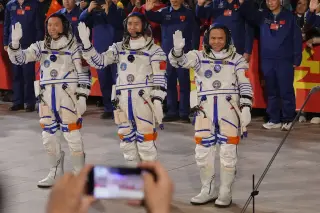
China’s Shenzhou-21 crew—Zhang Lu, Wu Fei, and Zhang Hongzhang—nearly 80 days in orbit as they advance diverse experiments aboard the Chinese space station, including interactive tests with the intelligent robot Xiaohang (touch, autonomous flight) and data collection to optimize its motion. In space medicine, they use a Raman spectrometer to analyze urine metabolites and collect saliva to study space-associated microbial changes; they also gather samples for a project on the origin of the genetic code and chirality in space. In microgravity physics, they continue electrochemical optical tests on lithium‑ion batteries for space use. Maintenance tasks included replacing a sampling cover in the combustion science cabinet, disassembling/reassembling modules, and swapping samples in the fluid physics cabinet. A system-wide pressure emergency drill strengthened crew-ground coordination, and regular medical checks and exercise were conducted.

NASA Reveals Spectacular Photos of Rare Space Station Event
science5 months ago

NASA Reveals Spectacular Photos of Rare Space Station Event

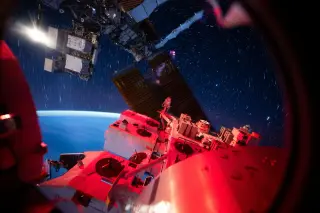
NASA and international researchers are using the International Space Station to capture unprecedented images and data on upper-atmospheric electrical discharges like red sprites, blue jets, and ELVES, which occur above thunderstorms and can impact communication and climate. Instruments like ESA's ASIM, the Light-1 CubeSat, and ultra-high-speed cameras are advancing understanding of these phenomena, their effects on the ionosphere, and their potential risks to aviation and space operations.

Russia Plans to Recycle Its Old ISS Module for a New Space Station
space5 months ago

Russia Plans to Recycle Its Old ISS Module for a New Space Station

Russia plans to recycle its aging half of the ISS to form the core of a new space station called ROS, after the current ISS is decommissioned post-2030. The decision follows economic setbacks and geopolitical issues, with concerns about the structural integrity and biological hazards of the Russian modules. The new station aims to maintain collaboration with India and continue orbiting in a similar path as the ISS.