Tag

Space History

All articles tagged with #space history

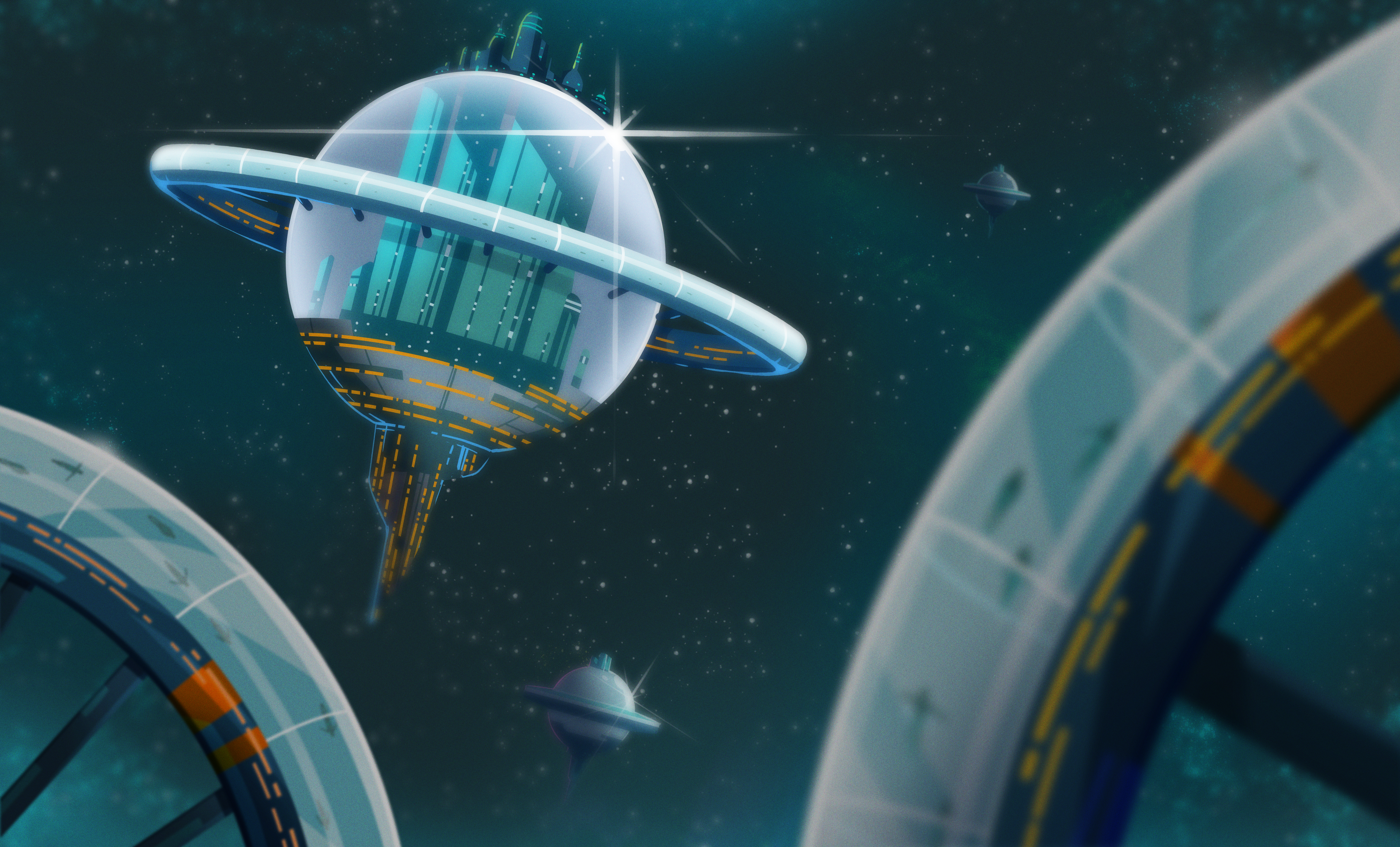
From Brick Moon to the Habitation Wheel: The Dawn of Rotating Space Stations
space-history15 days ago

From Brick Moon to the Habitation Wheel: The Dawn of Rotating Space Stations

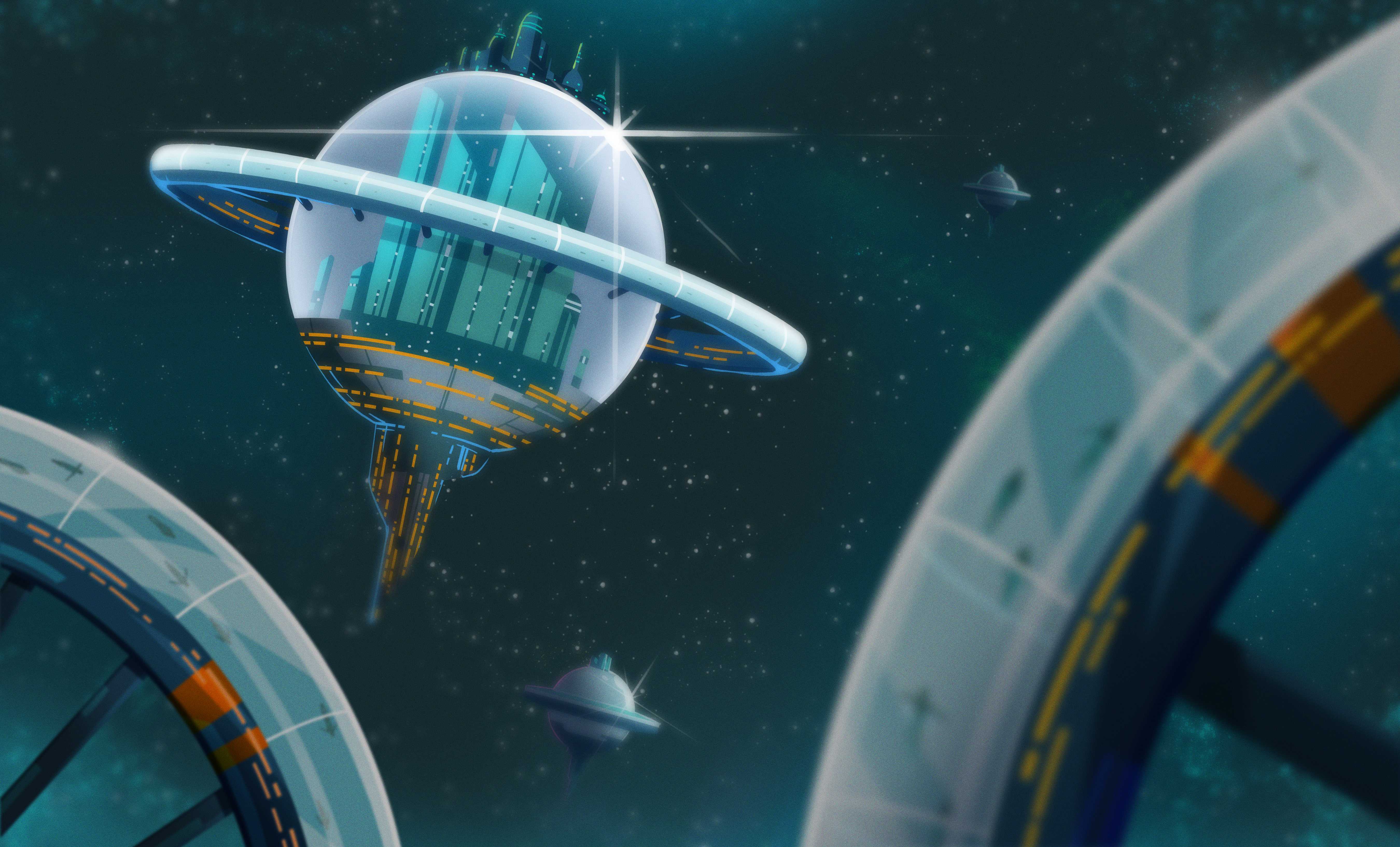
From Edward Hale’s 1869 Brick Moon—an imagined 200‑foot brick satellite launched with people aboard—to Noordung’s 1929 Wohnrad and von Braun’s mid‑century wheel concept popularized by Collier’s and Disney, the article traces how early science fiction and theory shaped ideas for rotating habitats, the physics of artificial gravity (requiring large rings for Earth gravity and introducing Coriolis effects), and why real stations have not relied on spin for gravity.

Luna 24: The Last Soviet Moon-Sample Return Mission (1976)
space26 days ago

Luna 24: The Last Soviet Moon-Sample Return Mission (1976)

Space.com’s On This Day recounts Aug. 9, 1976, when the Soviet Luna 24 launched, landed in Mare Crisium, and returned about 170 grams of lunar soil to Earth on Aug. 22 — the third and final Luna moon-sample return mission. The returned soil carried trace water (~0.1% by mass), a finding that helped advance early lunar-volatile studies. Luna 24 capped a prolific era of robotic lunar exploration even as NASA astronauts had already walked on the Moon, and the article notes subsequent Russian efforts (Luna 25 in 2023, which crashed) and the mission’s hardware (lander, ascent stage, Earth-return capsule) with LRO imagery confirming remnants of Luna hardware on the Moon.

Skylab ends a six-year orbit as debris in Western Australia becomes museums and a rain-catching keepsake
space1 month ago

Skylab ends a six-year orbit as debris in Western Australia becomes museums and a rain-catching keepsake

Skylab, NASA’s first space station, cost roughly $2.2 billion, hosted nine astronauts on three missions for a combined 171 days, and spent just over six years in orbit before re-entering in July 1979. Debris scattered over Western Australia, with pieces ending up in museums, private collections, and even a rain-catching trough made from an oxygen-tank lid. The project demonstrated long-duration spaceflight, orbital maintenance, and helped lay groundwork for later programs like Shuttle–Mir and the International Space Station.

The 1946 V-2 That Painted Earth From the Edge of Space
space1 month ago

The 1946 V-2 That Painted Earth From the Edge of Space

In 1946, a captured German V-2 rocket launched from White Sands carried a DeVry 35mm camera mounted in a steel nose-cone cassette; the camera survived the launch and impact, returning the first known photographs of Earth from space, showing horizon curvature and space above a sunless sky. Engineered by Clyde Holliday of Johns Hopkins APL, the mission used a camera able to endure ascent and radiation, with images later published in National Geographic. The wartime weapon’s postwar use helped seed the American space program, linking to the broader story of Operation Paperclip and the dawn of the space age.

Grapefruit-Sized Vanguard 1: The Silent Oldest Satellite Still Orbiting Earth
space1 month ago

Grapefruit-Sized Vanguard 1: The Silent Oldest Satellite Still Orbiting Earth

Vanguard 1, launched in 1958 and about the size of a grapefruit, remains the oldest human-made object in Earth orbit; its radio transmitters ceased in 1964, but it continues to circle the planet, helping scientists study orbital dynamics and Earth's shape, with NASA estimating an orbital lifetime of about 240 years (re-entry around 2198) though the date is not precise.

53-Year Orbit Ends as Soviet Venus Probe Kosmos 482 Returns to Earth
space2 months ago

53-Year Orbit Ends as Soviet Venus Probe Kosmos 482 Returns to Earth

Kosmos 482, a Venus-landing capsule from the Soviet Venera program launched in 1972, failed at launch and spent 53 years in Earth orbit before re-entering on 10 May 2025; its titanium descent capsule, built to withstand Venus’ extreme conditions, may have survived re-entry and landed in the eastern Indian Ocean, though no debris has been confirmed; it stands as the last surviving relic of the Soviet Venus program and a remarkable twist in space history.

Captured V-2 Camera’s 1946 Flight Gave Earth Its First View from Space
space2 months ago

Captured V-2 Camera’s 1946 Flight Gave Earth Its First View from Space

In 1946, a captured German V-2 rocket carrying a 35mm DeVry camera reached about 105 kilometers over White Sands, producing the first photographs of Earth from space. The grainy frames showed Earth's curvature and horizon against black sky, predating any formal boundary for space—the Kármán line—by decades. The camera survived the mission, while the rocket and many of its builders did not, and the achievement is often credited to Clyde Holliday and the Johns Hopkins APL team who adapted gear meant for other uses to peer into the upper atmosphere.

Luna 3's Grainy First Look at the Moon's Far Side
space3 months ago

Luna 3's Grainy First Look at the Moon's Far Side

In Oct 1959, Luna 3, a small Soviet spacecraft, flew behind the Moon, captured 29 35mm photographs, developed the film onboard, and scanned/transmitted the images back over about 480,000 km. The resulting frames—though grainy—gave the first view of the Moon’s far side (covering roughly 70% of it; 17 frames are commonly cited as successfully transmitted), revealing a terrain with fewer maria and more craters and laying the groundwork for future lunar mapping and exploration.

Galileo’s 58-Minute Descent Unveils Jupiter’s Hidden Atmosphere
space3 months ago

Galileo’s 58-Minute Descent Unveils Jupiter’s Hidden Atmosphere

Galileo’s 1995 Jupiter probe descended into the gas giant, transmitting for about 58 minutes before the harsh pressures ended the signal; it provided the first in-situ measurements of a giant planet’s atmosphere—temperatures, pressures, densities, chemistry, and cloud structure—revealing a drier-than-expected hot-spot region and hotter, denser conditions, while highlighting the limitation that a single descent cannot characterize the entire planet.

Venera 7: The 23-minute first data relay from Venus's surface
science3 months ago

Venera 7: The 23-minute first data relay from Venus's surface

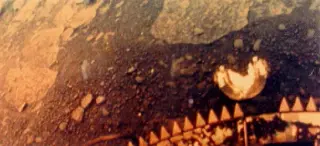
On December 15, 1970, the Soviet lander Venera 7 became the first object to transmit from the surface of another planet, delivering about 23 minutes of data before its batteries overheated in Venus’s ~475°C heat and 90 atm pressure; a misfired parachute left the antenna poorly oriented, masking the success until a later tape review confirmed the surface transmission via temperature telemetry. Venus’s extreme environment has limited long-duration landers, a pattern the Venera program confirmed with successive missions, while future Venus exploration emphasizes orbiters and short descent probes (e.g., DAVINCI, EnVision, VERITAS) rather than long-lived landers.

Apollo 10's Moon Return Still Sets the Fastest Human Reentry Speed
space6 months ago

Apollo 10's Moon Return Still Sets the Fastest Human Reentry Speed

In May 1969, Apollo 10 crew Stafford, Young and Cernan achieved the fastest human speed on reentry—36,397 ft/s (about 39,937 km/h)—during their lunar-return trajectory. The record endures because no crewed mission has left Earth orbit since Apollo 17, and subsequent flights have not surpassed that reentry velocity. Artemis plans aim to return humans to the Moon with comparable speeds, but thus far only the uncrewed Artemis I reentry reached about 39,400 km/h, keeping Apollo 10’s speed record intact as a landmark of lunar-flight physics.

Apollo-era Radio Telescope in NC Mountains for Sale
science10 months ago

Apollo-era Radio Telescope in NC Mountains for Sale

A historic 26-meter radio telescope in North Carolina, originally built for NASA's space tracking in 1962 and later used for military and intelligence purposes, is now for sale. The Pisgah Astronomical Research Institute (PARI) owns the site, which continues to support space research and education, and is seeking partners to help preserve its mission while exploring new uses, including private sector collaborations.